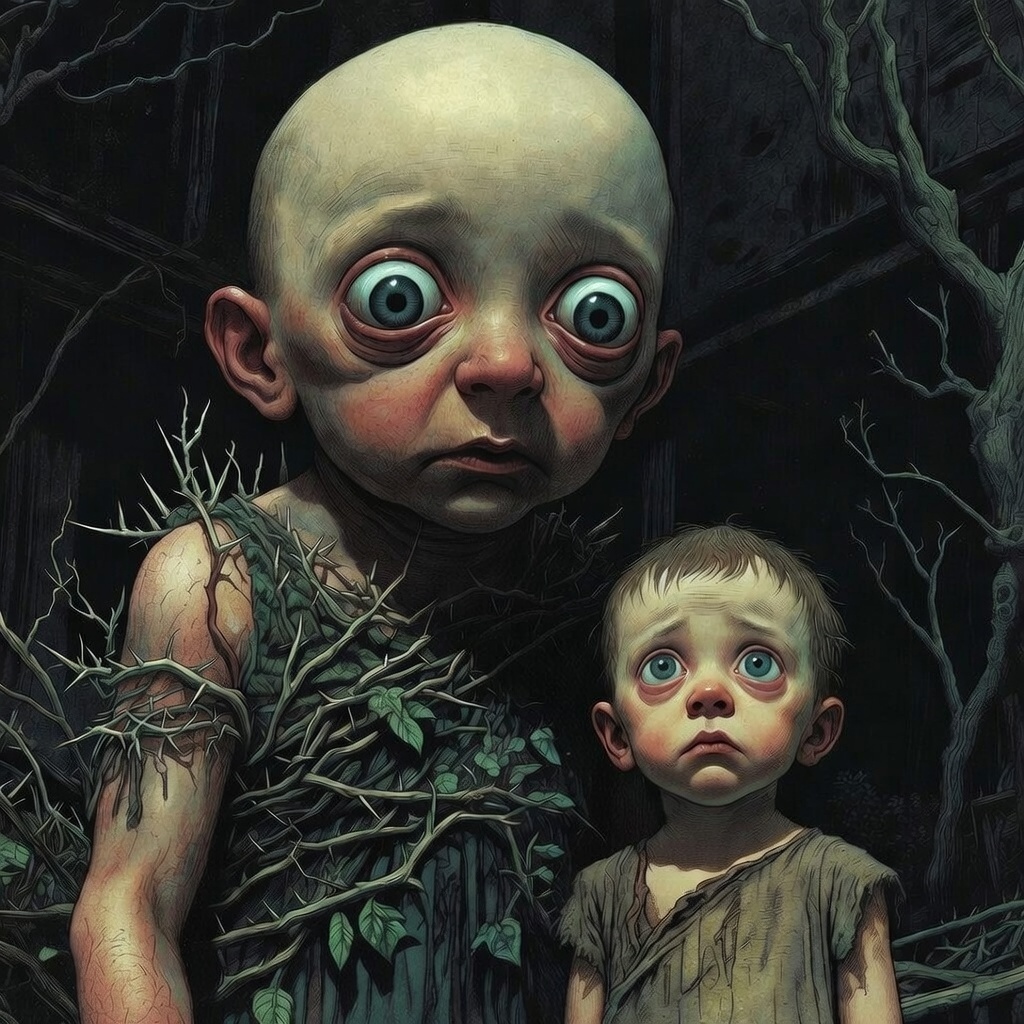
Do you ever worry excessively about offending people in social interactions? You appear timid, like a quail, irrationally afraid that if you say the wrong thing or handle something poorly, someone might slap you so hard you spin 720 degrees on the spot. Even if you encounter a civilized person, you fear they might hold a grudge over one sentence for generations, go home and curse you with a voodoo doll. Do you never know how to say no? No matter how unreasonable the request, even if you’ve mentally insulted their ancestors 3.1415926 times, you still put on a polite yet elegant smile, quickly agree, and then come home wishing you could slap yourself 3.1415927 times.
Do you see yourself as utterly worthless? Even when others acknowledge you, you still carry deep-seated insecurity, feeling that even with a Hubble Telescope you couldn’t find any merits in yourself—your only purpose is to highlight how excellent and wonderful others are.
If some of the above resonates with you, you might come from a family with overgrown infants; if all of it fits, there’s definitely at least one overgrown infant in your family of origin.
The bad news is, the impact of such a family background is somewhat difficult to change.
The good news is, today we’re going to “shake things up”—talk about what effects overgrown infant parents have on their children, and most importantly, how we can free ourselves.
What is an “Overgrown Infant”?
An overgrown infant, as the name suggests, is a giant baby—an adult body housing an infant’s mentality. Sigmund Freud, the pioneer of psychosexual theory, once pointed out that due to trauma or upbringing, a person’s emotional development can stagnate, leaving their psychological mechanisms stuck at a certain age.
To use a physical analogy: trauma is like a leg severely injured and disabled, making it hard to walk; environmental constraints are like being tied to a wheelchair since childhood, never walking, so the leg muscles atrophy—even if other parts of the body mature, the legs remain as weak as a baby’s.
Psychological growth is the same. Whether due to psychological trauma or environmental constraints, a person’s psychological development can freeze, creating a kind of psychological disability.
But psychological disability is different from physical disability: a physically disabled person is merely inconvenienced and doesn’t harm others; but a psychologically disabled person can wield an adult’s behavior and destructive power with an infant’s mind—like a little kid waving a gas cylinder around.
If You’re Stuck with Overgrown Infant Parents
If a friend or colleague is an overgrown infant, you might not care, because you’re an adult too—you might also be carrying a “gas cylinder,” maybe even a bigger one. Not only do you not have to fear them, you can teach them a lesson in no time, just with some minor hassle.
But if a defenseless child ends up with parents who are profoundly immature overgrown infants—that’s a disaster. A disaster spanning decades, descending anytime, anywhere, with no way to resist.
Infant Mode: Primary Narcissism
In infancy, one hasn’t yet developed a sense of self and others, unable to distinguish between oneself and the outside world. In their mind, crying brings milk, crying gets them cleaned. They think they’re a god—crying solves everything. This is called primary narcissism.
The most obvious trait of an overgrown infant is the same: subconsciously, they believe the world should operate according to their will, and their actions must be met with a response from the world. This is the overgrown infant’s delusional dictionary.
For example, an adult male overgrown infant might tell a girl: “I ate instant noodles for two months just to buy you this eight-core, eight-sword, discount-price 998 ‘Rolsten’ premium mechanical watch. Do you know how hard it was for me? After all that, how can you still not love me?”
In the overgrown infant’s mind, once they act or even just think something, things should unfold as they envision. If not, it must be someone else’s or the world’s fault—definitely not their own.
When Overgrown Infants Become Parents
This mentality in parents most commonly sounds like:
“I sacrificed so much for you, scrimped and saved to enroll you in 8 extracurricular classes, and you can’t even rank first in your grade every time? You can’t master every art and skill? How can you face me after all I’ve done?”
“I almost died giving birth to you, and now you’re grown—you can’t even somersault on clouds, let alone master the Kamehameha wave—you useless thing, I raised you for nothing!”
They don’t realize that nearly dying in childbirth or scrimping has no logical connection to their child getting top grades. Their minds lack something as “useless” as logic; they simply believe their wishes should override everything.
This ability to “make the world obey their will” is called Greater Prophecy in fantasy novels—a top-tier divine skill. But our overgrown infants basically all have a copy—at least they think they do.
Since they’re so amazing, why don’t they prophesy themselves into becoming Super Saiyans? Then the whole world would be at peace, right?
Why Do They Only Bully Their Children?
Because forcing the world to obey their will is too “advanced” for ordinary people to accept. If they tried that standard on outsiders, they’d likely get slapped into a 720-degree spin. So overgrown infants suppress their true nature outside—they have to keep up appearances.
Fortunately—it doesn’t matter if outsiders accept it or not; at home there’s always someone who can’t fight back.
That’s why many such families repeatedly emphasize that children “must be obedient, must comply,” even if you’re decades old—submitting to parents is still the “number one truth since the dawn of time.”
Because in an overgrown infant family, the child is merely an extension of the parents’ will, not even the most important part. The child shouldn’t have an independent personality; they’re more like a toy, a pet, a tool to satisfy the parents’ psychological needs.
But what child could fully satisfy overgrown infant parents? Children aren’t divinely blessed actors who can perform “Greater Prophecy” on cue.
So where does the problem lie? Of course, it lies with the child.
Thus, overgrown infant parents express disappointment: “How did I end up with such a worthless child? Any good in you comes from my genetics; everything else is flaws.”
“I gave birth to you, so you owe me. Even though I didn’t ask your permission to be born, how heartless of you to say such things.”
“I’m so outstanding, you’re so pathetic—failing to inherit my merits means you owe me squared; after all I’ve sacrificed for you and you still aren’t successful, you owe me cubed.”
Amid this daily bombardment of attacks, humiliation, and psychological manipulation, how many children grow up genuinely feeling they’ve failed their parents, carrying deep-seated insecurity, seeing themselves as trash unworthy of such “superior” parents?
Since they’re so awful, they must tread carefully, always afraid of upsetting their parents over some trivial matter. They grow up habitually timid, especially fearful of offending others.
“I’m sorry for being born”—that describes such children. How many who relate can quietly raise a hand in their hearts?
Emotional Outbursts and Emotional Displacement
Another trait of infants: whether they’ve soiled themselves, are hungry, or want a hug, they demand immediate satisfaction—otherwise they cry and scream, giving you a headache. They don’t know how to control their emotions.
Overgrown infants are the same. Though they usually don’t soil their pants, whenever they feel an emotion that isn’t instantly gratified, their infant mentality makes them “throw a tantrum”—the form may vary, but most commonly they torment those around them, especially family.
It’s normal for wishes to go unfulfilled—after all, we don’t have a Doraemon handy. A normal person would reflect: “Was my wish unreasonable?”
Overgrown infants don’t; they think: “The whole world owes me.”
Overgrown infants love to play the victim. Even when they’ve clearly done something wrong, it’s always because “the whole world is persecuting me, I had no choice.”
“I’m so miserable, what’s wrong with hurting you a little? It’s not like you’ll die right away. And none of you even try to understand my pain—otherwise why would you question me? Since you’re all like this, my hurting you is practically delivering divine justice.”
So overgrown infants bitterly believe the whole world is against them. Isn’t it “perfectly normal” to feel negative emotions as a result? And “perfectly reasonable” to need to vent those emotions immediately?
But whom to vent on? Venting on strangers risks physical danger. So they glance around and see the defenseless child—you’ll do. Besides, I gave birth to you, so you owe me from the start.
Thus, in many families, the child becomes an emotional trash can, a toilet for dumping emotional waste—makes perfect sense, right?
A Decades-Long Bullying Campaign
A tragic example: remember the boy who rushed out of a car and jumped off a bridge?
An overgrown infant mother was driving with her child, got triggered over some minor issue, the mood felt right, so she slammed on the brakes and stopped right on the bridge to yell at the child in the car. Such people don’t consider whether stopping in the middle of the road will cause traffic or inconvenience others—after all, “the whole world owes me, what’s wrong with scolding my kid for a bit?”
Later, maybe feeling the car was too cramped for her performance, she got out and went to the back seat to scream right in the child’s face.
The child wiped his tears, dashed out of the car, and without a moment’s hesitation jumped off the bridge—truly without hesitation. How utterly hopeless must life have felt to him?
Watching that, I thought the mother might be so remorseful she’d jump after him. Instead, she stayed very rationally on the bridge, looking devastated.
Did she regret it? Maybe. But from what I know of overgrown infants, her regret probably isn’t what kind-hearted people imagine.
She regrets because this incident will condemn her morally for life; she regrets because she shattered her own emotional trash can—now no one in the world will silently absorb her emotional garbage anymore.
Such a person might even resent the child inwardly: “I’ve bullied you like this your whole life, why couldn’t you take it this time? In the end, it’s your fault. I was counting on you to support me in old age, and you jumping off caused me so much trouble.”
This is essentially a decades-long bullying campaign by overgrown infant parents against their children. The overgrown infants get the thrill of control, dump their emotional garbage, and suck the life out of their children like leeches.
Extreme cases leading to suicide aren’t extremely common, but they’re not rare either. More common are children whose vitality has been drained, growing up with shattered hearts.
People rightfully detest school bullying, but bullying from within the family is even more inescapable, even more bone-deep.
Finally, How Should We Respond?
Overgrown infant behavior is truly detestable, but detestable people also have pitiable aspects. Many factors shape an overgrown infant; no one aspires to be one from childhood. They might have suffered trauma, or their own parents might have been overgrown infants.
I’m not saying this to make you resent your family of origin—most overgrown infants are just mindlessly repeating the previous generation’s patterns. After all, overgrown infant families most easily produce new overgrown infants.
Nor am I encouraging you to change them—no one can change a middle-aged or elderly overgrown infant; it’s a futile, thankless effort.
Instead, I hope those affected can see clearly:
Don’t let overgrown infants control your life, no matter how noble-sounding their justifications.
Even if they rage helplessly because they can’t control you, that’s not your fault.
Don’t feel guilty for refusing their absurd demands; don’t abandon your own life because of moral blackmail.
Even if you can’t be perfect, don’t let the shadows of your past extend to the next generation.
No amount of past suffering justifies harming an innocent child today.
If you wish to truly love your parents, first learn to love yourself—accept this imperfect self, flaws and all.
Only when you have enough love for yourself can you genuinely love others.
Otherwise, it’s just a distorted relationship and another turn in the cycle of inherited pain.
原文
原生家庭里的巨婴父母:伤害都是悄悄发生的
会不会在跟人打交道的时候特别担心得罪人?看起来弱弱的,就像一只鹌鹑,莫名其妙的害怕自己哪句话没说好、哪件事情做差了,别人就一个大逼兜过来,打得你原地转体720°。即使遇到个文明人,也会因为一句话恨上你八辈子,回家就给你扎小人儿。你是不是从来不知道怎么拒绝?不管别人提什么过分的要求,哪怕你在心里已经问候了对方先人3.1415926遍,还是会带着礼貌又不失优雅的微笑赶紧答应,然后回来恨不得扇自己3.1415927个耳光。
你是否认为自己就是一根废柴?即使得到别人的认可,也依然怀着深深的自卑,觉得自己拿着哈勃望远镜都找不到什么优点,唯一的意义就是衬托出别人的优秀与美好。
如果上面这些部分符合你,那么你可能来自巨婴家庭;如果全部符合,你的原生家庭里一定存在一个以上的巨婴。
坏消息是,这些原生家庭带来的影响,改变起来有点困难。
好消息是,今天我们正好就来“摇摇”巨婴——聊聊巨婴父母带给孩子哪些影响,以及最重要的一点:我们该怎么放过自己?
什么是“巨婴”?
巨婴,顾名思义就是巨大的婴儿,是成年人的身体里装着婴儿的心智。性心理学开创者弗洛伊德曾指出,人可能因为创伤或生长环境,导致部分情感能力停滞,心理机制停留在某个年龄阶段。
用身体来比喻:创伤就像腿受重伤后残疾,不方便走路;环境约束则像从小被绑在轮椅上生活,从未下地走过路,腿部肌肉萎缩,即使其他部分发育成熟,腿脚仍像婴儿一样无力。
心理成长也一样,不管是因心理创伤,还是环境约束,都可能让人心理停滞,造成某种心理残缺。
但心理残疾和身体残障不同:残障人士只是自己不方便,不影响别人;而心理残疾的人,却能用婴儿的心智驾驭成年人的行为与破坏力——就像一个小屁孩拿着煤气罐到处晃荡。
如果你摊上巨婴父母
如果朋友或同事是巨婴,你也许不在乎,因为你是成年人,也可能拎着“煤气罐”,甚至当量比他还大。你不但不用怕,还能分分钟教他做人,顶多有点麻烦。
但如果一个毫无自保能力的孩子,摊上的父母是心智极不成熟的巨婴——那就是一场灾难。一场延绵几十年、随时随地降临又不可抵抗的灾难。
婴儿形态:原始自恋
婴儿期的人还没建立主体和个体概念,分不清自己和他人。在他们意识里,一哭就有奶喝,一拉就有人清理。他们以为自己是神,一哭就能解决一切。这叫婴儿的原始自恋。
巨婴最显著的特征也是如此:他们潜意识里认为,世界理应按自己的意愿运行,自己的行为必须得到世界的回应。这叫巨婴的高端字典。
比如一个成年男巨婴可能对女孩说:“我吃了两个月泡面,就为了送你这块八芯八剑、打折后998的劳斯丹顿高档机械腕表,你知道我多不容易吗?我都这样了,你怎么还不爱上我?”
在巨婴的意识里,一旦自己行动或意念一动,事情就应当按自己预想发展。如果没有,那一定是别人或世界出了问题——反正绝不是自己的问题。
当巨婴成为父母
这种心态放在父母身上,最常见的话术是:
“我为了你付出那么多,省吃俭用给你报了8个课外班,你居然不能次次考全年级第一,也不能琴棋书画样样精通,你对得起我吗?”
“我当初生你多不容易,差点难产,你现在长大了,不会筋斗云也就算了,居然连龟派气功都没学会——你个没用的家伙,真是白养你了!”
他们意识不到,难产、省吃俭用和孩子考第一之间没有必然联系。他们脑子里没有逻辑这种“用不着的玩意儿”,只认为自己的意愿理所应当能摆平一切。
这种“让世界按自己意志运行”的能力,放在奇幻网文里叫大预言术,是顶级神术。但我们的巨婴基本人手一套——至少他们自认为会。
既然这么牛,为什么不把自己预演成超级赛亚人呢?那样世界不就清净了吗?
为什么只敢欺负孩子?
因为让世界按自己意志运行这种事过于“高端”,一般人不太接受。如果拿这套标准出门要求别人,很容易被一个大逼兜打得原地转体720°。所以巨婴在外多少会压抑本性,装也要装一下。
不过好在——外人接不接受没关系,家里还有一个不能反抗的。
这也是为什么很多家庭反复强调孩子“一定要乖、要听话”,哪怕你大几十岁了,服从父母仍是“天字第一号真理”。
因为在巨婴家庭里,孩子仅仅是父母意志的一部分,甚至不是最重要的那部分。孩子不应有独立人格,更像是玩具、宠物,或帮父母实现心理满足的工具。
但哪有孩子能完全满足巨婴父母?孩子又不是被神明眷顾的演员,配合“大预言术”肯定力不从心。
那问题出在哪儿?当然是出在孩子身上。
于是巨婴父母就会失望:“我怎么生了你这么个废物?你看看,你身上的优点都是我的遗传,除此以外哪哪儿都是缺点。”
“我生了你,你就欠我的。虽然生你时没跟你商量,但你说这样的话就是没良心。”
“我如此优秀,你如此糟糕,没能遗传到我的优点,就是你欠我的平方;我为你付出这么多,你还不争气,简直就是欠我的立方。”
在日复一日的打击、羞辱和PUA中,多少孩子打心眼儿里觉得愧对父母,从小带着自卑,觉得自己是废柴,配不上如此“高端”的父母。
既然自己这么糟糕,就得时时刻刻陪着小心,生怕又因为什么莫名其妙的原因惹父母不高兴。长大后也习惯性畏畏缩缩,特别害怕得罪人。
“生而为人,我很抱歉”——描述的就是这样的孩子。不知道有多少感同身受的小伙伴,能在心里默默举一次手。
情绪失控与情绪转嫁
婴儿的另一个特点是:不管拉了、饿了,还是想要抱抱,都必须立刻满足,否则就大哭大闹,吵得你脑壳疼。因为他们不会控制情绪。
巨婴也一样。虽然一般不至于拉在裤子里,但一旦有情绪没被及时满足,心智就会像婴儿那样“哭闹”——具体形式可能不同,最常见的就是折磨身边的人,尤其是家人。
愿望没被满足是正常的,毕竟身边没有哆啦A梦。正常人会反思:“我的愿望是不是过分了?”
巨婴不会,他们会认为:“全世界都欠我的。”
巨婴喜欢强调自己是受害者,哪怕做了板上钉钉的坏事,也一定是“全世界都在迫害我,我是被逼无奈”。
“我都这么惨了,做点坏事伤害你们怎么了?反正一时半会儿死不了。而且你们都不体谅我的痛苦,否则为什么还来质问我?既然你们都这样,那我伤害你们简直就是替天行道。”
所以巨婴苦大仇深地认为全世界都在针对自己,由此产生的负面情绪“特别正常”,需要立刻发泄出来“理所应当”。
找谁发泄?随便找人容易威胁人身安全,一扭头看见没有反抗能力的孩子——就你了,何况你是我生的,天生就欠我的。
所以在很多家庭,孩子是承接负面情绪的垃圾桶、排泄情绪垃圾的马桶——特别合理,不是吗?
一场持续几十年的霸凌
举一个悲伤的例子:还记得那个从车上冲出来跳桥的男孩吗?
一个巨婴妈妈开车带孩子,因为一点小事情绪上头,气氛到位了,直接一脚刹车停在桥上,在车里训孩子。这种人不会考虑停在马路中间会不会堵车、给别人带来多少不便——毕竟“全世界都欠我的,我就训会儿孩子怎么了?”
后来大概觉得车里空间太小不够发挥,于是亲自下车绕到后排怼脸输出。
结果孩子抹着眼泪冲下车,不带一丝犹豫地从桥上跳下去——真的没有一点犹豫。这得对生活绝望到什么份上?
当时看到这儿,我还以为这个妈妈会懊悔到跟着跳下去。结果人家特别理智地待在桥上,一副失魂落魄的样子。
她会后悔吗?也许会的。但以我对巨婴的了解,她后悔的内容可能跟善良的你想的不太一样。
她后悔,是因为这件事会让她遭到一生的道德谴责;她后悔,是因为原有的情绪垃圾桶被她亲手打碎了,从此世上不会再有人那样默默地承载她的垃圾情绪。
这样的人,甚至可能在心里埋怨孩子:“从小到大我都是这样霸凌你,怎么这次就受不了了呢?归根结底还是你的错。本来还指望你给我养老,结果你这么一跳,给我带来多大麻烦。”
这本质上就是一场巨婴父母对孩子持续几十年的霸凌。巨婴从中获得支配的快感,倾泻垃圾情绪,像蚂蟥一样吸食自己孩子的生命力。
导致轻生的极端例子不算很多,但也不算很少;更多的是被吸食生命力的孩子,带着残破的内心艰难长大。
大家会对校园霸凌咬牙切齿,其实来自家庭的霸凌更加无处可逃,更加深入骨髓。
最后,我们该如何面对?
巨婴的种种行为确实可恨,但可恨之人也有可怜之处。一个巨婴的形成有各种原因,没人小时候就立志要当响当当的巨婴。他们也许遭遇过创伤,也许上一代就是巨婴。
我说这些,不是让大家去怨恨原生家庭——巨婴中的大多数只是浑浑噩噩模仿上一代的行为,毕竟巨婴家庭最容易产生新的巨婴。
也不是鼓励大家去改变他们——没有人能改变一个中老年巨婴,这么做纯属白费力气还不讨好。
而是希望多少受困于此的你能看明白:
不要再被巨婴支配你的人生,哪怕这种支配打着冠冕堂皇的借口。
即使他们因为支配不了你而无能狂怒,那也不是你的错。
不要因为拒绝巨婴的奇葩要求而惭愧,更不要因为道德绑架而放弃自己的生活。
即使做不到最好,也不要让过去的阴影延续到下一代。
无论有多少悲惨的过去,都不构成今天伤害无辜孩子的理由。
如果你希望真正地爱父母,首先应该学会爱自己——接纳这个不完美、有着各种毛病的自己。
只有在爱自己的基础上有了余力,才有可能真正去爱他人。
否则,那不过是一种畸形的关系,也是一代代延续的痛苦轮回。