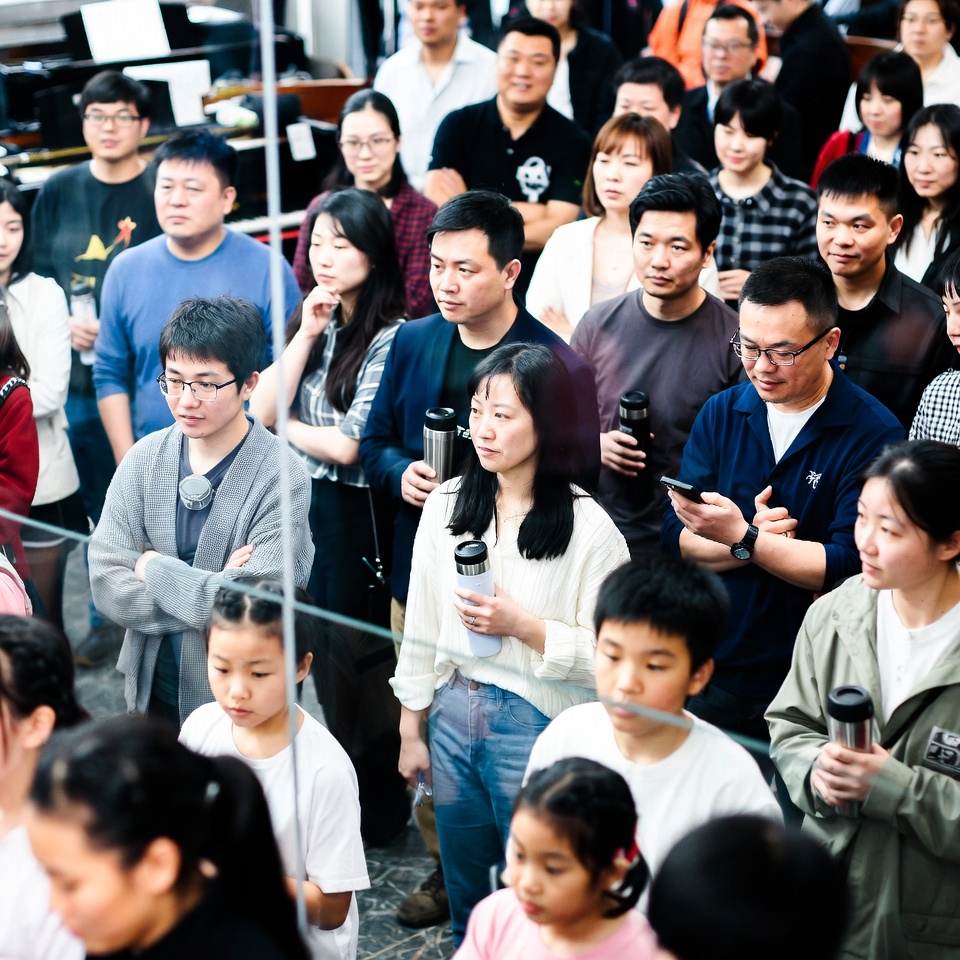
On weekends, a small piano studio near Kunming’s Jian She Road is crowded with parents. Some hold thermoses, some scroll their phones, others stare through the glass at their children with a mix of pride and anxiety.
“At the very least, they can’t fall behind,” one father mutters before signing the renewal form.
It’s hard to say which social class that sentence belongs to, but it speaks for a large portion of today’s so-called “middle class” —
consuming to create distance, consuming to soothe uncertainty.
01|A Class Defined by Consumption
The middle class was once a social identity, not an economic bracket.
In 19th-century Europe, urbanization created new professions:
Doctors, lawyers, architects, writers…
They didn’t rely on land, assets, or physical labor. They lived on intellectual work and cultural capital. They could converse with elites and exert influence on society — just like Arthur Conan Doyle. He struggled as a young doctor, later became a bestselling author with Sherlock Holmes, and despite income swings, his class identity remained the same: middle class.
Back then, the portrait was clear:
- Urban residence
- Higher education
- Intellectual labor
- Cultural literacy and social etiquette
It had nothing to do with income, and even less to do with consumption.
They were the ones enlarging the social gap between aristocrats and workers — a new class filling the space in between.
But in modern times, the concept has been rewritten by consumerism:
It’s no longer what you do, but whether you can consume the “lifestyle.”
So we see today:
School districts, hobby classes, mechanical watches, boutique cafés, brand-name household goods, overseas vacations…
The consumption site becomes the identity site.
And what we “need” and what we “must buy” are no longer the same thing.
02|Imitation and the Moving Fence
Piano lessons once swept through middle-class households.
In many parents’ minds, the piano symbolizes a “noble culture”: elegant, refined, with a certain class flavor. This impression wasn’t created out of thin air. In 18th-century Europe, the piano undeniably belonged to the aristocracy:
- Thousands of handmade parts
- Fragile mechanism
- Specialized repairs
- High maintenance costs
Back then, “piano = aristocracy” was completely valid.
Industrialization later made pianos affordable, but collective memory stayed in the past. So the piano studio became a social checkpoint:
It wasn’t about interest.
It wasn’t about future vocational skill.
It wasn’t even about music.
It offered symbolism.
Yet years later, the craze cooled, and the piano quietly slipped to the bottom of the “hobby hierarchy.” Not because the instrument declined, but because middle-class parents looked around and realized:
The real elites were already playing polo, sailing yachts, and riding European warmblood horses.
And suddenly, the pattern became clear:
The middle class chases, the elite retreats.
You follow consumption, they update culture.
Consumption goods form a silent hierarchy:
- For the lower class: an invisible door
- For the middle class: a handle just out of reach
- For the upper class: an unnecessary label
03|Lives Pushed by Anxiety
Today’s middle class shares a quiet trait:
looking up brings anxiety, looking down brings fear.
They push forward:
- Buying school-district apartments to secure the child’s path
- Filling schedules with classes to build a “social safety net”
- Pursuing elite diplomas and big-tech jobs to maintain class credentials
- Consuming “taste” and “lifestyle” to avoid sliding downward
Middle-class consumption isn’t just shopping —
it’s a form of insurance against invisible collapse.
Advertising understands this perfectly:
“You come to us, we train your child. You don’t come, we train your child’s competitor.”
Absurd logic, surgical accuracy.
Apps, credit platforms, and travel agencies attack from another angle:
“Borrow for a vacation.”
“First mechanical watch.”
“First car.”
“Autumn’s first milk tea.”
When credit makes lifestyle available,
anxiety becomes unavoidable.
04|The Misunderstanding Between Class and Goods
Consumerism’s greatest trick is storytelling:
“What you buy reflects who you are.”
As if a luxury handbag could unlock a different social tier.
Reality works the opposite way:
Class boundaries are formed by:
- Education & capability (middle vs. lower)
- Assets & social capital (middle vs. upper)
Consumption plays no decisive role. It only reminds you where you stand — and how easily you could fall.
05|Removing the Thorn of Symbolism
So we circle back to one question:
Are we consuming for ourselves, or for someone watching?
In today’s climate, countless people carry quiet burdens:
Mortgage pressure
Car payments
Children’s classes
Uncertain futures
If one day we step out of the consumerist script:
- Not outsourcing dignity to goods
- Not buying self-worth at retail price
- Not trading anxiety for status symbols
It wouldn’t be regression.
It would be recovery.
Because the real value of the middle class has never lived in shopping bags.
It lives in education, skills, judgment, and the things that cannot be purchased.
原文
中产的镜子:消费、阶层与一种无声的恐惧
在昆明建设路的一间培训机构里,周末的钢琴课总是挤满家长。有人拿着保温杯,有人滑着手机,也有人盯着玻璃后的孩子,眼神里混杂着焦虑和自豪。
“至少不能比别人差。”一位父亲说完,转过头去签下了续费单。
很难说这句话属于哪个阶层,但它恰恰是当下所谓“中产阶级”的共同语言:
用消费拉开距离,又用消费填补不安。
01|被消费定义的阶层
中产曾经不是一个经济词汇,而是一个社会身份。
十九世纪的欧洲,城市化带来了新职业:
医生、律师、建筑师、作家……
他们不靠土地、不靠资产、不靠体力,而是靠脑力劳动谋生。他们拥有交流能力、文化资本和社会影响力,就像当时的柯南·道尔。当医生的时候贫困潦倒,作品热卖之后声名大噪,但无论收入高低,他的身份始终属于“中产”。
那时候的中产有一个清晰的画像:
- 城市居住
- 高等教育
- 脑力劳动
- 文化品味与体面生活
与收入无关,与消费更无关。
他们是拓宽社会缝隙的人,是介于贵族与工人之间的新阶层。
但到了今天,中产的概念却被消费主义重新定义:
不是你做什么,而是你能不能消费那种“体面”。
于是我们看到:
学区房、兴趣班、机械表、度假民宿、精品咖啡、品牌家居……
消费现场成了身份现场。
那些“我们需要的”和“我们必须消费的”,有时候已经不是一回事。
02|模仿与门槛
钢琴培训曾经在中产家庭里风靡一时。
在很多父母的逻辑中,钢琴象征着一种“贵族的文化”:优雅、精致、有阶层意味。这种象征并非空穴来风——在十八世纪的欧洲,钢琴确实是上层社会的专属物件:
- 几千个零件
- 全手工打造
- 易损且难修
- 成本与维护极高
那时“钢琴=贵族”是成立的。
工业化之后,钢琴早已成为普通家庭可负担的乐器,但印象停留在旧时代,于是钢琴兴趣班变成了一道体面的门槛:
它和兴趣无关,与未来技能无关,与谋生无关,它提供的是一种“象征”。
然而几年后,钢琴的热度开始下降,甚至在“兴趣班鄙视链”中沦为底层。
不是因为钢琴不好,而是中产回头发现:
真正的上层已经在玩马术、游艇、高尔夫。
中产模仿的是门槛,上层制造的也是门槛。
你追一步,我退一步。
你跟随消费,我更新文化。
消费品因此成为一种“区隔”,一种无声的分层方式:
- 对底层,是看不见的门
- 对中产,是够不着的把手
- 对上层,是不需要的标签
03|被焦虑推着走的生活
今天的中产有一个共同特征:
向上看是焦虑,向下看是恐惧。
他们努力:
- 买学区房,为孩子锁住未来的通道
- 报兴趣班,为孩子铺设阶层的护栏
- 进大厂、读名校,为自己获得与上层沟通的资格
- 通过消费维持体面,避免“滑落”的风险
中产的消费不只是购买,而是在抵御一种看不见的坠落。
广告嗅到了这种情绪:“您来,我们培养您的孩子;您不来,我们培养您孩子的竞争对手。”
逻辑荒谬,却击中了内里最软的地方。
电商平台、银行和旅游APP也在同一战场里收割:
“借钱也要去一次海岛”、“秋天的第一杯奶茶”、“第一块机械表”、“第一辆车”……
当消费可以赊账,体面就变得触手可及,而焦虑也变得难以抵挡。
04|阶层与商品之间的误会
消费主义最擅长制造一种错觉:
“你用什么,就属于什么阶层。”
好像买一件高端商品,就能拿到另一扇门的钥匙。
现实恰恰相反:
真正区分阶层的从来不是消费,而是:
- 教育与能力(中产与底层的分界)
- 资产与关系(中产与上层的分界)
消费只是一次次提醒你:
你身在其中,但可能随时掉落。
05|尾声:拔掉象征的刺
回到最初的问题:
我们消费的东西,是为了自己,还是为了旁人的目光?
在今天的环境里,无数人正在负重前行:
背着房贷
背着车贷
背着孩子的兴趣班
背着对未来的隐忧
如果有一天,我们能从消费主义的剧本里退一步:
不再把体面托付给商品
不再用价格购买自我价值
不再用焦虑填补阶层恐惧
那并不意味着退化,而意味着重新获得温度和自由。
毕竟,中产的真实价值从来不在购物袋里,而在脑子里、手里、以及那些与商品无关的事情里。