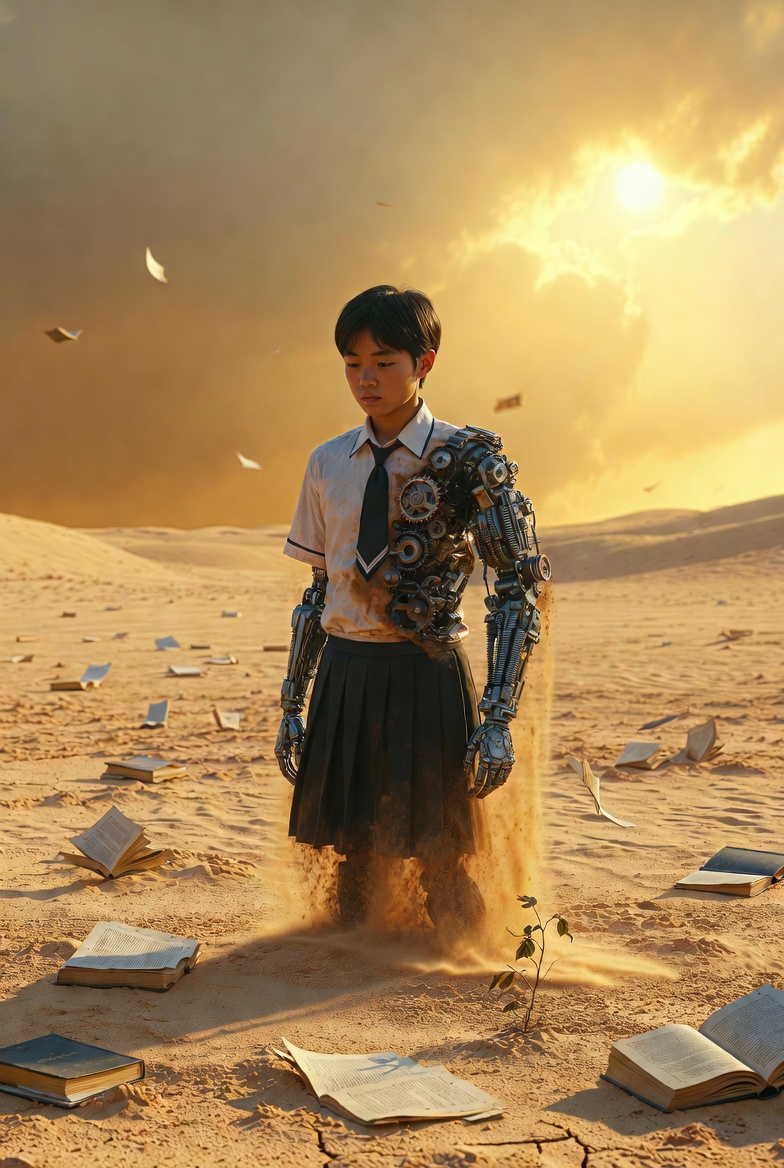
What is education for?
People have answered this question for centuries.
Some say education builds knowledge.
Some say it creates responsible citizens.
Some say it prepares people for society.
But one quote has always felt disturbingly accurate:
“It is, in fact, nothing short of a miracle that the modern methods of instruction have not yet entirely strangled the holy curiosity of inquiry.”
— Albert Einstein
Sometimes, it feels like he was talking about us.
Because for many people, education was never really about understanding life.
It was about becoming useful.
And once usefulness becomes the center of everything, something quietly disappears:
your ability to live as a human being, instead of a tool.
We Were Educated Like Products on an Assembly Line
Most people instinctively define education in practical terms:
Study hard.
Get good grades.
Earn a diploma.
Find a stable job.
Make more money.
On the surface, this logic seems reasonable.
You define a goal first, then optimize everything around reaching it.
Factories work the same way.
If you want to manufacture screws, you carefully filter raw materials, process them step by step, and remove defective parts along the way.
The problem becomes obvious the moment we apply the same logic to people.
Modern mass education — especially the system most of us are familiar with — was originally designed during the rise of industrial society.
Fixed schedules.
Forty-minute classes.
Centralized instruction.
Standardized testing.
Discipline. Obedience. Efficiency.
Its purpose was never hidden:
to produce large numbers of manageable, functional citizens at low cost.
And in many ways, it worked brilliantly.
But every assembly line has a hidden requirement:
standardization requires elimination.
Someone must fall behind.
Someone must fail.
Someone must be filtered out.
That pressure follows people for years.
As children:
“If you fail this exam, you’ll get punished.”
As adults:
“If you fail this time, your entire life might collapse.”
Eventually, external pressure becomes internalized.
You no longer need teachers or parents scaring you.
You learn to scare yourself automatically.
And strangely enough, the more terrified people become, the harder they work.
Like animals driven forward by fear instead of meaning.
Why So Many People Are Afraid to Stop
The deeper issue is not simply “stress.”
It’s that the system leaves very little room for failure.
In highly competitive environments, many fears are not imaginary.
Entrance exams determine futures.
Performance rankings shape opportunities.
Falling behind carries real consequences.
So students, parents, and schools all end up pushing toward the same thing:
total optimization.
Anything unrelated to measurable success gradually becomes “useless.”
Novels? Useless.
Games? Useless.
Art? Useless.
Music? Useless.
Because none of them increase your score by even one point.
Meanwhile:
Textbooks, exam prep materials, certifications, technical manuals —
those are “useful.”
Over time, this way of thinking spreads far beyond school.
It becomes a worldview.
The Most Dangerous Question: “Is It Useful?”
This mindset follows people into adulthood.
Take reading as an example.
Useful books:
- textbooks
- professional certifications
- business guides
- manuals
They teach you how to perform tasks correctly.
Useless books:
- novels
- poetry
- philosophy
- films
- games
- music
They don’t directly increase your salary next month.
So people begin asking:
“What’s the point?”
But human beings cannot survive on utility alone.
People need meaning the same way they need food or sleep.
You can spend your entire childhood following instructions perfectly —
study hard, graduate, get a job —
and eventually life still asks questions no textbook prepared you for:
Where do you want to live?
What kind of person do you want to become?
Who do you love?
What kind of life feels meaningful to you?
No company offers a job description that says:
“Join us. We’ll provide your purpose, relationships, emotional fulfillment, and existential direction.”
At some point, you must choose for yourself.
And to choose, you need values.
You need a sense of meaning.
Ironically, those are exactly the things “useful education” rarely teaches.
The Things We Call “Useless” Often Teach Us How to Live
The strange irony is this:
Many of the things society labels “useless” are precisely the things that help people understand life.
Novels let you experience different lives.
Films expand emotional understanding.
Music teaches emotional nuance.
Art teaches beauty.
Games can teach curiosity, cooperation, and imagination.
These things may not teach you how to “win.”
But they often teach you something more important:
what is worth pursuing in the first place.
Useful knowledge helps people do things correctly.
Meaning helps people decide which things are worth doing.
Without meaning, productivity becomes empty motion.
When Winning Becomes the Only Meaning Left
This problem becomes especially visible in competitive environments.
Take gaming as an example.
There are usually three types of players.
The first plays for enjoyment, relaxation, or exploration.
The second treats games like intellectual systems — studying mechanics, mastering strategy, creating guides.
Then there’s the third type:
People who care only about winning.
Not beauty.
Not creativity.
Not challenge.
Not fun.
Only domination.
If cheating helps them win, they cheat.
If exploiting loopholes helps, they exploit them.
Why?
Because many people were never taught how to experience meaning beyond outcomes.
From childhood, they learned:
Only results matter.
The experience itself has no value.
Over time, many people lose the ability to enjoy process, beauty, or curiosity.
And when life becomes emotionally empty, people still need stimulation.
Some seek meaning through art, relationships, or growth.
Others choose the fastest, cheapest substitute:
superiority.
Mocking others.
Humiliating others.
Looking down on others.
Because genuine joy requires emotional depth.
Cruelty does not.
Education Taught Us How to Function — But Not How to Live
Modern education is very good at producing functional people.
It can train workers.
Test-takers.
Specialists.
Professionals.
But it often struggles to answer a far more important question:
How should a human being live?
And perhaps even more importantly:
How should a human being remain human inside systems that constantly try to reduce them into tools?
This is not an argument against learning.
Knowledge matters.
Discipline matters.
Skills matter.
But when usefulness becomes the only value, life slowly loses color.
People stop asking what they love.
They only ask what is practical.
They stop asking what feels meaningful.
They only ask what is profitable.
Eventually, they may become highly efficient —
but emotionally hollow.
A Society Full of Useful People Can Still Feel Spiritually Empty
The tragedy of purely utilitarian education is not that it creates hardworking people.
It’s that it creates people who no longer know why they’re working.
People who can optimize everything —
except their own lives.
And when a person spends years treating themselves like a machine, eventually they begin experiencing the world mechanically too.
Relationships become transactions.
Rest becomes guilt.
Hobbies require justification.
Existence itself becomes performance.
That’s why so many people feel exhausted even when they succeed.
Because efficiency is not meaning.
Achievement is not fulfillment.
And survival is not the same thing as living.
The Final Question Education Rarely Asks
Education teaches people how to become useful screws in larger systems.
But almost nobody asks:
What exactly are those screws helping build?
And more importantly:
Do you actually want to spend your entire life becoming better at fitting into machines you never chose?
Because if education only teaches people how to function —
but never teaches them how to live —
then it stops being education.
It becomes conditioning.
And the final result of conditioning is not intelligence.
It is emptiness.
A perfectly efficient desert.
原文
教育只教你“有用”的东西,却让你活成了一片沙漠
问一个问题:教育是为了什么?
古今中外无数人回答过。孔子说“有教无类”,亚里士多德说“培养公民的美德”。但有一句话格外刺眼——爱因斯坦曾说:
“世界上最糟糕的教育,就是靠着恐吓、暴力和权威进行的。”
这听起来,是不是有点像在说我们?
01 我们熟悉的教育目的
很多人对教育的第一反应是:读书,学知识技能,拿文凭,好找工作,多赚钱。
这种期许有一个显著特点:先定制一个最终目标,再用目标倒推整个过程。
这个逻辑本身没问题——工厂流水线就是这么运作的。比如你要生产一把皮搋子,就得先筛选原材料,再一步步加工,最后做出成品。没被选上的材料,只能当残次品或废品处理掉。
问题出在哪里,已经很明显了。
今天我们不讨论“人不能被当成工具”这种价值观问题,也不讨论200年前为工业生产匹配的灌输式教育是否还适合今天的消费服务型经济。只讨论这套教育模式对你、我这样的个体造成了什么影响。
02 普鲁士教育:200年前的流水线
我们都熟悉的这套教育模式——早上七八点上课,一节课40到60分钟,老师全程灌输,学生被动接收。强调纪律、服从和权威。
它的正式名称是普鲁士教育,诞生于200多年前。目的是生产大量具备一定知识技能、且易于管理的国民。
这套模式有三大好处:
- 大范围、低成本完成基础教育,短期见效快;
- 用看似公平的考试筛选合适的劳动者;
- 低成本灌输意识形态,维护社会稳定。
但代价是:学生就是产品,按统一标准在流水线上被筛选。而筛选的另一面,就是淘汰。
被淘汰的阴影笼罩整个学生时代,刻进每个人的内心深处。
长大了就能摆脱吗?不会。只是习惯了。
小时候:这门课考砸了,回家要挨揍。
长大后:这次没考过,人生就完蛋了。
从家长和学校“手动式”的恐吓,进化成了全自动的自己吓自己。遇上什么事都条件反射地想象最可怕的结果,越是把自己吓得屁滚尿流,前进的动力就越足——像一头被鞭子抽着赶路的驴。
到了最后,不管结果如何,都心累。真他喵的累。
03 为什么不敢不恐惧?
除了十几年养成的路径依赖,更重要的原因是:这套模式下,个体的容错率太低了。
那些让人恐惧的东西,可能是真实存在的——一考定终身的高考、誓师大会、各种刺激与惩罚。每次考试升学前,是不是都得一周七天、每天12小时以上的学习?就为了争取一个留在船上不被淘汰的名额。
想起那段著名的话:
“人的一生应当这样度过:当他回首往事时,不会因虚度年华而悔恨,也不会因碌碌无为而羞愧。在临死的时候,他能够说——我的整个生命和全部精力,都已献给了世界上最壮丽的事业:为升学而进行的考试。”
在这种高压下,所有参与者——学生、学校、家长——都不得不把全部精力、时间、甚至金钱,破釜沉舟地“All in”这场游戏。
要求孩子心无旁骛地学习,不被任何外物分心,是最基本的。于是,对孩子们来说,世间万物都被简单地划分为两种:有用的和没用的。
小说、游戏、漫画——没用,因为它们不能帮你提高哪怕一分。
教科书、辅导材料、练习卷——有用,因为它们能。
04 “有用”与“没用”的毒瘤
这种以“有用/没用”划分万物的价值观,并不是学生的专利。随着一代代人长大,它已经渗透到社会的方方面面。
以阅读为例:
什么是有用的书?教材、辅导书、技能考试资料、说明书——它们能教你怎么把事情做对。
什么是没用的书?小说、诗歌、绘画、音乐、游戏、电影——它们不能帮你提高一分,也不能让你下个月多挣一块钱。看起来蛋用都没有。
那为什么要在这些事情上浪费时间?
因为人活着需要意义。这不是价值观问题,而是像吃饭喝水一样的刚需。
虽然我们经常自嘲“自己是NPC,是工具人”,但我们毕竟不是真正的NPC。没有一段代码在背后帮你规划好一切。即使你从小按父母的指示、社会的期许按部就班地学习升学——然后呢?
你要去哪个城市生活?做什么工作?安家在哪里?每天吃什么?工资怎么花?要不要结婚?跟谁结婚?生不生孩子?
没有公司在招聘启事上写:“来我们公司,包吃包住,包分配老婆,过段时间再发俩孩子。”
人生的每一个分岔路口,都需要你自己选择。就算你说“我让别人帮我选”,那你也要选择到底听谁的话。
选择的依据是什么?你需要一个东西,叫人生的方向。
人生的方向从哪儿来?取决于你想成为什么样的人,更深入地说,取决于你认为人生的意义是什么。
然后你会发现:这些,有用的书从来不教。学校不考,也没有人会为此发一张证书。
那这些东西怎么获得?通常来说,它们都来自那些没用的东西:
你看小说或电影,体会不一样的人生;你欣赏绘画,了解什么是美;你听音乐,分清什么是口水歌。要找到人生的意义,至少得先知道哪些事物值得追求。
那些所谓没用的东西,也许不能教你把事情做对,但它们会告诉你哪些事是对的。
05 你说你只想要“爽”?那也不简单
有人会说:你说的这些虚头巴脑的我都没兴趣,我追求的人生只要爽就行了。
没问题。做人嘛,最重要是开心。
但“爽”也是有区别的。
攻克难题很开心,买奢侈品包包很开心,霸凌弱小、看对方可怜兮兮的样子——也可以很开心。
为什么欺凌他人也能获得快感?这样的人太多了。比如我们这个频道,从来不缺从各种刁钻角度贬低、踩一脚的人。这和批评不同——批评是就事论事,踩你一脚是为了找优越感。
即使把我踩到尘埃里,对他们有什么好处?什么也没有。但很多人就是乐此不疲。
除了极少数天生如此,这口锅还真得由我们的教育模式来背。
逻辑有点绕,我们理一理:
我们的教育只专注于目标。目标就是一切。只有达成了目标,一切才有意义。一切无助于达成目标的事物,都是没用的。
这让很多人对人生的体验是失能的。
06 案例:玩游戏的三种人
以玩游戏为例。
第一种:纯粹娱乐,放松心情,体会游戏乐趣。
第二种:把游戏当成课题研究,分析机制,写出堪比论文的攻略——这是大佬,值得膜拜。
第三种:既不体会乐趣,也不研究机制,他们玩游戏就为了一个字——赢。
为了赢,可以不择手段:外挂能用就用,漏洞能钻就钻。体会不到剧情的温度,欣赏不了画面的精美,感受不到攻克难题的乐趣。眼睛里只有把人踩在脚下。
为什么会有这种人?
一方面,从小教育告诉他们:攻克难题、挑战自我的体验本身没有意义,一切意义归于最后的分数。
另一方面,他们的人生只关注“有用”的东西,而有用的东西支撑不起生命的重量。他们的内心是空的——那些所谓的追求,只是社会强加的功利性目标。
于是,他们的人生像一片沙漠。
但人需要意义支撑——这是刚需。所以他们需要找到存在感,需要一个宣泄情绪、寻找刺激的渠道。在所有选择中,最简单、门槛最低的就是霸凌他人。
因为——娱乐也有门槛。玩游戏也需要美学修养、阅读能力、共情能力。但宣泄情绪不需要任何门槛。只要找到一个可以欺负的对象,尽情宣泄愤怒,就能得到一段短暂的爽感。
真可怜。
07 教育不教的事
我们的教育从来不告诉你怎样度过人生,也不敢保证按它说的就能获得幸福。它只热衷于把形形色色的孩子打造成千篇一律的答题机器。
我不是读书无用论者,凡事不能非黑即白。我想说的是:
不管身在何处、年齿几何,不妨多把眼光从那些“有用”的事物上移开,让人生多几抹色彩。
人至少得先把自己当成人,而不是工具或答题机器,才谈得上人生的意义。
即使面对失败——天不会塌。那不过是人生中的一种必然,也是一段独特的体验。
每个人的人生意义都属于自己,需要自发去寻找。最后找到的也不尽相同,甚至同一个人的不同阶段也会大相径庭。
在这个过程中,不被社会和他人PUA,也不要试图去规定他人应该怎么活着。
大概就是这样。
结语
教育如果只教会你如何成为一把好用的皮搋子,却从不问你想要疏通什么——那它不是教育,是驯化。
驯化的终点,不是工具,而是荒漠。