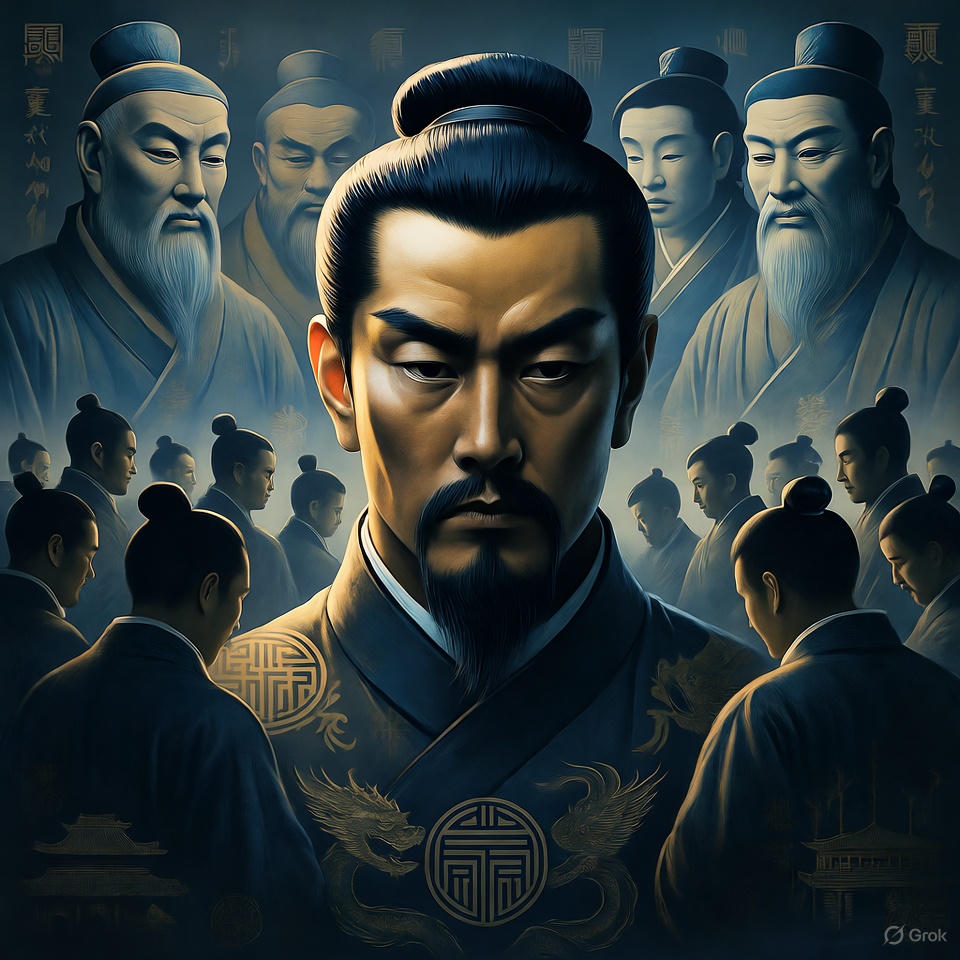
From Power Dependency to Collective Silence — A Reflection on the Deep Psychological Mechanisms of Chinese Culture
Among all civilizations, the Chinese people’s endurance and obedience to power are almost unparalleled. We are not merely afraid of authority—we are drawn to it, depend on it, even addicted to it. This is not simple cowardice, but a deep-seated psychological attachment shaped by culture: the oppressed learning to worship their oppressors.
It is a kind of Stockholm syndrome at the civilizational level—you beat me, and I think it’s for my own good; you take away my freedom, and I kneel more willingly. The root of this mentality lies not only in politics but in the long-standing emotional bond between patriarchy and the nation-as-family. Power is not seen as external oppression, but as an emotional anchor, an identity, even a form of spiritual belonging.
History repeats this pattern endlessly. When the Qing army entered China and massacred cities like Jiading, within a decade people were praising the emperor’s “benevolence,” even treating the humiliating queue hairstyle as an untouchable ancestral custom. Qin Shi Huang burned books and buried scholars alive, forced millions to build the Great Wall, yet after his death, people longed for his unifying rule. This is not merely “slave mentality,” but a cultural mechanism of psychological survival—to worship the one who controls you, because obedience feels safer than rebellion.
In China, once an individual enters a group, individuality dissolves instantly.
Phrases like “the people are outraged” or “the masses are always right” replace personal judgment. Many so-called “popular movements” in history were not the awakening of the people but the manipulation of crowd psychology. From the Red Turbans and the White Lotus to the Taiping Rebellion—all ended as tragedies of mass hysteria.
Within the crowd, there is no reasoning, only imitation; no thought, only echo.
That is why Chinese history is not a story of democracy, but a cycle of mass frenzy followed by the rise of new strongmen. Ironically, those who truly possess knowledge often stay silent, while the loudest voices belong to those who least understand what they are talking about—a cultural version of the Dunning–Kruger effect.
Our culture rewards certainty, not doubt; rhetoric, not reasoning. The imperial examination system favored memorization over thinking: the better you recited clichés, the higher your chances of success. Thinkers like Li Zhi, Huang Zongxi, and Gong Zizhen—all of whom questioned orthodoxy—ended up persecuted or marginalized. Meanwhile, sycophants like Qin Hui or He Shen thrived. Thus emerged a “culture of rhetoric”—where saying the right thing is safer than saying the true thing.
Social jealousy reinforces this pathology.
When you achieve something, it’s not your enemies but your colleagues, friends, or even family who first drag you down. This is the “crab mentality”: when one crab tries to climb out, the others pull it back. Reformers like Wang Anshi and Zhang Juzheng both fell because their reforms offended entrenched interests. Even Confucius, despite his wisdom, was rejected and left wandering—because he was too right for his own time.
In such a society, excellence becomes a sin. People learn to hide their talent, to stay quiet, to play safe. “Don’t stand out, don’t take responsibility, don’t speak the truth”—not life advice, but survival code.
Chinese culture struggles to handle ambiguity.
It tends toward binary extremes—black or white, friend or foe, loyalty or betrayal. The Book of Changes once taught the harmony of yin and yang, yet later it was reduced to “good versus evil,” “gentleman versus villain.” This dualistic mindset shapes both thinking and language. Disagreement is not debated—it is condemned.
Language, which should serve logic, became an art of performance.
Chinese rhetoric prizes rhythm and elegance over reasoning and evidence. Confucius spoke in ambiguities; Laozi in riddles. Over time, vagueness became wisdom, and clarity became rudeness.
The result: the more obscure you are, the deeper you appear; the more honest you are, the more trouble you invite.
Gradually, language ceased to convey facts—it conveyed loyalty. Telling the truth became dangerous; speaking in empty slogans became safe.
Another symptom is the scapegoat complex.
Whenever problems arise, blame falls on individuals, never on systems.
The fall of the Ming dynasty was blamed on Emperor Chongzhen, Qing corruption on He Shen, the late Qing collapse on Empress Dowager Cixi—yet few questioned the structural rot behind them.
Each failure produces a villain to hate, not a system to reform. This keeps society stuck in the same psychological loop—rage without reflection.
This culture of external blame permeates daily life.
Leaders blame subordinates, parents blame children, governments blame citizens’ “low quality.” Everyone deflects responsibility; no one looks inward. Over generations, we lost our ability to self-examine—the first step of any genuine civilization.
The Chinese are brilliant at opposing, but poor at building.
We can argue endlessly, but rarely construct workable solutions.
Factional strife—the Donglin Party, the Eunuch Wars, the Literati Purges—all testify to our passion for destruction over creation. Every generation of intellectuals repeats the same tragedy: enthusiasm, disillusionment, and finally silence. Thus emerges a national aphasia—the most observant minds lose their voices.
This silence is not peace; it’s paralysis.
From childhood, we’re taught not how to express, but how to read faces; not how to reason, but how to avoid offense.
Telling the truth becomes impolite, lying becomes etiquette.
History punished those who spoke truth—Wu Zixu was executed, remonstrators exiled, truth-tellers silenced. Over time, we learned that silence is safer than honesty.
A nation that cannot express itself can never truly understand itself.
This is not the fault of one generation, but of a thousand-year cultural mechanism.
Today, we chant “cultural confidence,” yet we rarely speak of cultural diagnosis.
If we refuse to face these deeper pathologies—our dependence on power, our fear of dissent, our addiction to conformity and self-censorship—then “confidence” becomes just another illusion.
The Chinese are not evil, merely overtrained in endurance, too used to seeking safety in suppression.
Healing will not come from slogans, but from courage—the courage to admit that something is wrong, and to start thinking again.
Cultural recovery begins the moment we dare to speak the truth.
End
原文
我们为何害怕真话:一个民族的文化心理诊断书
从权力依附到集体失语——对中国文化深层心理机制的反思
中国人对权力的忍耐与服从,在世界范围内几乎独一无二。我们并非单纯惧怕权力,而是亲近它、依附它,甚至沉溺其中。这并不是懦弱,而是一种被文化塑造出的心理依恋——一种“被压迫者崇拜压迫者”的机制。正如斯德哥尔摩综合征那样:你越打我,我越觉得你是为我好;你越剥夺我,我越安心地跪下。这种心态的根源,不只是政治,而是几千年来对“父权—家国一体”的深层情感依附。它让权力不再是外在的压迫,而变成了情感的寄托、身份的认同、甚至灵魂的归宿。
历史上,我们一次又一次地见证这种循环。清兵入关时屠城无数,嘉定更是血流成河,但十年不到,百姓便开始颂扬“圣君仁政”;留辫子的羞辱,也成了“祖制不可废”。秦始皇焚书坑儒、役使万民筑长城,暴政极盛,百姓未起义,反而在其死后怀念“大一统”。这不是奴性,而是文化内化的心理逻辑——被压迫者学会了崇拜压迫者,因为那才是“安全的生存方式”。
在中国,一旦人进入群体,就会迅速失去个体。
“大家都觉得”“人民的眼睛是雪亮的”,这些话语听似正义,实则剥夺了每个人独立判断的权利。历史上那些看似来自“民意”的运动,往往是群体心理被操控的产物。红巾军、白莲教、义和团、太平天国——哪一场不是情绪失控的悲剧?洪秀全利用救世主的幻象,把盲信转化为战争,最终是数千万人的死亡和社会的重创。
群体中没有理性,只有模仿;没有思考,只有附和。于是历史在“群情沸腾与强者上位”的循环中原地打转。更可怕的是,那些真正有见识的人往往沉默,而最敢发言、最坚信自己正确的,却往往是无知者。这就是达克效应的文化版:能力越低的人,越自信;越浅薄,越响亮。
这种文化奖励的,不是怀疑与谦逊,而是“立场坚定”。封建时代的科举如此,读书人越会背套话,越能中举;真正有思想的人,往往下场凄凉。李贽批判儒家伪道德,被诬为邪说;黄宗羲有启蒙思想,却终身无施展之地;龚自珍主张变法,反被排挤出京。相反,李林甫、秦桧、和珅之流,善于逢迎与话术,却一路高升。久而久之,中国形成了一种“话术文化”:真理要小声说,废话最安全。
社会嫉妒和排挤机制,进一步加深了这种心理病态。
当你做出一点成绩,最先来踩你的往往不是敌人,而是同事、朋友、甚至家人。
这就是典型的“螃蟹心态”——一笼螃蟹里,只要有一只想爬出去,其他的就会把它拽下来。王安石变法、张居正改革,都在触动既得利益后被群起攻之;孔子周游列国,终身不得重用,不是因为思想不伟大,而是因为“说得太对”。在这样的文化环境中,出头不是功德,而是罪孽。聪明人学会藏拙,才能生存。于是社会逐渐演化出一条潜规则:不要锋芒毕露,不要承担责任,不要讲真话。
中国文化最难面对的,是模糊与复杂。
我们习惯非黑即白、非友即敌,几乎没有中间地带。
《易经》本倡阴阳互补,但后人简化为“君子与小人”“正与邪”。这种二元思维贯穿历史,也支配着语言。当你说出不同意见,不是被反驳,而是被扣帽子。这种语言暴力,不只是懒惰,更是对思考的封杀。一个没有中庸但又无理性的社会,只能在极端与盲从之间摇摆。
语言本该是逻辑的载体,但在中国,它成了修辞的艺术。我们擅长排比、对仗、格律,却缺乏推理、论证与证据。孔子语焉不详,老子言辞含混,久而久之,“含糊”成了智慧,“直白”成了冒犯。结果是——越模糊的表达越被视为有深意,越清晰的表达越可能得罪人。久而久之,我们的语言不再传递事实,而只传递态度。讲真话要小心,讲空话最安全。
这种文化的另一个症状,是“替罪羊心理”。
出了问题,总有人背锅,但永远不是制度。明朝亡了怪崇祯,清朝烂了骂和珅,清末崩溃怨慈禧,却少有人质疑文化结构本身。每当改革失败,人们指责“奸臣走狗”“汉奸卖国”,而不是反思集体心态。于是整个民族在“找坏人”的循环中自我麻醉,永远不会真正治病。
这种推责文化延伸到生活的每一层:领导失误归咎下属,父母过失怪孩子,国家问题怪民众素质。人人都在推卸责任,却无人敢直视自己。久而久之,社会丧失了最宝贵的品质——自我反思。
中国人最擅长的,是反对。
我们会猛烈地批评别人,却几乎不会建设性地提出方案。
历史上的党锢之祸、东林党争,都是“自毁式正义”。知识分子一代代重复同样的宿命:起初热血,继而怀疑,最后沉默。久而久之,文化患上了“失语症”——越有见识的人越不说话。
这种沉默不是谦逊,而是系统性的瘫痪。
中国人从小被教的不是如何表达,而是如何察言观色;不是如何陈述观点,而是如何避免得罪人。于是,说真话成了失礼,说假话成了礼貌。伍子胥掘楚王墓而死,魏征因唐太宗庇护方得直言。敢言者的命运,早已告诉后人——沉默比真话更安全。
一个民族如果不能自我表达,就无法真正成为自己。
这不是一代人的问题,而是千年文化机制的结果。
今天我们谈“文化自信”,却很少敢谈“文化诊断”。
如果不敢正视这些深层的心理病灶——权力依附、从众崇拜、逻辑缺失、语言失真、推责文化与群体失语——那么“文化自信”只是一种新的幻觉。
中国人不是坏,只是太习惯于在压抑中寻找秩序、在妥协中寻求安全。
真正的疗愈,不在口号,而在勇气——承认我们有病,并开始思考如何治。
文化的康复,从敢于说真话那一刻开始。