Recently, I came across a new term spreading across Chinese social media — “Ligong Mentality” (力工思维). The phrase instantly caught my attention. It’s humorous on the surface, yet deeply revealing underneath.
For a long time, this ancient land seems never to have experienced a complete ideological enlightenment. Some pre-modern intellectual foundations have always lingered beneath the surface, quietly shaping the way people think. Then, only a few days later, an unmistakable signal appeared — and that signal is precisely the “Ligong Mentality” we are talking about today.
Some might ask: Does the rise of the Ligong Mentality mark the beginning of an ideological enlightenment?
I would say — yes, in a certain sense. Although it sounds abstract, this wave of thought, represented by the “Ligong Mentality,” indeed carries the faint glimmer of enlightenment. The speed at which the concept was censored after it appeared also indirectly proves that those behind it are not, as some might claim, “useless people.”
Originally coined as a joke, a piece of internet slang for mockery, the term gradually detached itself from that original humorous context. Once it came into existence, it was destined to collide with the most fundamental operational logic of this country, overturn certain thousand-year-old social assumptions, and deconstruct the heaviness of the entire social order.
This might be the latest episode in the long-running “historical script” — as fascinating and as unpredictable as ever. Today, let us try to dissect the logic of this script: what does the rise of “Ligong Mentality” signify, what underlying logic drives it, and how might it evolve in the future?
I. What Is “Ligong Mentality”?
“Ligong Mentality,” or what some jokingly call the “Ligong All-in Law,” is not a particularly novel or profound idea. It refers to a large group of men who see “finding a wife and having children” as the sole purpose of their existence.
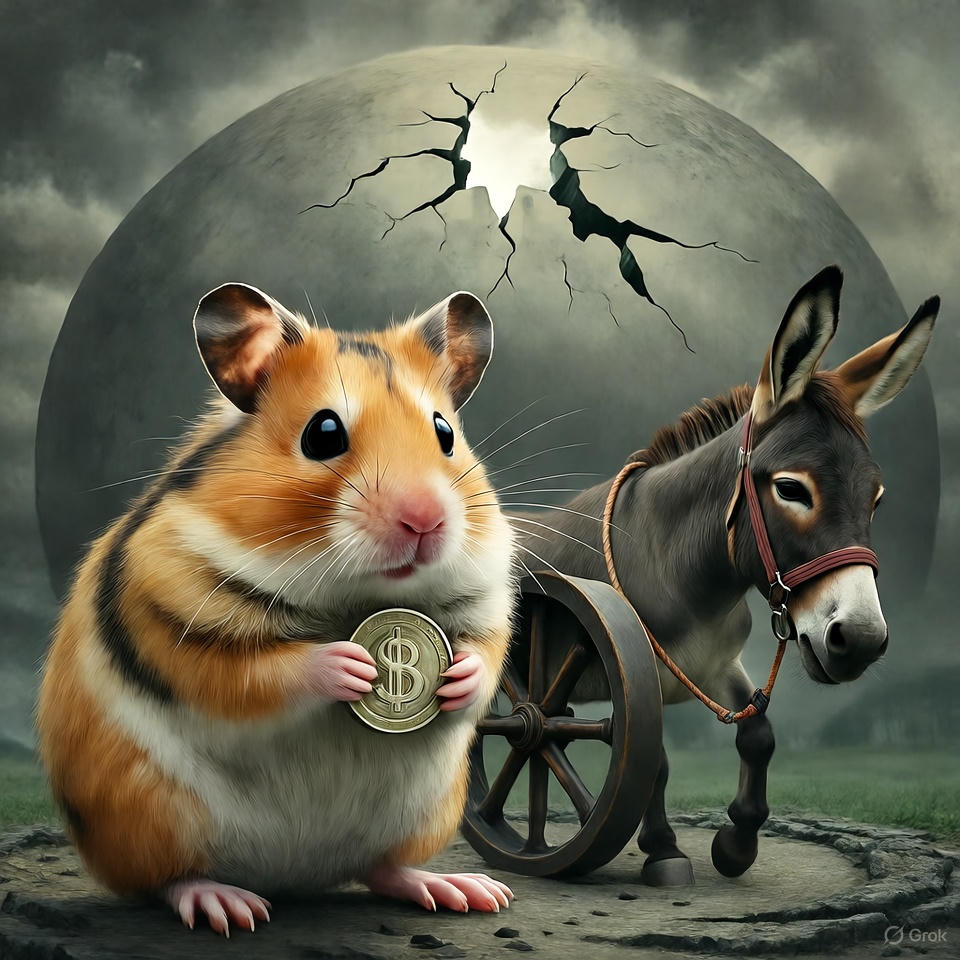
To achieve this, they believe there is only one path: make money, and save money — as much as possible. They work tirelessly, cutting every possible expense. If one lunchbox costs 4.5 yuan and another costs 5, they’ll never choose the more expensive one. Like hamsters hoarding food, they carry every saved coin back to their little burrows, preparing to “go all in” — to wager everything — when the time comes to get married.
Many seem to live their entire lives simply as instruments for the purpose of marriage, reproduction, and continuation of the family line. This kind of person is not rare; they are everywhere. Similar terms have appeared before in Chinese online discourse — “tool people” (工具人, gōngjùrén), “human minerals” (人矿, rénkuàng), and so on. Each carries a slightly different emphasis, but their core meaning is essentially the same.
So, one might ask: what’s the essential difference between Ligong, Tool Person, and Human Mineral? How can this be elevated to the height of ideological enlightenment?
The crucial difference lies here:
“Tool Person” and “Human Mineral” are descriptive results — they describe the outcome of social alienation.
“Ligong Mentality” is the underlying mindset, the cause of that alienation.
One might say: it is precisely the Ligong mentality that produces human minerals and tool people. The process from “Ligong” to “Tool” to “Mineral” is the process of continuously losing one’s subjectivity — the gradual deepening of human alienation.
Beyond that, the term itself isn’t particularly profound. After all, it was born as satire.
II. The Power of a Concept
In social transformation, whether a term is profound or not doesn’t really matter. What matters is its impact — what kind of reaction it sparks in the public consciousness from the moment it’s born to the moment it spreads.
It’s like a piece of art: its true value lies not in technical mastery, but in the emotional spark between the creator and the audience.
Take Van Gogh, for instance. His paintings are now sold for astronomical prices, not because his technique was unparalleled, but because his art bore distinctive traits. People sympathized with his tragic, impoverished life; novels and films romanticized his suffering; and of course, capital speculation played its part. All these elements together forged his near-mythic status.
To be honest, I love some of Van Gogh’s paintings — but let’s be real: were there not countless others who painted just as well, or even better?
Social trends of thought operate in much the same way. They emerge not because of the inherent brilliance of a single phrase, but because the societal atmosphere is ready for them. When a certain collective sentiment becomes increasingly restless and visible, a symbolic term will inevitably be born.
It doesn’t matter whether that term is called “Ligong Mentality” or “Linong Mentality.” What matters is that, once it appears, the public interprets it, expands its meaning, and through that collective process, it in turn begins to reshape society itself.
This is a self-reinforcing cycle — and it marks an important turning point in any era of transformation. And now, we have reached precisely such a turning point.
III. The First Spark
When a society has long been piled high with dry branches and dead leaves — metaphorically speaking — the first match that falls upon it need not be dazzling in itself. The key lies in where it lands.
Once that spark touches the tinder, it begins a chain reaction — the “single spark that starts a prairie fire.” Even if it smolders quietly beneath the surface, invisible to most, it is a symbolic event not to be ignored.
The ultimate outcome may exceed imagination, but one thing is certain: it follows a logical trajectory.
IV. The Collapse of the “Ligong Model”
The emergence of “Ligong Mentality” represents the public’s rejection of the “Ligong model.”
Those who hold this mindset occupy a position roughly equivalent to that of a donkey turning a millstone — endlessly circling, laboring without direction, their effort converted into someone else’s gain.
To be called a “Ligong” is not a compliment. It implies a defect — either in intelligence or in worldview.
But what does rejecting the “Ligong model” really mean? Interpreted more deeply, it signifies a questioning of the entire social contract.
V. The Broken Promise
In the traditional social narrative, there has always been one core belief:
As long as you endure hardship and work hard, you will live a happy life.
“No cross, no crown,” as the Western proverb goes.
This can be understood as society’s promise to the individual — an unwritten contract. Although not signed by any specific person, the “Party A” in this contract can be seen as society as a whole, especially its rule-makers and power-holders.
The more people believe in this contract, the more they will follow the rules, lower their heads, and work diligently — allowing society to function at low cost.
But now, this path has proven unreliable.
More and more real-world experiences are teaching people a bitter truth:
After the storm, there is no rainbow — only more storms.
Working hard no longer guarantees financial stability. The labor market grows ever more involuted (卷, juǎn) — everyone competing harder for diminishing returns. Wages shrink, or are delayed. Saving money doesn’t guarantee marriage; marriage doesn’t guarantee happiness. Some lose their savings to bride price scams (彩礼, cǎilǐ). Some end up falsely accused or humiliated.
Even after one fulfills all the so-called obligations — marriage, child, property — none of it necessarily brings happiness, freedom, or dignity.
So people start asking, “Why should I still endure hardship?”
VI. The Parable of Futility
It’s like a story from a martial arts novel — the legendary “Sunflower Manual” (葵花宝典). On the first page, it says:
“To master this technique, one must first castrate oneself.”
After gritting one’s teeth and doing it, one turns to the second page:
“Even after castration, success is not guaranteed.”
Cursing silently, one turns to the third page, only to read:
“If not castrated, one can also succeed.”
By this point, anger turns into clarity. And in reality, many “Ligongs” have already seen that third page.
That’s why this narrative — the promise of hard work leading to happiness — has collapsed.
VII. The First Step of Awakening
What follows is predictable: countless ordinary people quietly withdraw from the contract.
They no longer believe in the promise of future rewards. They only care about how to spend their current wages — living what’s now called the “lying flat” (躺平, tǎngpíng) lifestyle.
At this stage, the social trend has completed its first step: questioning the prescribed life path.
VIII. The Next Question
So what comes next?
Once the officially instilled ideology — “endure hardship and diligence will lead to happiness” — is proven unreliable, what alternatives remain?
Should one lie flat completely? Or seek another path?
And if one changes paths, can the goal still be achieved?
Eventually, a deeper question arises:
“What goal does my life actually need?”
Yes — what do I truly want?
Why must I find someone to marry?
Gradually, people realize that “earning money, getting married, and having children” may not be universal truths, but rather socially assigned missions, sacred and unquestionable only because they’ve been drilled into us since childhood.
This goal itself may be an implanted program — something we were conditioned to believe is mandatory in life.
At this point, many inevitably recognize that marriage and childbirth are not necessarily suitable for everyone. They are not sacred, nor mandatory — merely one among countless options of living.
Then, they begin to reflect on the goal itself — and further question the very meaning of the family.
IX. When the Family Narrative Collapses
Once the meaning of family itself begins to be questioned, the traditional “family–state–universe” narrative — “the family is the smallest country, and the country is the largest family” — inevitably starts to shake.
Especially those lofty slogans like “national rejuvenation” and “historical mission”, once bestowed upon individuals as spiritual banners — are they also just implanted programs, meant to make us work like donkeys at the millstone, circling endlessly, with little reward?
The moment one starts to think in this way, the conclusion becomes almost predetermined. There is no second possibility.
As the “Ligong Mentality” continues to ferment, it will inevitably deconstruct those grand narratives that once united people’s hearts — step by step.
“I” am just “I.” I am no longer part of a “community of shared destiny” with the nation. At best, the relationship is purely transactional.
The country can now be seen as an employer — a “boss.”
“You pay me, I work for you. Don’t talk about feelings — they’re too expensive.”
X. From Sacred State to Secular Contract
When the nation — or to speak more directly, the regime — transforms from a sacred existence into a “boss,” patriotic behavior also changes.
It ceases to be an innate emotion and becomes a cost–benefit calculation.
Every policy introduced by the state, every call from the government, in this atmosphere, will be interpreted as yet another attempt by “the boss” to “draw pies in the sky” (画饼, huà bǐng) — making empty promises to laborers to keep them working.
The relationship between the state and the individual thus shifts from one of subordination to — if not equality — at least mutual negotiation.
This change will not erupt as a loud, revolutionary storm. More likely, it will resemble a frog boiled in warm water — gradual, silent, yet irreversible.
What might the next step be? Perhaps a twenty-first century version of “non-violent non-cooperation.”
XI. Why the “Ligong Mentality” Was Banned
And so, the question arises: Why was the term “Ligong Mentality” banned?
The answer is now clear.
This is no longer about chipping away at the walls or removing a few bricks — it’s about placing explosives under the foundation.
The same logic applies to the so-called “lying flat philosophy” (躺平学, tǎngpíng xué): not buying houses, not marrying, not having children, not consuming.
Eventually, all of these ideas will reach the same critical point — and thus, they must all be censored thoroughly.
To be fair, the reaction to censor such terms was swift and efficient.
But was it useful?
Not at all.
You can erase the phrase “Ligong Mentality,” you can delete everything related to lying flat, but the process that has already begun will not pause just because a particular word disappears.
It’s like a building that’s already collapsing. The structure is riddled with cracks, and you quickly paint over them to make the walls look new — what good does that do?
You can ban all the words you want, but you cannot suppress the thoughts already living in people’s minds.
Of course, censorship must still happen — otherwise, this month’s KPI would not be met.
XII. The Question of Enlightenment
Finally, let’s talk about ideological enlightenment.
What was the historical Enlightenment? It was the rise of scientific thinking, rational spirit, and — most importantly — the spread of humanism.
It shifted focus from the grand narratives of the time — God and King — toward ordinary human beings, making man himself the ultimate purpose.
So, does the “Ligong Mentality” qualify as something so grand as “enlightenment”?
I believe it does.
It carries the same questioning spirit toward traditional meanings of life.
Humans are not born to serve God — nor are they born to serve “grand narratives.”
Some might say: “This term is just about gender relations, not exactly lofty.”
True. But don’t forget — the prelude to the Enlightenment was the Renaissance.
And what did the Renaissance revive? Greco-Roman culture.
Painters at that time adored depicting ancient gods. Among so many deities, which one did they paint most often? Venus — the Goddess of Love and Beauty.
Why?
Because only when painting the “Goddess of Love” could they legitimately paint her nude.
Let’s not romanticize it too much — as someone who once painted seriously, I understand how it works. The painter paints happily; the audience watches with equal joy. It’s that simple.
XIII. From Venus to Enlightenment
Every social trend of thought erupts from the point most relatable to the masses — the most visible, the most emotionally charged.
It doesn’t matter where it begins — what matters is where it points, and what it becomes.
From admiring Venus’s bare form to arriving at the Age of Enlightenment — what’s the problem with that? None at all.
Similarly, from joking about “Ligong Mentality” to questioning the meaning of labor, family, and state — the journey may be unintentional, but the direction is unmistakably forward.
XIV. The Invisible Turning Point
A few years ago, I had a vague sense that something was shifting beneath the surface.
At that time, it was only intuition — a hazy feeling.
But when the term “Ligong Mentality” appeared, and I witnessed the public’s collective reaction, I became certain: an ideological awakening is happening.
It has already reached a milestone — quietly, almost unnoticed.
Its difference from past awakenings lies in this:
It is no longer the self-entertainment of intellectual elites within small circles.
It is a nationwide enlightenment, involving — or at least sweeping along — the majority of young people.
Because it involves so many, it will take time.
During this process, new terms will constantly be invented, new concepts will emerge and fade, wrong paths will be taken, extremes may occur — but regardless of where it goes, the process has already begun.
XV. The Iron House
So, what does all of this mean?
Perhaps it means that the “iron house,” once thought to be sealed and indestructible, may finally be welcoming its first ray of dawn.
The “iron house” metaphor comes from the writer Lu Xun. He once compared Chinese society to an airless iron house: everyone inside was asleep, suffocating without knowing it.
He asked — if you wake one person, that person will suffer knowing he’s doomed, while everyone else keeps sleeping peacefully.
So should you wake them?
But what if the house isn’t entirely sealed anymore? What if cracks have already appeared, and through them, faint light is seeping in?
The “Ligong Mentality,” in that sense, is not merely a joke or a rebellion.
It is a crack in the iron house — a thin fracture through which awareness, however faint, begins to shine.
XVI. The Unfinished Enlightenment
This awakening is unfinished — and perhaps it will remain so for a long time.
There will be backlashes, suppression, and co-optation. There will be cynicism, fatigue, and silence.
But none of that changes the fact that the process has started.
From “Ligong Mentality” to “lying flat,” from the questioning of marriage to the skepticism toward national myths — all these fragments belong to the same great shift: the rediscovery of human self-awareness within an immense, dehumanizing structure.
The Enlightenment of the 18th century taught humanity to dethrone God and King.
The unfinished enlightenment of today teaches us to dethrone the System — to stop worshiping labor, productivity, and sacrifice as sacred.
When an ordinary worker begins to ask,
“Why must I keep enduring hardship for promises that never come true?”
— that is the spark of modern enlightenment.
It may not look heroic. It may come wrapped in memes and sarcasm. But it is no less profound.
XVII. Closing Thoughts
The “Ligong Mentality” is not about despair — it is about seeing clearly.
It does not call for destruction; it calls for awareness.
The moment people realize that the meaning of life is not to serve systems, but to reclaim their own subjectivity, a quiet revolution begins.
No slogan can capture it. No censorship can erase it.
And that is precisely why it matters.
Perhaps this is how enlightenment appears in our time — not as thunder or lightnings, but as a whisper.
Not as philosophers in salons, but as millions of silent individuals, each asking themselves one simple question:
“What if I stop playing the game?”
When enough people ask that, even the strongest iron house will begin to tremble.
原文
力工思维:悄然兴起的社会思潮与未竟的启蒙(一)
今天我在中国国内的网络上了解到一个新名词——“力工思维”,觉得这个词很有意思,和大家分享。
长久以来,在这片古老的土地上,似乎始终没有经历过一场真正的思想启蒙,因此总保留着一些前现代的思想底色。结果没过几天,一个明显的信号真的出现了——那就是我们今天要聊的“力工思维”。
有人可能会问:力工思维难道意味着思想启蒙的到来?是的,虽然听起来有点抽象,但以“力工思维”为代表的这一波思潮,确实带有某种启蒙的意味。从它一出现就被迅速封禁的速度来看,也能侧面印证它背后的人,并不全是“废物”。这个原本用来调侃的词,一旦被发明出来,就逐渐脱离原本的语境,注定会冲击这个国家最根本的运作逻辑,颠覆千年来的某些共识,解构整个社会的沉重感。这或许是最新一期的“历史剧本”,像过去一样充满趣味,也像过去一样难以预测。今天,我们就来拆解一下这个剧本的逻辑,探讨它出现意味着什么、它的底层逻辑是什么,以及未来可能如何演进。
“力工思维”,或者说“力工梭哈定律”,其实并不是一个多新鲜、多高深的概念。它指的是很多男人把“找个媳妇儿、生个孩子”视为人生唯一的追求,而实现这一目标的路径只有一条:挣钱、攒钱。他们一边辛苦工作,一边尽量省钱——有四块五的盒饭,绝不吃五块的。他们像仓鼠一样,把省下的每一分“家当”叼回洞里藏好,只为在寻找配偶时,能一次性“梭哈”出足够多的财产。很多人一辈子,似乎就是作为“娶妻生子、传宗接代”的工具而存在。这样的人数量相当多,而形容这类群体的概念也不止一次出现过,比如早期的“工具人”“人矿”等等。这些词侧重点略有不同,但内核其实差不多。
那有人可能要问:力工、工具人和人矿,看起来有什么本质区别吗?怎么就扯到“思想启蒙”的高度了呢?特别之处在于:“人矿”和“工具人”更多是客观描述,是一个结果;而“力工思维”是一种心智模式,是原因。可以说,正是“力工思维”这种原因,造就了“人矿”和“工具人”这样的结果。从“力工”到“工具”再到“矿物”,是一个主体性不断丧失、人的异化不断加深的过程。除此之外,这个词本身其实谈不上多深刻,毕竟本意是调侃。
在社会变革中,一个概念是否深刻并不那么重要,重要的是它会带来什么影响,是它在传播过程中会与社会大众产生怎样的“化学反应”。就像一件艺术品,最重要的从来不是技法有多精妙,而是作者与观众之间擦出的火花。比如梵高的画之所以能拍出天价,并不是因为他的画是世界第一,而是因为他的作品有鲜明特点,观众对他贫困潦倒又极具故事性的一生抱有同情,再加上小说、电影的渲染和资本的炒作,这一切共同成就了他的“神位”。说实话,梵高的作品虽然我很喜欢,但画得比他好的人难道没有?一种社会思潮更是如此。它的诞生首先来自于社会整体的氛围。当某种思潮越来越明显、越来越躁动时,早晚会孕育出一个标志性的词汇。至于这个词叫“力工思维”还是“力农思维”,并不重要。重要的是,这个词出现后,经过大众的解读和内涵的丰富,最终会反过来影响整个社会。这是一个不断自我强化的过程,也是大时代变革中相当重要的节点。而现在,这个节点来了。
当社会已堆满厚厚的枯枝烂叶,那落下的第一根火柴本身不需要多耀眼,关键在于它落在了易燃物上,启动了星火燎原的第一步。哪怕最初只是在看不见的地方阴燃,这也是一个不该被忽视的标志性事件。最终结论或许会超出想象,但不管怎样,它肯定是符合逻辑的。
“力工思维”这个词的出现,代表大众否定了“力工模式”的可行性。抱有这种思维的人,地位约等于“拉磨的驴”。所以,当个“力工”并不是一件光彩的事,意味着这个人存在某种缺陷——无论是智力上还是三观上。而否定“力工模式”意味着什么?再往下解读,就是对整个社会契约的有效性产生了质疑。在传统叙事中,有一个核心内容:只要你吃苦耐劳,就能过上幸福生活——“不经历风雨,怎么见彩虹”。这可以看作是社会对个人的一种承诺,也可以说是一种契约。这个契约虽然不是和具体的某个人签订的,但“甲方”可以理解为整个社会,尤其是社会的规则制定者。越来越多人相信这个契约,才会遵守规则、埋头苦干,社会也才能以较低成本运转。但现在,这条路径已被证明不可靠。
越来越多的现实经验告诉我们:风雨之后没有彩虹,只有更大的风雨。吃苦不一定能挣到钱,工作越来越卷,工资越来越少,甚至拿不到工资。拿到工资不一定能攒下钱,攒下钱不一定能结婚,可能被骗彩礼还被告强奸。结了婚不一定能生孩子,生的孩子不一定是自己的。即便完成了这一切,也跟幸福、自由、尊严没有半毛钱关系。那么人们不禁要问:我为什么还要吃苦?
这就像拿到一本《葵花宝典》,翻开第一页写着:“欲练神功,必先自宫。”等一咬牙自宫了,翻开第二页:“即使自宫,未必成功。”这时心里已经开始骂娘了。强忍怒气翻开第三页,几个大字:“如不自宫,也能成功。”问题是,现在很多“力工”已经看到第三页了。所以,这套叙事破产了。
接下来可预见的是,无数默默无闻的人会选择退出这个契约。他们不再相信未来会有更美好的回报,只在乎当下的工钱该怎么花,过上所谓的“躺平生活”。至此,社会思潮完成了第一步:对人生路径的质疑,该怎么办?既然官方意识形态灌输的“吃苦耐劳,过上幸福生活”已被证明不可靠,那么下一步该怎么做?是完全躺平,还是换一条路走?换一条路能不能达到目的?进而会思考:我的人生到底需要什么样的目标?
是啊,我到底想要什么?为什么一定要找个人结婚?之后,他们就会意识到,“挣钱结婚生孩子”这件事,可能只是被社会赋予的、神圣不容置疑的人生意义。这个目标本身,或许就是一个被植入的程序,是我们从小被规训以为是人生的“必选项”。这时,一定会有相当比例的人认识到:结婚生子不见得适合自己,至少不是必须的,更不是什么神圣不可置疑的存在。它只是人生无数选项中,既不必须也不特别的一种而已。然后,他们会反思这个目的本身,进而质疑家庭存在的意义。
当家庭的意义被质疑之后,传统的“家国天下”叙事——“家是最小的国,国是最大的家”——也会开始被动摇。尤其是所谓的“民族复兴”“历史使命”,这些曾经被赋予个体的精神旗帜,是不是也是一种忽悠人努力拉磨却没什么回报的“植入程序”?只要你开始这样思考,答案就几乎是注定的,不会有第二种可能。
当“力工思维”持续发酵,必然会一步一步解构那些曾经凝聚人心的宏大叙事。“我”就是“我”,和国家不再是“命运共同体”,彼此之间最多是一种纯粹的交易关系。国家也许会被看作一个雇主、一个老板——“你付钱,我干活,别谈感情,太伤钱了。”
当国家,或者说政权,从一个神圣的存在变成一个“老板”,爱国行为就会从一种内在的情感,变成一种需要计算成本收益的选项。国家出台什么政策,政府发出什么号召,在这种氛围下,就会被视作“老板又开始给泥腿子画饼了”。国家与个人的关系,就会从原来的从属关系,变成不说平等、至少也是对等的关系。这种改变带来的,虽然不是激烈的革命爆发,但更可能是一种温水煮青蛙式的、静默却不可逆转的变化。再往前走一步会是什么?也许是21世纪的“非暴力不合作”。
所以,“力工思维”为什么会被封杀?答案已经很明显了。这已经不是敲墙拆房子的问题,而是直接拿炸药炸地基了。包括那些“不买房、不结婚、不生子、不消费”的躺平学,早晚也会走到这一步,所以一样要被封得干干净净。不得不说,封杀的反应不算慢,效率也挺高。但有用吗?没什么用。“力工思维”,或者说任何与躺平相关的内容可以消失,但已经启动的进程不会因为失去某个名词而有任何停顿。这就像一栋楼要塌了,整个结构到处都是裂缝,你赶紧拿油漆把裂缝刷上,看起来崭新,有什么用?你可以封掉所有的词,但封不住人们心中无处不在的思潮。当然,封还是要封的,不然这个月的KPI就完不成了。
最后,我们谈谈思想启蒙。历史上的思想启蒙是什么?是科学思想、理性精神,最重要的,是人文主义的普及——把视线从当时的宏大叙事,比如上帝、国王,转移到普通人身上,让人成为目的。那“力工思维”够得上这么高大上的概念吗?我认为是够得上的。它同样包含对传统人生意义的质疑:人不是生来就为了侍奉上帝,也不是生来就服务于宏大叙事的。可能有人会说:这个词讲的不过是男男女女的关系,不登大雅之堂。确实,但别忘了,思想启蒙的前置步骤是“文艺复兴”。文艺复兴复兴的是什么?是希腊罗马文化。比如,画希腊罗马的神仙。那么多神仙,画家最喜欢画谁?最喜欢画维纳斯(阿芙洛狄特),为什么?因为只有画“爱与美之神”,可以光明正大地不穿衣服。别说得那么高大上——作为一个正经画过画的人,我是知道怎么回事的。画家画得心情愉悦,观众看得兴致勃勃,就这么简单。
任何社会思潮,都会从大众最关注、人民群众最喜闻乐见的那个点开始爆发。不在于它从哪儿开始,而在于它指向哪里,最终会变成什么。从爱看维纳斯光屁股,到最后的思想启蒙,有毛病吗?没毛病。其实在几年以前,我就有一种朦胧的感觉:事情正在起变化。但那时更多是一种直觉,说不上有多明确。直到“力工思维”这个词出现,以及后来大众的反应,我才确定:思想启蒙正在发生,而且是在大多数人都没有察觉的情况下,已经走到了一个里程碑式的节点上。它与过去的不同点在于,这不再是知识精英在小范围内的自娱自乐,而是一次全民式的、至少是裹挟了大多数年轻人的启蒙。只不过,涉及这么多人的事情,时间会很长。期间会不断有新鲜概念被发明,新的词汇在流行,会有歧路,也可能走极端。但不管未来怎样,至少当下,已经在路上了。这是不是意味着,一间封闭且万难破毁的铁屋子,即将迎来第一缕启蒙的曙光!