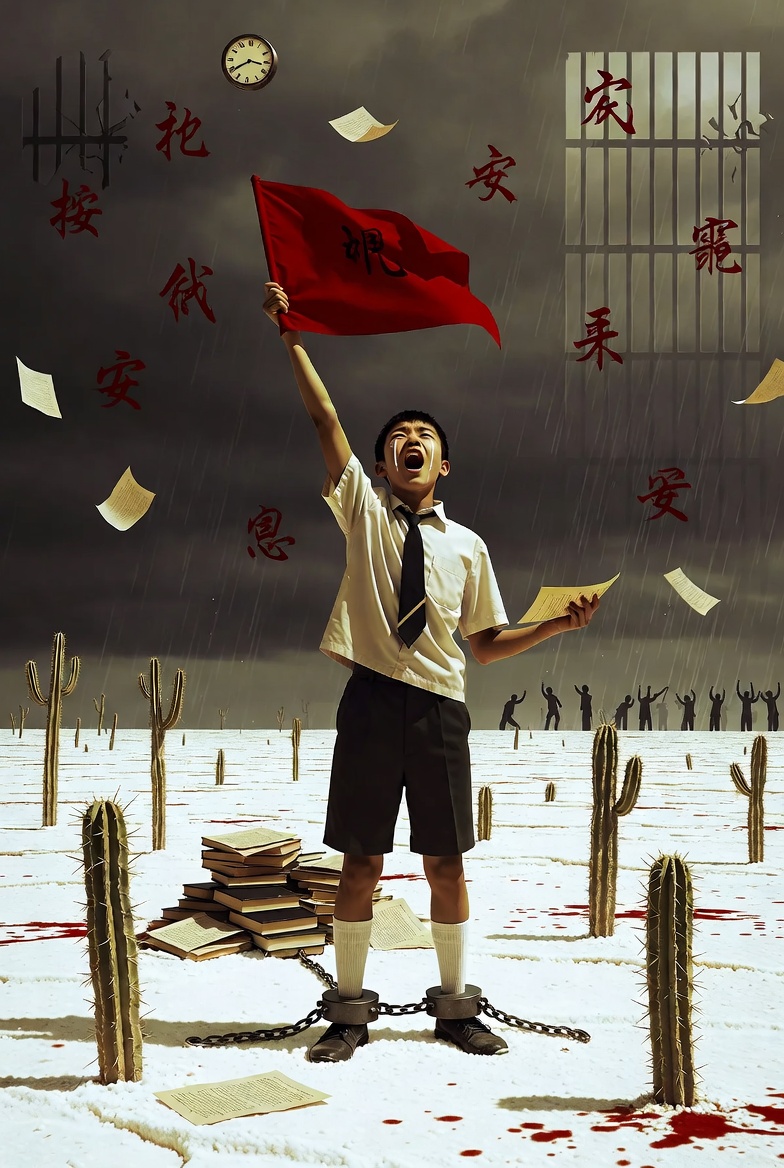
There’s something strange going on.
Logically, the more painful something is, the more people should oppose it.
But in reality, it often works the other way around.
Very often, the people who defend a system the most are the ones who have suffered under it the most.
You’ve probably seen it everywhere:
- “We studied 16 hours a day back then, and we turned out fine.”
- “If you don’t suffer now, you’ll suffer later.”
- “The world is supposed to be brutal. That’s just reality.”
Notice what these statements have in common:
They don’t question whether something is wrong.
They assume:
It’s supposed to be this way.
1. A Reality We Don’t Like to Admit
The world is changing fast.
Entire industries that once felt stable can collapse overnight.
Paths that used to guarantee success now lead nowhere.
But here’s the real issue:
The rules have changed, but people’s thinking hasn’t.
Many are still using outdated frameworks to explain a completely different world.
So you end up with something contradictory:
- Reality feels increasingly unstable
- Yet the explanations people give sound more confident than ever
2. When Bad Logic Starts Sounding Reasonable
Take layoffs in the tech industry as an example.
You’ll usually hear two types of reactions:
- “The economy is bad. Companies are cutting costs.”
- “If you got laid off, it’s because you weren’t good enough.”
The second one is clearly oversimplified.
But strangely, it often feels more convincing.
Why?
Because many people were raised to believe one core idea:
Every outcome is your personal responsibility.
Once that idea is in place, everything else follows:
- Structural problems become personal failures
- Economic shifts become individual shortcomings
And suddenly, these statements make sense:
- You’re poor because you didn’t try hard enough
- You failed because you weren’t strong enough
- You’re suffering because you’re not capable enough
It sounds empowering.
But only if you pretend the environment doesn’t exist.
3. How a Few Voices Shape the Image of Many
You might feel like people are becoming more extreme.
But that’s not necessarily true.
What’s more likely is:
You’re seeing the most visible minority, not the silent majority.
The internet amplifies extremes:
- The more outrageous → the more shareable
- The more shocking → the more memorable
Over time, your perception shifts:
Exceptions start to feel like the norm.
4. The Ideas You Never Question
Some beliefs are so deeply ingrained that we rarely examine them.
Take this one:
“No pain, no gain.”
It sounds harmless—even motivating.
But break it down, and you’ll see the assumptions behind it:
- Suffering is necessary
- Success must come through suffering
- If you fail, it’s because you didn’t suffer enough
That’s not just describing reality.
It’s prescribing it.
5. When Suffering Becomes Meaningful
This is where things get dangerous.
Once pain is given meaning, it stops being questioned.
Example 1: Overwork Culture
People often justify excessive work with lines like:
“Work hard while you’re young.”
Even when the work is inefficient or unnecessary,
it’s reframed as a matter of attitude.
Example 2: Education Systems
Ask people about high-pressure exam systems, and you’ll hear:
“It’s tough, but it’s fair.”
Push a little further, and it becomes:
“We had it worse. This is already better.”
Notice the shift:
- From acknowledging problems
- To defending them
Example 3: Parenting
Many people who experienced harsh discipline growing up say:
“It made me who I am.”
And just like that:
Harm becomes justification.
6. Why Do People Do This?
It’s not complicated.
1. They Don’t Want to Invalidate Their Past
If the system is flawed, then all that suffering might have been unnecessary.
That’s a hard thing to accept.
So instead, people choose to believe:
The pain had value.
2. Adaptation Feels Like Truth
Humans adapt.
Stay in any system long enough, and it starts to feel normal.
Even if it isn’t.
3. Hidden Superiority
There’s also a subtle psychological reward:
“I endured it. That makes me stronger than you.”
At that point, suffering isn’t just endured.
It becomes a filter.
7. The Irony
Many people believe they’ve “won.”
But often, they’ve just moved into a different version of the same system.
A student becomes a worker.
A worker becomes a manager.
And eventually:
They enforce the same rules they once suffered under.
8. So What’s the Real Problem?
If there’s one conclusion, it’s this:
The problem is not just the individual.
People are shaped by their environment.
In a system that rewards pressure, competition, and anxiety,
people will naturally internalize those values.
That’s not an excuse.
It’s structure.
9. One Last Thing
Understanding this doesn’t mean accepting it.
You might not be able to change everything right now.
But at the very least:
You don’t have to defend it.
And you definitely don’t have to romanticize it as
“necessary pain” or “the price of growth.”
Sometimes, it’s much simpler than that.
It’s just not right.
原文
为什么越痛苦,越有人为它辩护?
有个很奇怪的现象。
按理说,一个东西越让人痛苦,反对它的人应该越多才对。
但现实恰恰相反——
很多时候,最为它辩护的人,恰恰是被它折磨得最狠的那批人。
你只要在网上多看两天,就一定见过:
- “我们当年一天学16个小时,不也过来了?”
- “不吃苦,你以后吃什么?”
- “社会本来就是弱肉强食,有什么好抱怨的?”
这些话有个共同点:
它们不是站在“有没有问题”的角度说的,而是默认——
问题本来就该存在。
一、先说一个不太舒服的事实
这个时代变化很快。
快到什么程度?
前几年还被当作“铁饭碗”的行业,说没就没;
曾经被当作“人生标配”的路径,现在走一半就断了。
你会发现一件事:
规则在变,但人脑子里的规则没变。
很多人还在用十年前、二十年前那套逻辑解释今天的世界。
于是就出现一种很拧巴的状态:
- 现实越来越不合理
- 但解释它的语言,却越来越“理直气壮”
二、为什么离谱的东西听起来越来越“有道理”?
举个很具体的例子。
前几年互联网公司裁员的时候,有两种声音:
一种说:
“大环境不好,公司在甩人。”
另一种说:
“被裁说明你不够优秀。”
你仔细想想,第二种话其实逻辑很粗糙。
但它往往更容易被接受,甚至更“有说服力”。
为什么?
因为很多人从小被灌输一个非常稳定的逻辑:
一切结果,都是你个人的责任。
于是——
- 经济问题 → 变成个人能力问题
- 结构问题 → 变成努力程度问题
这套逻辑一旦成立,后面很多话就顺理成章了:
- 你穷,是因为你不努力
- 你失败,是因为你不够拼
- 你痛苦,是因为你不够强
听起来很励志,对吧?
但它有个前提:
必须假装环境不存在。
三、为什么少数人的极端,会变成多数人的印象?
很多人会有一种感觉:
“是不是大家都变得越来越极端了?”
其实未必。
更接近现实的情况是:
你看到的,是被放大的那一小撮人。
就像一个班里,有几个人干了特别离谱的事,
最后传出去的,不是“这个班大多数人很正常”,
而是:
“这个班的人都很离谱。”
互联网就是这么运作的:
- 越极端 → 越容易被传播
- 越刺眼 → 越容易被记住
久而久之,你就会产生一种错觉:
异常,变成了常态。
四、真正的问题,是那些你以为“理所当然”的东西
很多观念,其实你从来没认真想过,但它们一直在起作用。
比如这句:
“吃得苦中苦,方为人上人。”
乍一听没问题,甚至挺正能量。
但你把它拆开看,会发现它隐含了三层意思:
- 苦难是必要的
- 成功必须通过苦难获得
- 不成功,是因为你吃的苦还不够
这就有意思了。
它不是在描述现实,而是在规定现实应该是什么样。
五、当苦难开始“有意义”,事情就变了
再看几个现实里的例子。
1. 加班
很多人明明知道加班低效,但还是会说:
“年轻不拼,什么时候拼?”
于是:
- 本来可以优化的问题
- 被解释成“态度问题”
2. 教育
你去问很多人对考试制度的看法,他们会说:
“是苦,但没办法,这是最公平的。”
再往下聊,很快就会变成:
“我们当年更苦,现在已经很好了。”
你会发现一个微妙的变化:
- 从“承认问题”
- 变成“维护问题”
3. 家庭教育
很多人小时候被打,长大后反而会说:
“不打不成器。”
于是:
伤害,被解释成了必要。
六、为什么人会这样?
说白了,不复杂。
第一层:不愿意否定自己
如果承认这些东西是错的,就意味着:
- 过去吃的苦,没有必要
- 自己曾经的努力,不一定有意义
很多人接受不了这一点。
所以更容易选择:
把痛苦说成有价值。
第二层:习惯比真相更重要
人是会“适应”的。
当你长期处在某种环境里,你会慢慢觉得:
“这就是正常。”
就像长期待在一个压抑的地方,你不会第一时间想到离开,而是先学会适应。
第三层:一种很隐蔽的“优越感”
有些人其实不是在维护制度,而是在维护一种感觉:
“我熬过来了,我比你强。”
于是逻辑就变成了:
- 我能承受 → 说明它合理
- 你承受不了 → 说明你有问题
这时候,苦难就不只是苦难了,它变成了一种筛选工具。
七、最讽刺的一点
很多人以为自己“赢了”。
但实际上,只是换了一种形式继续被束缚。
就像有人从学生变成打工人,
再从打工人变成“管理者”,
最后做的事情是:
把自己经历过的那套,再复制一遍。
这时候,你很难说他是在反抗,还是在延续。
八、问题到底出在哪?
如果一定要说一句结论,那就是:
问题从来不只在个人。
人会变成什么样,很大程度取决于他所处的环境。
在一个鼓励竞争、放大焦虑的环境里,
人自然会变得更功利、更紧绷。
这不是借口,这是结构。
九、最后说点不那么好听的
理解这些,不是为了变得更“宽容”。
有些东西你可以暂时改变不了,
但至少没必要:
替它说话。
更没必要,把它包装成什么“必要的苦”“成长的代价”。
很多时候,它就是:
不合理。
仅此而已。