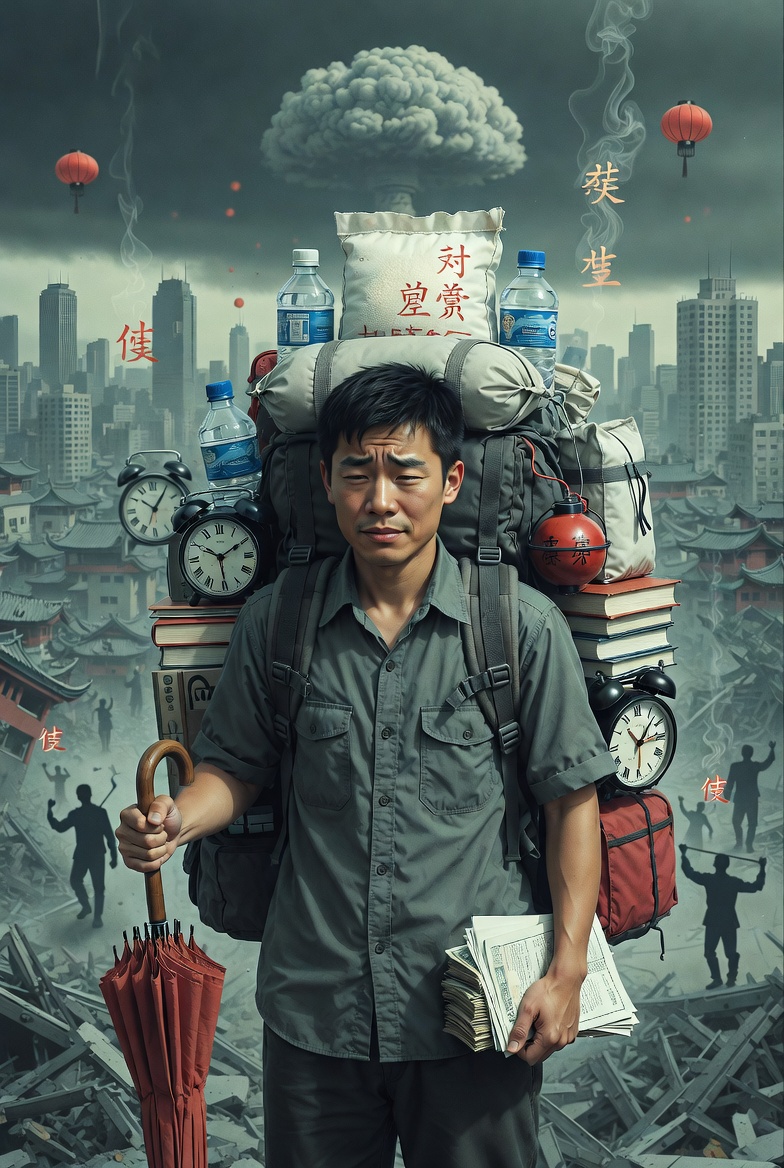
I have a slightly uncomfortable idea:
If the world ever collapses — war, pandemics, economic breakdown, full-on apocalypse —
the people who survive best might not be the strongest.
They might be the ones who’ve been preparing for disaster their entire lives.
Many people don’t realize this, but we weren’t raised to live well.
We were raised to survive the worst-case scenario.
We Were Trained to Expect Things to Go Wrong
“Prepare for a rainy day.”
“Think ahead, or you’ll regret it.”
“Always have a backup plan.”
These sound like wisdom.
But underneath, they carry a hidden assumption:
Something will go wrong. Eventually.
Here’s a simple example:
A child gets a 98 on a test and runs home excited.
The first response isn’t “well done.”
It’s:
“What happened to the other 2 points?”
Or this:
The moment school breaks begin, schedules fill up immediately — extra classes, coding, language training.
Because:
“If you don’t prepare now, you’ll fall behind later.”
So from a very young age, we learn:
Happiness can wait. Risk cannot.
The “Disaster-Prevention Mindset”
This isn’t random.
It’s a survival algorithm shaped by generations of instability, competition, and uncertainty.
Let’s call it:
The Disaster-Prevention Mindset
It looks like this:
- Constant sense of insecurity
- Over-preparation for worst-case scenarios
- Difficulty relaxing
- Difficulty enjoying the present
For example:
You may know someone who has savings, a stable life — yet refuses to leave a toxic job.
Why?
“What if I can’t find something better later?”
The Cost Is Higher Than You Think
This mindset works.
But it’s not free.
The cost is:
your emotions, your joy, and your ability to live fully.
Joy Becomes Suspicious
Even when something good happens, it doesn’t last.
You finish a big project and decide to relax.
You open a game, and immediately a voice appears:
“Do you really deserve this?”
“Others are still working.”
“What if you fall behind?”
The joy disappears before it even begins.
Or worse:
You feel happy during the day —
but at night, you start questioning it:
“Was I too relaxed today?”
“Is this going to cost me later?”
Joy becomes:
brief → guilt → self-correction
Eventually, your brain stops producing it altogether.
Entertainment Feels Like a Crime
You can’t just relax.
You need to justify it.
Playing games → improving reaction time
Watching shows → studying culture
Reading novels → building skills
Otherwise, there’s guilt.
Be honest:
How many times have you been scrolling your phone,
while also thinking, “I’m wasting my time”?
You’re not relaxing.
You’re defending your right to relax.
Suffering Becomes a Strategy
Pain starts to feel like security.
Less sleep → more competitive
More overtime → more stable
More sacrifice → better future
In many workplaces, you’ll see this:
It’s 10 PM. Everyone has finished their work.
No one leaves.
Because:
“If I leave first, what will it look like?”
“Will my boss think I’m not committed?”
So people stay.
Not because they need to.
But because they’re afraid.
And over time, a belief forms:
If I suffer more now, I’ll suffer less later.
It sounds logical.
But it isn’t.
We’re Trading Today for a Future That Never Arrives
Here’s the paradox:
To avoid an uncertain future,
we’re destroying a very real present.
Remember the early days of the pandemic?
People weren’t just buying what they needed.
They were hoarding.
Not because supply had already collapsed.
But because:
Not preparing felt more dangerous than overreacting.
This logic doesn’t just apply to emergencies.
It applies to life.
We keep sacrificing today
for a sense of safety tomorrow.
Like people training their whole lives to fight a dragon —
only to collapse before the dragon ever arrives.
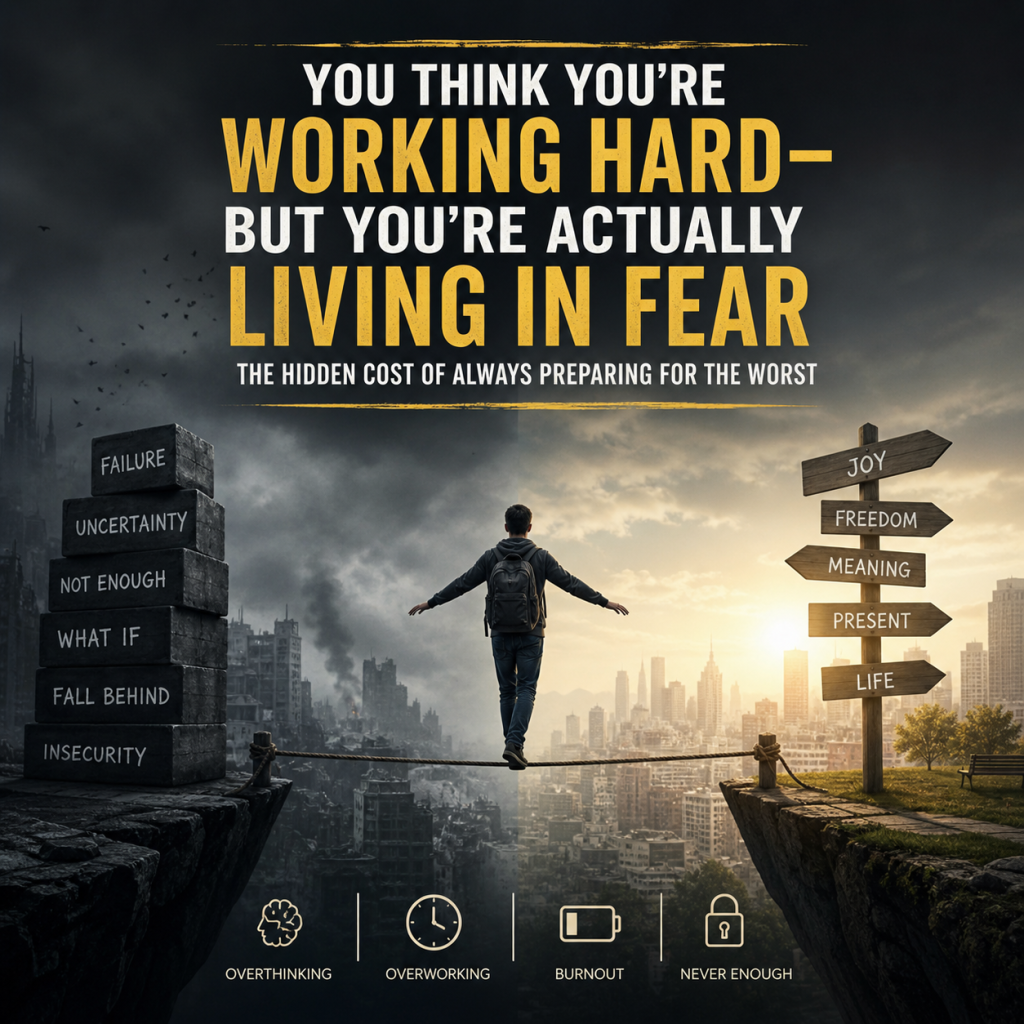
The Real Danger Isn’t Hard Work
It’s that you no longer know why you’re working.
At some point, the question disappears:
“What do I actually want?”
And is replaced by:
“I just can’t stop.”
Because stopping feels dangerous.
Is There a Way Out?
Honestly?
Not easily.
In an environment where mistakes are costly,
the safest strategy is:
Be careful.
Work harder.
Stay ahead.
Only a small number of people can step outside this system.
For most, it’s not a real option.
The Only Real Solution
The solution isn’t individual.
It’s structural.
People can only stop “preparing for disaster”
when the world becomes less punishing.
When failure is survivable.
When risk is shared.
When the future isn’t a single narrow path.
Only then can people stop living in defense mode.
Otherwise—
We’ll keep getting stronger.
We’ll keep getting tougher.
And one day,
we may be able to survive anything.
Except a meaningful life.
原文
你以为自己在努力,其实是在“防灾”
我一直有个不太好听的观点:
如果哪天世界真的进入末日——战争、瘟疫、崩溃、废土——
最后活得最好的,很可能是中国人。
不是因为我们更强。
而是因为我们一直在为灾难做准备。
很多人没有意识到,我们从小被训练的,并不是“如何活得更好”,
而是——
如何在最坏的情况下活下来。
01 我们从小就被教会“预防灾难”
“居安思危”
“人无远虑,必有近忧”
“晴带雨伞,饱带干粮”
这些听起来像智慧,其实背后只有一个假设:
世界随时会出问题。
比如一个很常见的场景:
一个孩子考了 98 分,兴冲冲回家。
家长第一句话不是“不错”,而是:
“那两分怎么丢的?”
再比如:
刚放暑假,还没玩两天,就被安排上了补习班、编程课、英语班。
理由很简单:
“现在不努力,将来怎么办?”
于是,从很小开始,我们就学会了一件事:
快乐是可以延后的,但风险必须提前规避。
02 防灾型人格,是一套生存算法
这种心态不是偶然的。
它是战争、饥荒、动荡、竞争,一代代筛选出来的结果。
我把它叫做:
防灾型人格
它的典型特征是:
- 总觉得不够安全
- 总在为最坏情况做准备
- 很难放松
- 很难真正享受当下
比如你可能见过这样的成年人:
银行卡里已经有几十万存款,但依然不敢辞掉一份压榨严重的工作。
因为他脑子里想的是:
“万一以后找不到更好的呢?”
03 但这套系统的代价,极其昂贵
问题是:
这套系统不是免费的。
它要的代价是——
你的情绪、你的快乐、你的生命体验。
快乐,是危险的
我们很少允许自己真正快乐。
比如:
你终于完成一个项目,准备放松一下。
刚打开游戏,脑子里立刻蹦出一个声音:
“你现在有资格玩吗?”
“别人还在努力。”
“你这样会不会落后?”
于是游戏还没开始,快乐已经结束。
还有一种更隐蔽的情况:
明明今天挺开心,但一到晚上就开始反思:
“今天是不是太放松了?”
“这样下去会不会出问题?”
快乐变成:
短暂 → 内疚 → 自我否定
久而久之,大脑直接关闭了这条回路。
娱乐,是有罪的
我们已经习惯给所有娱乐找“正当理由”。
打游戏 → 锻炼反应能力
看综艺 → 研究传播逻辑
刷短视频 → 获取信息
否则就会有一种隐隐的罪恶感。
你可以回忆一下:
有多少次,你一边刷手机,一边在心里骂自己“浪费时间”?
我们不是在娱乐。
我们是在“为娱乐辩护”。
吃苦,变成信仰
只要更痛苦,就更安全。
比如职场里一个常见的画面:
晚上 10 点,办公室还亮着灯。
有人已经完成任务,但不敢走。
因为:
“别人都没走,我走是不是不太好?”
“领导会不会觉得我不努力?”
于是大家一起坐着,加班到深夜。
第二天发朋友圈:
“又是拼命的一天。”
看起来很努力,其实是一种集体性的恐惧。
逐渐形成一套逻辑:
只要我现在够惨,未来就不会更惨。
04 我们在用“未来的灾难”,毁掉现在的人生
最荒谬的是:
为了防止未来的不确定,
我们正在确定地毁掉现在。
就像疫情刚开始那会儿:
有人疯狂囤粮、囤水、囤一切能囤的东西。
不是因为真的马上会断供,
而是因为——
不准备,就会恐慌。
这种心理,其实贯穿一生。
我们不断透支当下,
去换取一个并不确定的“安全感”。
就像一群人拼命练习屠龙术,
结果龙还没来,人已经废了。
05 真正可怕的,不是努力
而是你已经不知道自己为什么努力
很多人已经不再思考:
我想要什么?
只是在重复一个逻辑:
不能停。
一停,就会出事。
06 那有没有解?
很遗憾。
在一个容错率极低的环境里,
个体几乎没有解。
你只能:
一边小心翼翼活着
一边拼命内卷
能跳出来的人,极少。
07 唯一的可能
改变不在个体。
而在环境。
一个允许失败的社会,
一个可以承担风险的系统,
一个不用把一切押在未来的结构,
才可能让人停止“防灾”。
否则——
我们会继续变得更强。
也会继续变得更累。
直到有一天,
我们已经可以应对一切灾难,
却再也不会生活了。