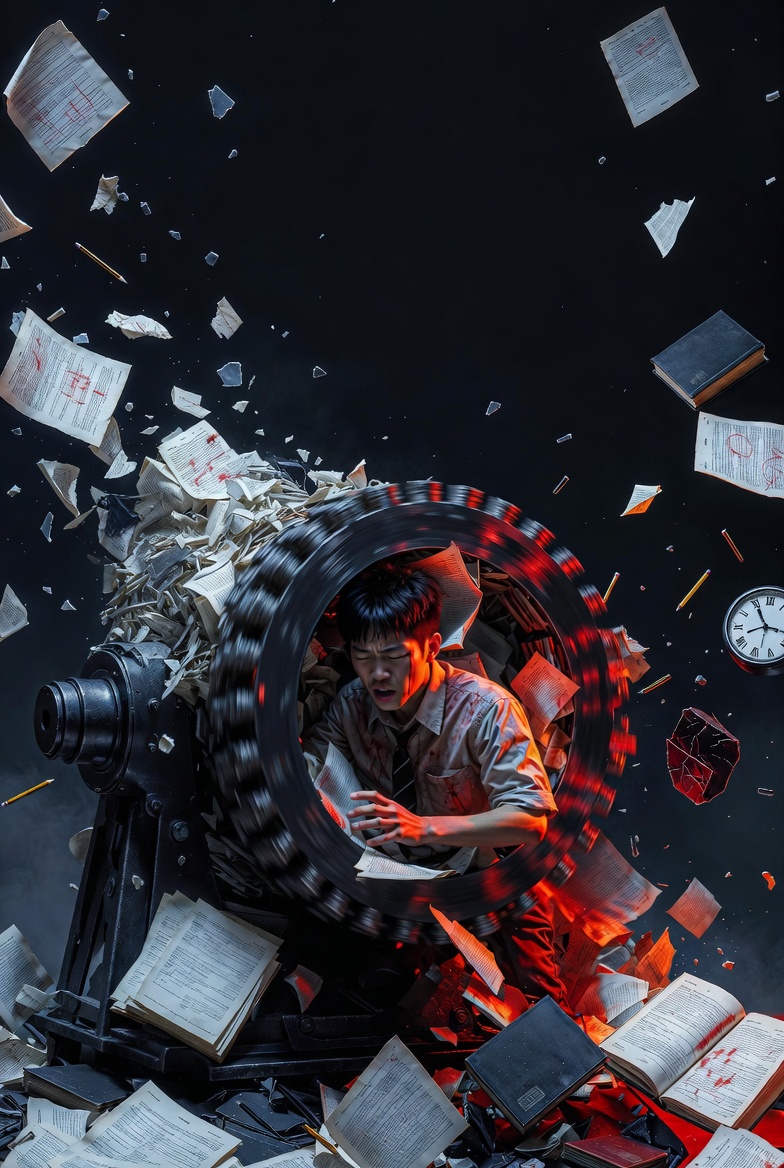
Let’s talk about the Gaokao.
I recently watched a series of videos about it.
They were filled with motivational clichés:
“Struggle.”
“Dream.”
“No regrets.”
“Rainbow after the storm.”
I don’t know how others feel.
But my reaction was simple:
I haven’t felt this uncomfortable in years.
For some people, the Gaokao changes their lives.
For others, it becomes something else entirely:
A nightmare.
A literal one.
1. Decades Later, You’re Still Taking the Exam
Many people share the same recurring dream:
You’re late for an exam.
Or time runs out before you finish.
You wake up in a cold sweat.
It takes a moment to realize:
The Gaokao ended years ago.
Your child might even be preparing for it now.
Yet you’re still trapped inside that exam.
Psychology has a term for this:
PTSD — Post-Traumatic Stress Disorder
It usually affects:
War survivors
Disaster victims
People who experienced violence
These are events that exceed normal human experience.
For many people, the Gaokao becomes one of the closest things to that kind of psychological imprint.
That’s not something to celebrate.
2. Turning Suffering Into Nostalgia
The Gaokao is undeniably painful.
Yet people often romanticize it.
It’s like famine survivors reminiscing:
“We used to eat tree bark — it was natural and healthy.”
This isn’t nostalgia.
It’s trauma being repackaged as meaning.
The Gaokao receives the same treatment.
3. You Don’t Miss the Exam — You Miss Yourself
Some argue:
“The Gaokao changed my destiny.”
That may be true.
But what changed your life was you, not the exam.
Every era produces winners.
Even if the exam tested something entirely different,
the same types of people would likely succeed.
Because exams measure:
Focus
Discipline
Memory
Stress tolerance
The content is secondary.
The test is just a filter.
4. How Much of It Actually Matters?
You can master high school math
without touching real mathematics.
You can memorize history
without understanding history.
You can solve thousands of English exercises
without speaking naturally.
Yet students sacrifice their most valuable years
for these narrow objectives.
Teachers push.
Parents worry.
Students burn out.
All for one exam.
5. “Practice Makes Perfect” — In Another Era
Confucius said: review to gain new insights.
But in his time:
Books were rare
Knowledge was scarce
Repetition made sense
Today:
Information is infinite
Knowledge is accessible
Learning paths are diverse
Spending years repeating limited material
no longer makes sense.
And most people forget everything
within a few years anyway.
6. The Hidden Cost: Mental Conditioning
The real danger isn’t wasted time.
It’s the mindset.
Exam systems teach:
There is one correct answer
There is one correct path
Effort guarantees success
This works in school.
It collapses in reality.
7. The Real World Has No Standard Answers
In real life, outcomes depend on:
Background
Opportunity
Timing
Talent
Luck
Effort matters.
But it isn’t everything.
Some fail exams but succeed in business.
Some excel academically but struggle professionally.
The world is not graded on a curve.
8. Effort Is Important — But Overrated
Effort becomes harmful
when everyone is forced to maximize it.
You study until 10 PM.
Someone else studies until midnight.
Eventually everyone does.
The result:
More suffering
Less advantage
Total burnout
This is how academic competition becomes social burnout.
9. Standardized Talent Becomes Cheap
Exam systems reward standardized ability.
But standardization leads to:
Interchangeable people
And interchangeable things become cheap.
Exam fairness exists.
But it ignores:
Creativity
Curiosity
Diverse strengths
Uniform evaluation creates uniform outcomes.
10. Final Thoughts
This isn’t an argument against education.
It’s an argument against:
One path
One answer
One definition of success
Exams are still a path.
Just not the only one.
Life isn’t a multiple-choice test.
原文
高考:一场被精心设计的苦难游戏
今天我们聊聊高考。
我刷了一圈高考相关的视频,被灌了一肚子鸡汤。
耳朵里全是:
“拼搏”“梦想”“青春无悔”“风雨见彩虹”。
不知道别人什么感觉。
反正我的观后感是:
好多年没有这么反胃过了。
高考,对有些人来说是阶级跃迁的通道。
但对更多人来说,它留下的只有一种东西——
噩梦。
字面意义上的噩梦。
01 考完几十年,还在做噩梦
很多人都有过这样的梦:
梦见考试迟到
或者题还没写完就被收卷
从梦中惊醒,一身冷汗。
盯着天花板愣半天才反应过来:
高考早就过去了。
甚至孩子都快要高考了。
可你还困在那场考试里。
这种情况,在心理学上有个词:
PTSD —— 创伤后应激障碍
通常发生在什么人身上?
战争幸存者
灾难经历者
暴力受害者
这些体验有一个共同点:
超出正常人类经验范围
如果从这个角度看——
高考,几乎是很多人一生中
最接近“创伤体验”的事情之一。
这是一件值得骄傲的事吗?
显然不是。
02 丧事喜办,是老传统了
高考是一种苦难,这点其实不需要争论。
但奇怪的是,总有人试图歌颂它。
这让我想起一个荒诞的场景:
过去饥荒年代
挖观音土、啃树皮
几十年后回忆:
“多么怀念的味道啊,天然无污染,健康低脂。”
这不是怀念。
这是创伤的自我美化。
高考也是一样。
03 你怀念的不是高考,是你自己
有人会说:
“我确实因为高考改变了命运。”
这没错。
但问题是——
改变命运的,是你,不是高考。
每个时代都会有人脱颖而出。
哪怕今天考试改成八股文
最后出头的人,依然差不多是同一批人。
因为考试筛选的,从来都是这些能力:
专注力
记忆力
执行力
抗压能力
考什么并不重要。
重要的是——
它只是一个筛选工具。
八股文本身没有意义。
高考的很多内容,同样没有。
它们只是人为制造的难度。
04 你学的那些东西,到底有什么用?
为什么说这是一种浪费?
因为你把中学知识学到极致,
也没有真正触及现代学科的核心。
数学学了十几年
却没真正进入微积分世界
历史背了三年
却没有形成历史观
英语刷了上万题
却无法自然交流
为了这些内容:
孩子被灌鸡血
老师被压指标
家长被贩卖焦虑
所有人拼命消耗最宝贵的青春。
只为了通过一场考试。
05 “温故而知新”?时代变了
有人说:
多练习没什么不好。
孔子也说:
温故而知新。
但问题是——
孔子那个时代
一辈子可能只读几本书
信息稀缺
知识难以传播
反复琢磨是唯一办法。
而今天呢?
知识爆炸
信息无限
学习成本趋近于零
在这种情况下
继续死磕有限题库
本质上是在浪费时间。
更现实的是——
高考结束几年后
大多数人已经忘得干干净净
那些年流的汗
全部归零
06 比浪费时间更可怕的,是思想改造
应试教育带来的,不只是时间浪费。
更重要的是,它塑造了一种危险的认知:
人生存在标准答案
你的兴趣不重要
你的梦想不重要
重要的是分数。
于是孩子学会:
世界有标准答案
成功有唯一路径
只要努力
就一定成功
这种逻辑在学校里成立。
但进入社会以后,很快崩塌。
07 真实世界,从来没有标准答案
现实世界里,影响命运的因素包括:
家庭背景
天赋
性格
运气
时代
努力只是其中之一。
而且未必是最重要的。
有人没考上大学
却继承家业
有人成绩平平
却抓住商业机会
有人名校毕业
却陷入职场内卷
决定命运的,从来不是分数。
而是复杂系统。
考试天赋,也是一种天赋。
但我们把它误认为“努力”。
08 努力很重要,但别神化它
努力当然重要。
但当所有人都被教育必须努力时——
就变成:
你学到10点
我学到12点
你刷5套题
我通宵刷题
当所有人都拼命时
努力的收益迅速下降
最后只剩下:
集体痛苦
集体内卷
集体焦虑
东亚社会的内卷
和这种教育模式有没有关系?
答案很明显。
09 标准化人才,注定廉价
应试教育培养的,是标准答案追逐者。
最终形成:
标准化人才
但任何标准化的东西:
越标准
越廉价
这适用于商品
也适用于人
有人说:
应试教育是公平的。
是的,它提供了一种“分数公平”。
但同时,它忽略了:
天赋差异
兴趣差异
成长路径差异
用一个模子塑造所有人
本身就是一种不公平。
10 最后
我并不是否定读书。
我否定的是:
人生存在唯一标准答案
我否定的是:
所有人朝一个方向内卷
考试仍然是一条出路。
但它不应该是唯一出路。
更不应该被神圣化。
世界不是单选题。
人生也不是。