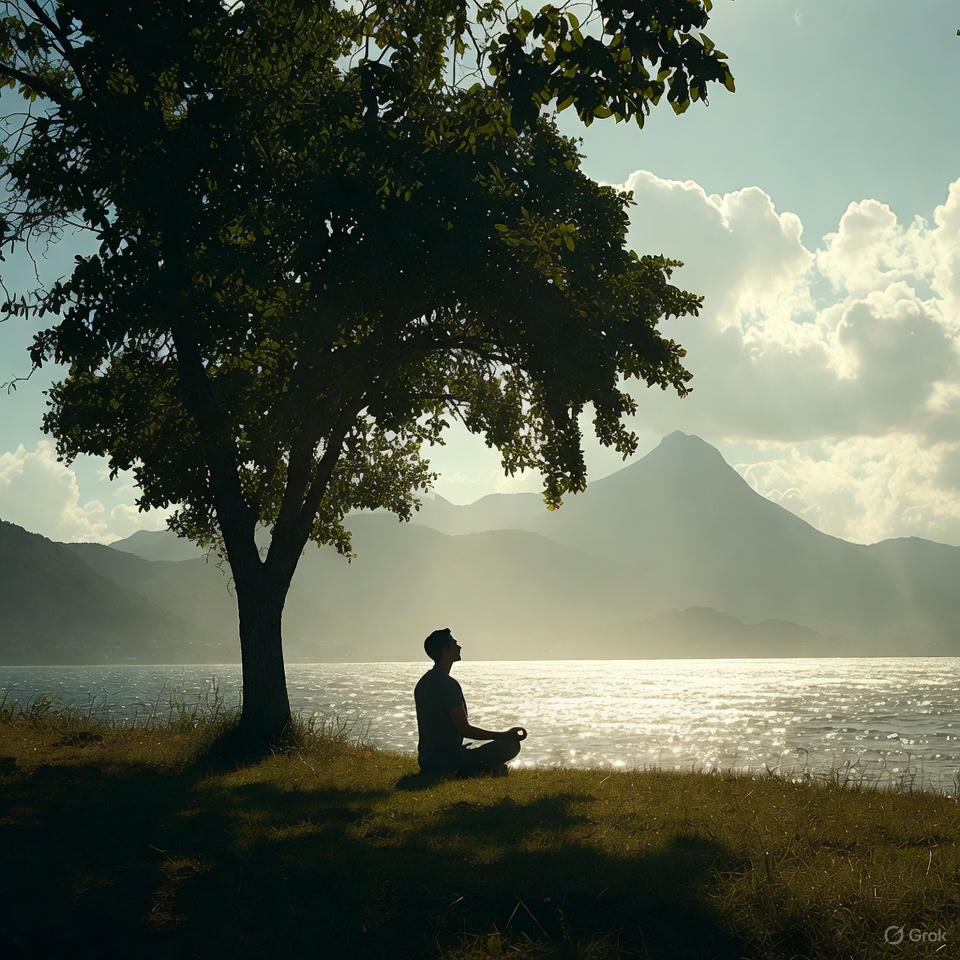
The greatest drain on your life is not others, but the obsession in your own heart.
Your overthinking, your anxiety, your comparisons, your self-blame—these inner exhaustions are what truly harm your vitality.
Buddhism says: “The mind is like a skilled painter; it can paint the entire world.”
Your world is drawn by your own mind.
When the mind is chaotic, the world becomes chaotic.
When the heart suffers, life becomes suffering.
Often, what truly wears you down is not the situation itself, but how you repeatedly paint it darker, heavier, and harder to overcome in your mind.
Have you ever had moments like these?
—Someone says something casually, and you replay it in your head all day.
—A conflict has long passed, yet it still resurfaces before sleep.
—An event is already over, yet you continue arguing with the person in your heart over and over again.
Those feelings of exhaustion don’t come from others—they come from your heart tormenting itself, from turning a small matter into a long, looming shadow.
An elderly man once said: “People aren’t worn out by life; they’re worn out by thinking.”
It sounds like a joke, but it is the truth of life.
The more you think, the more tired you become; the more you think, the more trapped you feel.
Inner consumption drains your physical strength, your emotional strength, and your life force—bit by bit.
It is like dripping water, slow and quiet, yet enough to penetrate each day.
The Buddha taught:
“The mind suffers from calculation, life suffers from attachment, and the greatest difficulty is letting go.”
The more you care about something, the more it torments you.
The more tightly you hold, the more it suffocates you.
We all understand these truths, yet the one tossing and turning at night is still ourselves, burdened by thoughts we cannot hold yet cannot release.
You must understand: inner conflict is not inherently bad.
It is life reminding you where you’ve pushed too hard, where you’ve clung too tightly, where you’ve misjudged right and wrong, and where you still cling to old wounds.
It is like wearing uncomfortable sandals—it’s not the sandals’ fault; it’s your unwillingness to change into a more comfortable pair.
To free yourself from internal exhaustion, start with caring for your body and caring for your mind.
Caring for your body means:
Eat enough, sleep earlier, move more.
Spend time in the sun, look at the mountains and sea.
Let the wind scatter your heavy thoughts; let the sunlight brighten the shadows in your heart.
Only when the body relaxes can the heart soften and slow down.
Caring for your mind means:
Complain less, blame yourself less, compare less.
Say “it’s okay” more often.
Give yourself an extra hug.
Acknowledge your efforts.
Remember the light in life more than the shadows.
Before asking whether others are happy, ask yourself first:
Are you tired? Are you hurt? Is it worth it?
The heart is not made of iron—it is a seed that grows tired and needs gentle nourishment.
Buddhism says:
“The past mind cannot be grasped; the present mind cannot be grasped; the future mind cannot be grasped.”
Yesterday’s troubles cannot block today’s sunlight.
Tomorrow’s storms have not yet arrived.
Yet people trap themselves in an unchangeable moment—
believing that not letting go is responsibility,
that holding on is seriousness—
without realizing that this is the true source of suffering.
Growing up doesn’t mean never crying—it means being able to keep moving after tears.
Maturity is not about never being hurt—it is the ability to heal yourself afterward.
Why do many people feel more exhausted as they grow older?
Because they stuff every grievance into their hearts, suppress every emotion, never speak, never release, never let go.
Their feelings spin silently inside them, draining all their strength until only fatigue remains.
Thoughts are like clouds in the sky—you are the sky itself.
Clouds come and go; the sky remains unchanged.
But people trapped in inner struggle mistake the clouds for themselves, the storm for destiny, and temporary emotions for permanent suffering.
Buddhism teaches:
If you don’t follow your thoughts—if you simply watch them come and go like clouds drifting by—your heart will naturally grow brighter.
You will discover that what truly exhausts you in life is rarely the difficulty itself,
but the inner resistance.
You want to prove yourself, yet you doubt yourself.
You want to let go, yet you can’t bear to.
You want ease, yet you can’t stop overthinking.
You are fighting a war in your heart every day—that’s why you are so tired, so drained.
Remember:
No one is obligated to understand you.
No one is obligated to treat you well.
Most people in your life are merely passing through—companions for a stretch of the journey.
There’s no need to cling, no need to calculate.
The tighter you hold, the more your heart hurts;
the more you release, the more space you gain.
Let me share a small story:
A young man carried a sack of stones on his daily trek.
He asked his master, “Why does it feel heavier the farther I walk?”
The master replied, “Put it down, and it becomes light.”
The young man said, “But these are stones I picked up along the way—they didn’t wrong me.”
The master laughed:
“Precisely because they didn’t wrong you, you keep carrying them.”
Isn’t that just like the unnoticed thoughts in our lives—seemingly light, yet suffocating over time?
To live well, you must first be gentle with yourself—and even gentler with your heart.
Less anger, less hatred, less blame.
More acceptance, more encouragement, more tenderness toward yourself.
Aside from health, nothing else truly belongs to you.
If you lose your peace of mind, what is the point of winning an argument?
If you gain pride but lose yourself, what have you really gained?
Happiness is not a distant illusion, nor the memory of the past.
Happiness is this warm meal, this cup of water, this peaceful sleep.
It is the wind outside your window, the light inside your home, someone asking “Have you come back?”
It is being able to forgive yourself in the quiet of the night.
The best of human life is simple—
meals and seasons, peace and joy, warm lights and gentle company.
Starting today:
Stop fighting yourself.
Stop entangling with the past.
Stop judging yourself with someone else’s eyes.
Inner battles have no winners.
The only thing you can do is protect your heart—
set down the thoughts that hurt you,
release the obsessions that suffocate you.
When you stop fighting yourself, life loosens.
When you forgive yourself, life warms.
When you conserve your energy, good fortune naturally arrives.
Life becomes spacious when you loosen your grip,
clear when you awaken,
gentle when you cultivate compassion.
May you live in peace with your own heart—
no more depletion, no more entanglement.
When the heart is calm, strength arrives.
When the heart is steady, storms are gentle.
When the heart is soft, the world becomes soft as well.
原文
学会放下,是一生的修行
最消耗生命的不是别人,而是你心里的那份执念。你的胡思乱想、执着焦虑、攀比自责,这些内在的消耗才最伤元气。
佛家说:“心如工画师,能画诸世间。”
你的世界由你的心画出来。心乱了,世界就乱了;心苦了,人生就苦了。
很多时候,让你真正熬不住的不是事情本身,而是你反复在心里把它描得越来越暗、越来越重、越来越难跨过去。
你有没有过这种时候:
——明明只是别人一句不经意的话,你却反复揣摩了一整天;
——明明冲突已经过去很久了,你却睡前还会想起;
——明明事情已经结束了,你却还是在心里和对方吵了无数回合。
那些疲惫不是别人给的,是你的心自己折磨自己,是你把一件小事拉长成了漫长的阴影。
有位老人曾说:“人呀,不是累死的,是想死的。”
这句话听起来像玩笑,其实是生活的真相。你越想越累,越想越苦,越想越走不出自己的圈子。
内耗就是这样一点点磨掉你的体力、你的心力、你的生命力。它像慢慢滴落的水声,不急不响,却足以穿透你的日子。
佛陀曾开示:“人心烦在计较,人生苦在执着,人生难在放下。”
你越是在意什么,什么就越折磨你;你越是抓着不放,什么就越压着你,喘不过气。
我们都懂这些道理,可是真正在夜里辗转反侧的却是我们自己,是那些舍不得丢、又拿不稳的念头。
你要明白,内耗不是坏事,它是生命在提醒你:哪里过度用力了,哪里太执着了,哪里没有看清是非,哪里还放不下那些旧的伤痕。
就像穿了一双夹脚的鞋,不是鞋的错,是你不愿意脱下来换一双舒服的。
要摆脱内耗,先从护身和护心开始。
护身是什么?
是吃得饱一点,睡得早一点,动得勤一点。
多晒晒太阳,多看看山海,让风吹开你积郁的心事,让阳光照亮你暗下来的念头。
人的身一松,心才可能软下来,才可能慢得下来。
护心是什么?
是少埋怨,少自责,少攀比;
多说一句“没关系”,多给自己一个拥抱;
多认可自己的努力,多记住生活里的光,而不是阴影。
很多人忘了问别人开不开心之前,要先问问自己累不累、伤不伤、值不值得。
人的心不是铁,是一颗会疲惫的种子,它需要被温柔灌溉。
佛家说:“过去心不可得,现在心不可得,未来心不可得。”
昨天的烦恼留不住,今天的阳光也挡不住;
明天的风雨尚未到来,可人偏偏把自己困在一个早已无法改变的瞬间里。
以为不放下就是负责,以为执着就是认真,却不知道这才是让自己最苦的原因。
成长不是不掉泪,而是哭过以后还能继续往前走。
成熟不是不受伤,而是在受伤之后能靠自己疗愈。
很多人为什么越长大越累?
因为他们把所有委屈往心里塞,把所有情绪往心里压,不说、不动、不放,只在心里默默打转,然后耗尽自己的力量,最终只剩下疲惫。
念头像天上的云,你才是天空。
云来云去,天无增减。
可是内耗的人总把云当成自己,把风雨当成命运,把一时的情绪当成永远的困境。
佛法说:一切念头,只要你不跟随它来、随它去,就像看着一朵云飘过,你的心自然会明亮许多。
你会发现,生活真正让你疲惫的从来不是事情的难度,而是你心里的对抗。
你想证明,却又自我怀疑;
你想放下,却又舍不得;
你想轻松,却又忍不住想太多。
你一直在心里打仗,所以才那么累,那么心力交瘁。
记住,人生没有谁必须理解你,也没有谁必须对你好。大多数人与你只是缘分一程,是路过,是借过,是同行一段。
不必太执着,不必太计较。
你越抓,心越痛;你越松,心越宽。
我想给你一个小例子:
一位年轻人背着一袋石头每日苦行。他问师傅:“为什么我越走越重?”
师傅说:“放下就轻。”
年轻人说:“可这些是我一路捡来的石头,没犯我。”
师傅笑道:“正因为你觉得它没犯你,你才一直背着。”
这不就是我们人生里那些不起眼,却压得人喘不过气的念头吗?
看着不重,背久了就要了命。
人活着,最该对自己温柔,对自己的心更要温柔。
少气一点,少恨一点,少责怪一点;
多允许自己,多鼓励自己,多心疼自己。
除了健康,什么都不是你的。
输了心情,赢了争吵又如何?
赢了面子,赔了自己又怎样?
幸福不是远方的幻影,也不是过去的模样。
幸福是当下这一口饭,这杯温水,这一段安心的睡眠;
是窗外的风,是家里的灯,是有人问你“回来了没”;
是你能够在深夜放过自己。
人间最好不过:三餐四季,平安喜乐,灯火可亲。
从今天起:
别再和自己较劲,别再和过去纠缠,别再用别人的眼光审判自己。
内耗没有赢家。
你唯一能做的是护好自己的心,把那些让你反复痛的念头轻轻放下,把那些让你焦虑的执念慢慢散开。
当你不再内耗,生活就松了;
当你愿意放过自己,日子就暖了;
当你开始节省心力,好运自然就来了。
人生会因为你的松弛而变得宽阔,因为你的清醒而变得透亮,因为你的慈悲而变得柔和。
愿你从此能与自己的心和平相处,不再消耗,不再纠缠。
心若静,静中有力量;
心若定,风雨皆从容;
心若柔,世间便处处是温柔。