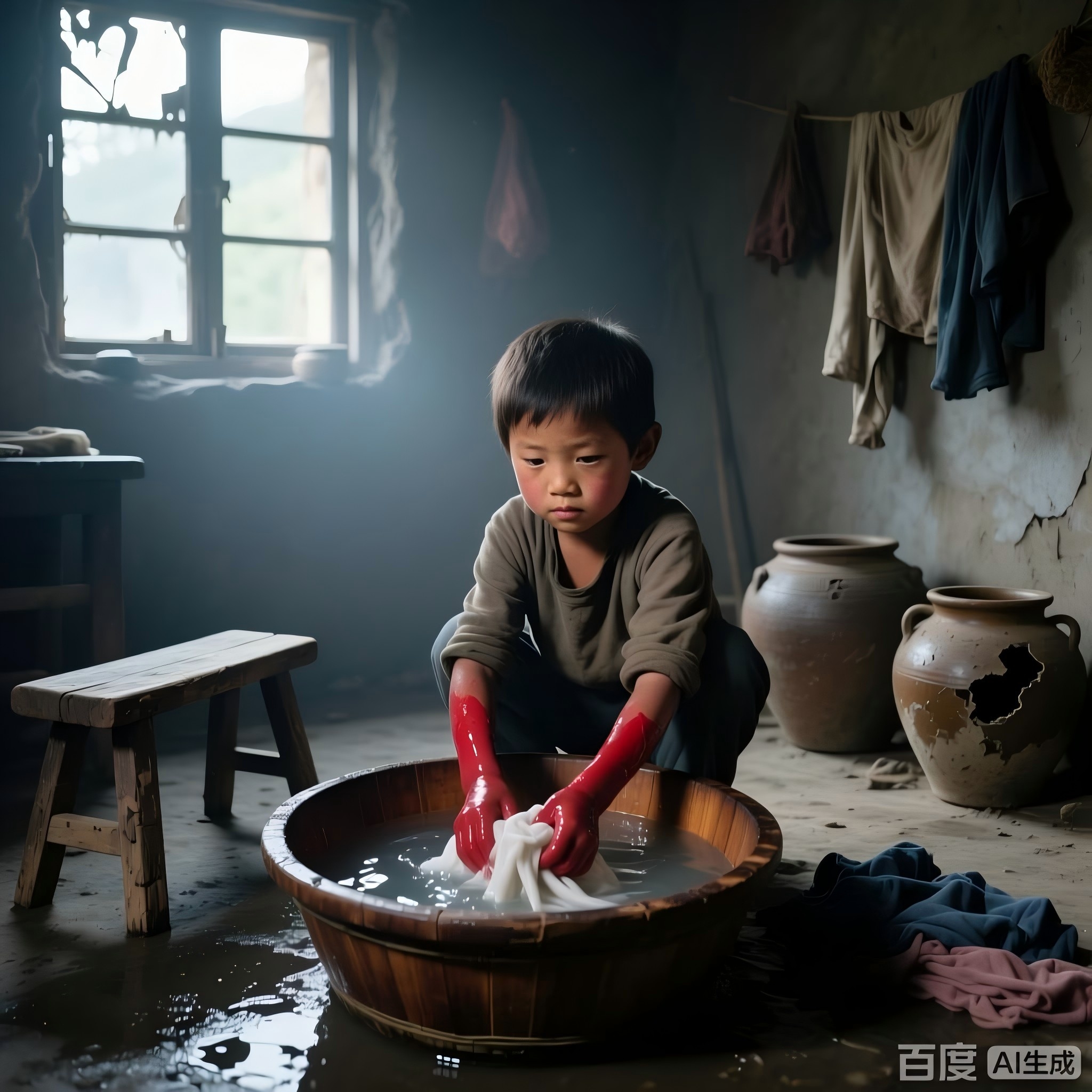
“Children from poor families grow up early.” This phrase is often used to describe those who take on family responsibilities at a young age amidst hardship. We tend to picture a small figure getting up before dawn to work, washing clothes in the cold with reddened hands, or caring for younger siblings after school. Such children are praised as “well-behaved,” “mature,” or even held up by some parents as role models of “discipline.”
But is this forced maturity truly worth celebrating? Today, we explore the phenomenon behind this seemingly inspiring story—and the deep, often overlooked damage it can cause.
1. From a Biological Lens: A “Regression” Under Pressure
In nature, the length of infant dependency often correlates with an animal’s position in the food chain. Herbivores on the lower end—gazelles, wildebeests—must learn to run right after birth or risk being eaten. In contrast, predators like lions and tigers are born with closed eyes and require long parental care.
Humans are among the species with the longest childhood dependency. A lengthy, protected childhood is critical for learning, cognitive development, and socialization.
Therefore, when children are forced to become “independent” due to survival pressure, it is not an evolutionary advantage but rather a kind of “regressive adaptation” — cutting childhood short under threat. In essence, it is a consumption of the developmental process rather than a sign of strength.
2. The Real Cost of Growing Up Early: Poor Focus and Environmental Anxiety
Children who grow up bearing adult responsibilities often live in unstable, uncertain environments. They must constantly worry about the next meal, how to soothe a crying sibling, whether the food on the stove is burning…
This constant low-level anxiety severely disrupts the development of attention and focus.
Focus is not innate—it is cultivated in safe, predictable environments. Just as grazing animals can never fully relax while watching for predators, these children rarely experience true calmness or sustained concentration. Living in a near-permanent “alert state” makes it difficult for them to observe society deeply, understand the world, or build mature value systems and mental frameworks.
This partly explains why some individuals from impoverished backgrounds may lose themselves after suddenly obtaining wealth—not simply due to “lack of exposure,” but because they never developed systematic focus and discernment. When confronted with temptation and choices, they struggle to stay grounded.
3. When Struggle Becomes Normal: The Pitfall of Learned Helplessness
Assigning responsibilities beyond a child’s capacity means they will constantly encounter failure. For an undeveloped psyche, repeated failure does not create resilience—it produces learned helplessness.
Like the dog in the experiment that no longer tries to escape after repeated shocks, these children may eventually stop resisting altogether, even when a path opens.
When a child realizes they cannot simultaneously manage household duties, care for siblings, and succeed academically no matter how hard they try, they easily form the belief that “effort is meaningless.”
This mindset carries into adulthood, showing up as avoidance, indecision, or self-doubt in the face of opportunity.
True growth is not forged through continuous blows but through repeated small successes. Games are addictive for precisely this reason—they provide immediate, clear, and positive feedback. In contrast, our education and parenting often lack such systems. Instead, children are offered vague promises of a distant future and immediate criticism in the present.
4. How Do We Face the Past and Move into the Future?
If your childhood resembled this kind of “forced maturity,” and if it left you with lingering self-doubt, the first thing to understand is:
None of this was your fault.
We do not choose our circumstances. We simply endure them.
Change can begin with the smallest acts: ensuring that every effort brings even a tiny visible reward, accumulating small “certainties.” It also involves discerning which responsibilities genuinely belong to us—and which do not.
Each person can only be responsible for their own life. Putting down burdens that were never ours is the first step toward psychological health.
5. In Closing
Discussing “children who grow up early” will always be heavy. Behind those children sitting in delivery boxes while following their parents on motorbikes, and behind those doing household chores far too young, are families making painful compromises.
The wound of poverty is not merely material scarcity—it is how it shapes one’s personality and cognition, narrowing the scope of possibility and selfhood.
Recognizing this is the first step out of the maze.
May every person who was forced to “grow up early” eventually understand and accept their past, and then reclaim their own pace and potential.
原文
穷人的孩子早当家:看不见的伤痛与性格改写
“穷人的孩子早当家”——这句话常被用来形容那些在困境中早早承担起家庭责任的孩子。我们脑海中往往会浮现出一个瘦小的身影,在天未亮时起身劳作,在寒冬中用通红的小手洗衣做饭,放学后还要照顾弟弟妹妹。这样的孩子常被周围人称赞“懂事”“成熟”,甚至被一些家长当作“锻炼孩子”的榜样。
然而,这种被迫提前成熟的“早当家”,真的值得赞美吗?我们今天要探讨的,正是这种看似励志的现象背后,可能对孩子造成的深远伤害。
一、从生物学看“早当家”:人类的“返祖现象”
在自然界中,幼态持续的时间长短往往与物种在食物链中的位置相关。食物链底层的生物,如角马、羚羊,它们的幼崽一出生就必须尽快学会奔跑,否则便会沦为捕食者的目标。相反,食物链顶端的狮子、老虎,幼崽出生时眼睛都睁不开,需要父母长时间的照料与喂养。
人类是所有动物中幼态持续最长的物种之一。漫长的童年期是人类学习、发展认知与社会能力的关键阶段。因此,孩子在生活压力下过早“独立”,并不是什么值得称道的进化优势,而更像是一种“返祖现象”——在生存压力下被迫提前结束童年,本质上是对成长过程的一种透支。
二、早当家的真实代价:专注力的缺失与环境的焦虑
那些过早承担家庭责任的孩子,往往生活在一个不稳定、不确定的环境中。他们需要时刻担心下一顿饭在哪里、如何安抚哭闹的弟妹、灶上的饭是否烧糊……这种持续的低强度焦虑,严重影响了他们专注力的养成。
专注力并非天生,而是需要在安全、稳定的环境中逐步培养。就像草原上的食草动物永远无法安心吃草一样,这些孩子也难得有真正放松、专注的时刻。长期处于“警戒状态”的他们,很难像同龄人一样深入观察社会、理解世界、建立扎实的价值观与思维框架。
这也部分解释了为什么有些出身贫困的人在突然获得财富后容易迷失自我。不仅仅是因为“没见过世面”,更因为他们从小缺乏专注力的系统训练,面对突如其来的诱惑与选择时,难以保持清醒与坚定。
三、当挫折成为日常:习得性无助的深渊
让孩子承担超出其能力的责任,意味着他们将不断面对失败与挫折。对于心智尚未成熟的孩童而言,长期的挫折并不会铸就“坚韧”,反而可能导致“习得性无助”——就像实验中那只反复遭受电击后放弃逃跑的狗,最终即使笼门打开,也不再尝试逃脱。
当孩子发现自己无论怎么努力都无法妥善处理家务、照顾好家人、同时维持学业时,他们很容易形成“努力无用”的信念。这种心态会延续至成年,表现为逃避选择、害怕决定、甚至在机遇面前自我怀疑。
真正的成长并非来自不断的打击,而是来自一次次的“小成功”。正如游戏之所以吸引人,正是因为其提供了清晰、即时的正面反馈机制。而我们对于孩子的教育,却常常缺乏这样的“反馈设计”,只有遥远而模糊的“未来大饼”,与即时的批评与否定。
四、我们该如何面对过去,走向未来?
如果你在成长中经历过类似的“早当家”困境,并因此陷入自我怀疑,首先要明白:这不是你的错。出身环境不由我们选择,我们只是那段经历的承受者。
改变可以从最小的事情开始:确保每一次努力都能带来一点可见的回报,积累那些微小的“确定性”。同时也要学会分辨——哪些责任真正属于我们,哪些不是我们必须背负的。每个人只能对自己的人生负责,放下不该扛的重担,是走向健康心态的第一步。
五、写在最后
讨论“穷人的孩子早当家”,始终是一个沉重的话题。那些坐在外卖箱里跟着父母奔波的孩子,那些小小年纪就扛起家务的子女,背后往往是一个家庭的无奈与妥协。
贫困的困境不仅在于资源的匮乏,更在于它如何悄然塑造人的性格与认知,将人禁锢在狭小的思维与可能性中。认识到这一点,是我们走出困境的第一步。愿每一个曾被迫“早当家”的人,都能在理解与接纳自己的过去之后,重新找回属于自己的节奏与可能。