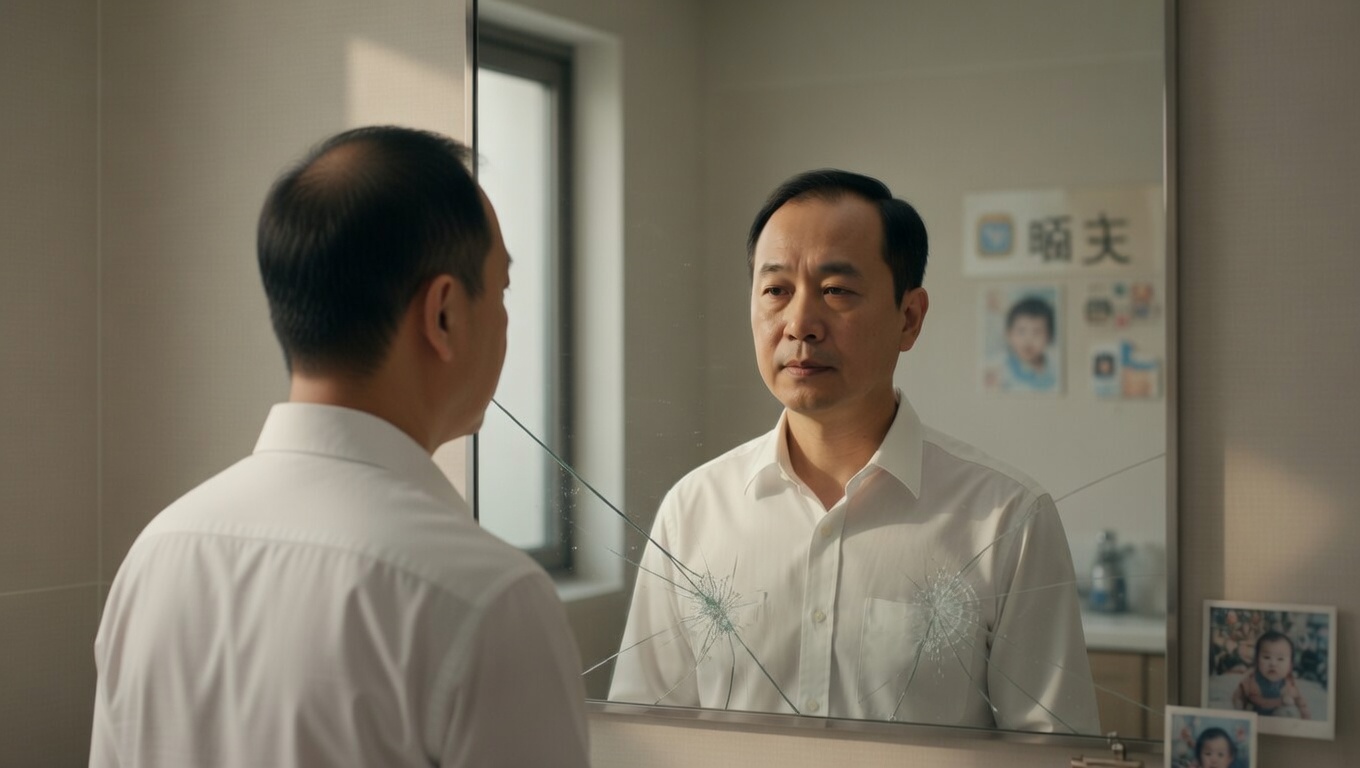
When did you realize your child wasn’t a genius?
Probably around second or third grade.
Before that, that adorable little creature—whose every cry and laugh melted your heart, who could swipe a phone screen and seem like a prodigy—suddenly turned into someone else.
Bad grades. Terrible homework. A nightmare every time it’s time to study.
The “my baby is a genius” filter shattered into a million pieces.
You open your social media feed, scroll through all those proud parent posts from years ago, and ask the universe:
What was I thinking? Why did I post this kid every single day?
But wait. It gets worse.
In midlife, you learn to accept three things:
That your parents are ordinary.
That you are ordinary.
And that your kids are ordinary.
Look in the mirror. Calmly ask yourself:
Who do you think you are, to have a genius child?
Did your ancestors produce Einstein? Or Yao Ming?
Most of us—and our children—are born ordinary.
There might be some delusions along the way, but in the end, we all return to ordinary.
Accepting your own ordinariness is not easy.
It’s like thinking you’re the main character in a video game,
and then one day realizing—
you’re just an NPC.
Not even an important one.
No dialogue. Probably no name either.
No impressive background. No dramatic life story. No remarkable talent.
Just another face in the crowd of NPCs.
Let me use myself as an example.
When I was a kid, I was fast.
How fast?
First place in every school sports day sprint. No one could catch me at recess.
The PE teacher gave me a second look. My friends called me “little Bolt.”
My grades weren’t great, so my mom—grasping at straws—sent me to the district sports school.
I started late, had average fundamentals, but improved quickly.
Within months, I was top three in team trials.
The coach said I had “potential.”
I started dreaming of provincial teams.
Looked like talent, didn’t it?
That’s what I thought too.
Then I met someone my age at a city competition.
Hardly any formal training—just gym class at school.
He beat me by nearly a full second.
That second felt like a wall.
Let me give you an analogy:
You grow up as the strongest person in your village.
You join the army and hear about General Pan Feng, a man of unmatched might.
You challenge him—he can take on two of you at once.
You’re convinced he’s the strongest person alive.
Then you go to war against Dong Zhuo.
The enemy sends out Hua Xiong.
Pan Feng rides out—and is cut down in one stroke.
Your world collapses. Someone just shattered your ceiling of understanding.
Before you can recover, a messenger arrives:
A man named Guan Yu has just killed Hua Xiong.
In the time it takes for wine to warm.
Later, you hear that Guan Yu and his two brothers together could only tie with a man named Lü Bu.
By now, nothing surprises you.
Even if a guy in red underwear showed up and killed Lü Bu in one blow, you wouldn’t blink.
Whatever. Whoever.
Same with sports.
I finally saw the truth:
Forget it. I quit.
By the 10,000-hour rule, I’d long surpassed that.
After all those years, I finally accepted it:
I have no real talent for sports.
Back then, I thought I was special. I just hadn’t seen real mountains. I was a big fish in a small pond.
Now? I run once in a while. Play some ball. Break a sweat.
That’s enough.
Talent is obvious.
Like balding in middle-aged men—you can’t hide it.
If you’re still wondering whether you have talent in something,
don’t kid yourself: you don’t.
If you really had it, you wouldn’t be here wondering.
So what do you do if you have no talent?
Like an NPC in a game—no rich family, no powerful connections, no money in your pocket.
Does that mean you stop living?
Take this channel of mine.
It’s been a year.
Subscriptions? Better than some, but compared to the top—
the gap is about the distance from Earth to the moon.
Call it “ordinary.” Fair enough.
But here’s the real question: What does “ordinary” even mean?
Is being just like everyone else ordinary?
But everyone is just like everyone else.
Is Elon Musk handsome?
Steve Jobs started balding young. He’s worse off than me.
Why are they not ordinary, but we are?
“Ordinary” is a concept born from comparing yourself to others within a功利 system.
How much money you make. How big your house is. How much power you hold.
That system makes sense for society as a whole.
But if it’s your only measure—
then what’s the difference between you and an animal?
The prison of social judgment is one we walk into ourselves.
Why not play a different game?
Everyone else is playing battle royale, red in the face, desperate to win.
We don’t have the background, the connections, the talent. We can’t win at that game.
Fine. Admit it.
You go eat your chicken dinner.
We’ll play Monopoly. Roll some dice quietly.
Get bored? Let’s play some Bubble Shooter.
Is that not allowed?
None of us chose to be born. None of us choose when we die.
The only thing we can control is what we do in between.
I just don’t want—
after working a 9-to-5 for over a decade, punching the clock every day,
finally finding something that feels meaningful—
to turn that into clock‑punching too.
I just want every piece of content I make to feel right to me.
Respectable to myself. Respectable to my audience.
I don’t dare compare myself to others. Only to myself. I have no choice.
Life is far wider than you think.
Not everyone has to run on the same narrow bridge.
In my eyes, there’s only one kind of ordinary:
Drifting with the current your whole life,
and passing that mindset on to the next generation.
Some people can talk endlessly about things that have nothing to do with them—
a few drinks at dinner, and suddenly they’re debating international politics, economic trends, palace secrets.
You’d think you were in the UN headquarters.
But themselves?
They never dare step out of line. Always follow the crowd.
They huddle together like sheep,
telling you in vivid detail how dangerous it is to leave the herd.
They don’t just stay ordinary themselves—
they try to make everyone around them just as ordinary, forever.
The way out of being ordinary is just four words:
Know and act.
If you want to try something, do it.
When necessary, leave the crowd. Leave the so‑called safety.
Find your own patch of ground.
Whether the result is dazzling or not—
for your life, that’s enough.
I can accept having no wealth, no fame, no status.
(Not that I have a choice.)
But I will never accept—
drifting with the crowd my whole life,
complaining my whole life,
judging others my whole life.
Being ordinary is not the problem.
The problem is never living for yourself.
If this resonates with you,
share it with that friend who always says “I’m nothing.”
Tell them: you’re not ordinary. You just haven’t found your own game yet.

人到中年三件事:接受父母平庸、接受自己平庸、接受孩子平庸
你是什么时候发现,自己的孩子不是天才的?
大概小学二三年级吧。
之前那个一哭一笑都可爱得要命、玩个手机就能惊为天人的萌娃,突然就变成了——
成绩不行,作业一塌糊涂,一学习全家头疼。
萌娃滤镜,碎了一地。
你打开社交账号,看着以前一条条晒娃记录,流着泪问苍天:
当初到底是怎么想的,天天晒这个货。
别急,更扎心的还在后面。
人到中年,得学会接受三件事:
接受父母的平庸,
接受自己的平庸,
接受孩子的平庸。
你揽镜自照,心平气和地问一句:
何德何能,觉得自己能生出天才?
祖上出过刘翔还是姚明?
我们,和我们的后代,大概率都生而平庸。
中间也许会有一些不切实际的幻想,但最终都将归于平庸。
接受自己平庸,不是一件容易的事。
就好像你一直以为自己是主角,
突然有一天发现——
你就是个NPC。
还不是重要的那种。
连台词都没有,搞不好连名字都没有。
没有显赫的背景,没有曲折的经历,没有什么值得称道的天赋。
丢在一群NPC里,找都找不出来。
拿我自己开刀吧。
小时候我跑得贼快。
什么水平呢?
班里运动会短跑永远第一,课间追着玩没人追得上。
体育老师多看了我两眼,同学起外号叫“小博尔特”。
后来成绩不行,我妈死马当活马医,送我去区体校试试。
去得晚,底子一般,但进步快。
没几个月,队内测试能排前三了。
教练说“这孩子有灵气”。
我自己也飘了,觉得是不是该往省队冲一冲。
看起来是不是挺有天赋的?
当年的我也是这么以为的。
直到一次市里比赛,我碰上一个同龄人。
没怎么正规训练过,就学校体育课随便跑跑。
结果人家比我快了将近一秒——
那一秒,像一堵墙。
我打个比方:
你从小孔武有力,十里八乡出了名的猛人。
后来去当兵,才知道有个上将叫潘凤,有万夫不挡之勇。
你一试,人家一个打你两个。
服了。你想,世上最厉害的大概也就这样了吧。
结果出征打董卓,对面出来个华雄。
潘凤上去,一刀被斩了。
你崩了——世界上居然有人能一刀砍碎你的认知天花板。
还没缓过来,又有人报:
咱们这边有个叫关羽的,一刀把华雄也斩了。
效率高到一杯酒都没凉。
再后来,关羽三兄弟齐上阵,才跟一个叫吕布的打成平手。
这时候你已经波澜不惊了。
就算现在出来个穿红内裤的一刀砍了吕布,你也不会惊讶。
随便吧,爱谁谁。
体育这事也一样。
我突然就想通了:
算了,放弃吧。
按一万小时理论,我早超了。
这么多年下来,终于认清一件事:
我在体育上,根本没什么天赋。
早些年那些自以为是,不过是没见过高山,在小池塘里感觉良好。
现在呢?偶尔自己跑跑步,打打球,出出汗。
够了。
有没有天赋其实很明显。
就像中老年男人的脱发,藏不住的。
如果你还在思考自己到底有没有天赋——
不要怀疑,那就是没有。
真有的话,你压根用不着在这儿想。
那没有天赋,怎么办呢?
就像游戏里的NPC,没有显赫的家世,没有过硬的背景,兜里也没几个钱。
不活了?
说回我这个频道。
开通一年了,订阅量比下有余,比上嘛——
差距大概是从地球到月球的距离。
说句“平庸”,没毛病吧?
但我想说的是:什么叫平庸?
泯然于众人就是平庸吗?
问题是,每个人都会泯然于众人。
马斯克长得很帅吗?
乔布斯年纪轻轻就掉毛了,比我还不如。
为什么他们不平庸,我们就平庸?
平庸,是在社会功利体系里,跟别人横向比较产生的概念。
挣多少钱、住多大房、掌握多少权力。
这套标准对全社会来说有它的合理性。
但对个体而言,如果这是唯一的标准——
那你跟野兽的区别在哪儿?
把自己囚禁在社会评价的牢房里,
这个牢,是我们自己要进去的。
换个玩法不行吗?
所有人都在玩大逃杀,脸红脖子粗地要吃鸡。
咱们没家世、没背景、没天赋,吃鸡玩不过——
承认,没问题。
你们吃你们的鸡,
我们打开大富翁,安安静静扔会儿色子。
玩腻了,再来两局泡泡龙。
不行吗?
每个人都生不由己,死不由己。
唯一能做主的,就是中间这段时间,做点想做的事。
我只是不希望——
上了十几年的班,打了十几年的卡,
终于找到一个有点意义的事情,
最后还是赶着打卡交作业。
我只希望每一期内容,自己是觉得合格的。
对得起自己,也对得起观众。
不敢跟别人横向比,只敢跟自己比,也只能跟自己比。
人生远比我们想象的宽广。
并不是千军万马都得挤在一根独木桥上。
我认为的平庸只有一种:
随波逐流地混一辈子,
还把这种观念传给下一代。
很多人对八竿子打不着的事情评论得头头是道——
酒桌上几杯马尿下肚,国际风云、经济趋势、宫廷秘闻,
恍惚间你还以为身在联合国总部。
但是自己呢?
从来不敢越雷池一步,从来都是挤在人潮里随大流。
他们像绵羊一样拱在一起,
绘声绘色地告诉你:离开人群是多么危险。
他们不但自己平庸,还试图让身边每个人都跟自己一样,永远平庸下去。
摆脱平庸的方法,无非四个字:
知行合一。
想做什么,就去做。
必要的时候,离开人群,离开所谓的安全感。
找到自己的一片天地。
无论结果是不是耀眼,
对人生而言,这就够了。
我可以坦然接受自己一生没财富、没名气、没地位。
(不接受也没办法)
但我一定不接受——
一生都在随大流,
一生都在抱怨,
一生都在对别人品头论足。
平庸不可怕。
可怕的是一辈子都没为自己活过。
如果你觉得这篇有用,
转发给那个总说自己“啥也不是”的朋友。
告诉他:你不是平庸,你只是还没找到自己的玩法。