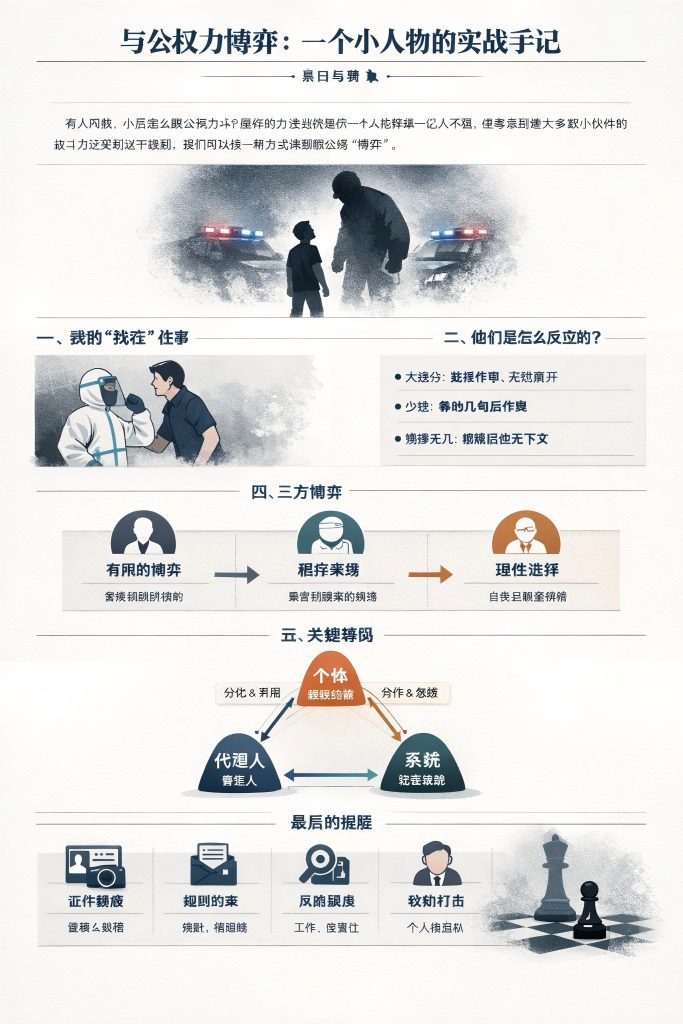
Alright, I’ve been waiting for this day for a long time. If you ask me how ordinary people can fight against public power, the most direct method is, of course, if you can take on 100 million people by yourself and beat them all down—then you win. But we also have to consider that a very small number of friends might still have slightly weaker combat capabilities and aren’t quite ready to take on 100 million people just yet. So, to accommodate these friends, we have to take some time to break down this topic of playing the game against public power.
Let’s get down to business. If one day, public power turns against ordinary people and does evil, how should we little weaklings respond?
This question seems unsolvable at first glance, because the disparity in power is more悬殊 than between an ant and an elephant. No matter how good an ant’s kung fu is, it will still be crushed without leaving a trace. After all, public power monopolizes the highest forms of violence—they have the police, the military, tanks, aircraft, nuclear weapons. For ordinary folks with their tiny arms and legs, saying “a mantis trying to stop a chariot” is already flattering; at best, it’s just lining up to offer your head.
So, when ordinary people encounter public power, can they only lie down and wait to be slaughtered? Here, I’d like to tell you a story—an absolutely true one, because I did it myself.
During those three years of the “great health” era, it was a turning point in fate for many people. I don’t know how you all got through it, but I know many didn’t. As for me, it’s simple: those years, I was very unhappy. When everyone was locked at home, and the only thing to do every day was line up like a dumb goose, open your mouth, and wait to have a swab shoved down your throat—if you can even call that life—that kind of life was worse than a pig in a factory farm. At least pigs get fed at regular times, and they even consider their nutritional balance, right? You don’t have to scramble to buy overpriced vegetables yourself?
When human dignity and freedom are trampled to the point of being worse than a pig, I don’t know about others, but at least for me, I was so frustrated I was about to explode. If I kept bottling it up, something was bound to happen—either I’d do something big, or I’d break down. So, for myself and for my family, I needed to find some kind-hearted people to help share some of that frustration, to bear some of that anger for me. Who should I find? Simple: whoever made me frustrated, I’ll go find them.
Who were they? They were the control personnel composed of police, community workers, and volunteers who, at the time, could ignore the law, trample on people’s dignity, and act arrogantly to the extreme. These people had a collective name back then—the “Big Whites” (referring to hazmat-suited personnel). Ah, yes, this group of people full of positive energy. Surely they wouldn’t mind helping an ordinary person share a little frustration and anger, right?
How did I get them to share it? It wasn’t complicated. Within my area of reach, whenever I had the chance, I’d go right up to them—whether they wore black uniforms or white hazmat suits—and unleash a barrage of words. Not directly cursing them, but from multiple angles, in a全方位 way, I’d ridicule, mock, and sneer at them. And I didn’t beat around the bush; I made sure to express it in a way they could understand.
What was this like? It was somewhat similar to workplace bullying—not hitting or cursing, but definitely making you feel terrible. If that made them angry and frustrated, thereby causing them psychological distress, then my own mental health would improve. Negative energy doesn’t just disappear, but it can be transferred to others.
I did this for over half a year. I don’t remember exactly how many I confronted. I kept at it until things opened up and it ended. Some might ask, what were the consequences? Other than my mood improving, there really weren’t any.
What were their reactions when I was picking fights with them? I’ll list them out. Some would glance at me and silently walk away. Some would give an awkward laugh and then leave. Some would say a few words in their defense, then turn and walk away. If they couldn’t get away, they’d have an expression like “a dead pig isn’t afraid of boiling water”—say whatever you want, I don’t care. And not just them, but their colleagues around them also mostly acted like it had nothing to do with them. At most, they’d come over and say something to smooth things over: “Ah, forget it, forget it.”
This kind of non-cooperation accounted for the majority.
At times like that, I felt very bored, like I was the bad guy, which made me even more frustrated.
Of course, there were some who engaged. Among the remaining few, some would initially argue back. When I encountered someone who could get into the role, I was delighted—this was exactly what I was here for. But most would stop arguing after a few exchanges, and then revert to the first boring state.
Out of all these people, only a handful of “elite monsters” would stick it out to the end, throwing down threats: “Just you wait!” I’d wait, let’s see what you’ve got. Did I ever get what I was waiting for? Of course not. After the tough talk, everyone went home to their own families. We’re adults, we’re not that childish—if you don’t go home for dinner, are you expecting someone to treat you?
That’s how it went. I believe this outcome might surprise some, because it doesn’t match the impression of the arrogant and domineering “Big Whites.” What was the reason? Was it because I look like a burly warrior, and they were afraid I’d pull a huge staff out of my pants and come charging? No, that’s not it. I look quite gentle. I don’t really have that kind of intimidating presence.
Then why? Shouldn’t they have used their methods against me? That’s impossible. Not because they didn’t want to, but because I wouldn’t give them that chance. I only engaged them at the right moment, within a defined scope, for a limited game. I wouldn’t give them the opportunity to step outside that scope. This approach seems magical, but it’s really like a magic trick—once you see how it’s done, it’s nothing special. And by the end of this piece, you’ll see that their seemingly abnormal responses were actually rational. Turning the other cheek was their wisest choice.
What’s the secret behind this? We’ll break it down piece by piece. But before that, I must say: I absolutely do not encourage anyone to do anything similar. I may sound confident now, but in reality, I was walking a tightrope. The reason nothing happened was because I was summarizing and adjusting as I went, achieving a kind of “agile conflict” through small steps and rapid iteration. And luck was on my side—I didn’t encounter anything beyond expectations. Of course, I thought about what I’d do if things went wrong, but not having anything go wrong was somewhat侥幸. Most importantly, this activity had no benefits whatsoever. None at all. Only risks, no gains.
This was just an extreme measure I resorted to during a peculiar time to deal with my emotions. It’s not universally applicable. You could also say I was just asking for trouble, and that’s fair. But regardless, you have to admit, there aren’t many people who can ask for trouble like this and also summarize it into an abstract theory. So if you come across such a rare creature, be sure to give me a like.
Alright, let’s get started.
The reason most people are repeatedly oppressed and harvested by public power is rooted in one fundamental thing: their understanding of public power is wrong. Completely wrong.
In their minds, confronting public power means confronting the state apparatus, the military, police, intelligence agencies, tanks, aircraft, nuclear weapons. How is that possible? It’s terrifying. It’s an invincible existence. They’re scared to death before even making contact.
But here’s the thing: no matter how outrageous the actions of ordinary people are, they won’t bring nuclear missiles targeting your city, an armored division ready to take your neighborhood, or bombers dropping missiles through your window. Those invincible things will never appear in your sight. In other words, you can act as if they don’t exist.
Some might say: even if those things don’t exist, when confronting public power, just two cops can pin me down. What difference does it make?
That’s true. But here’s the question: When did we ever talk about “confronting” public power? We’ve been talking about “playing the game” against public power. Individuals should never try to challenge the entire system—that’s no different from seeking death. There might be a very few who, knowing it’s impossible, stand alone against the indescribable, sacrificing themselves. We usually call such people heroes. But heroes are often martyrs. Being a martyr is not the script for ordinary people.
What we face is not the entire state apparatus, but specific individuals doing the work—one or several executors, or what we call “agents of the system.”
For example, if a lockdown is ordered from above, there will be a “Big White” representing that order to seal off your building. The person you face is just that one individual. While they do have some kind of authorization, no matter what, they are just one person.
Now, pay attention, here comes the key point.
The question is: Are the interests of this agent completely aligned with the goals of the system?
Rest assured, they are never, ever aligned. There’s always a huge gap between their interests, and that’s exactly where we can start.
You must remember one thing: never view this as a binary opposition between the individual and public power. Instead, see it as a three-way game between the individual, the system, and the agent.
As the individual, you are indeed the weakest. That’s true. But being weak doesn’t mean you have to be at their mercy. If the agent and the system stand together against you, then it’s a dead end. To avoid that, you must never directly confront the system. Never elevate the conflict to an ideological level. Don’t give the agent the righteous excuse to deal with you.
Those who were repeatedly bullied by the “Big Whites” often chose to directly confront the system, which gave the agents a legitimate reason to crack down on them.
In most cases, the first thing we need to do is use the system’s power to restrain the agent. After all, it’s the agent you’re facing directly.
First, we need to split them, to solidify the board of this three-way game. If you can’t do this, then it’s indeed wiser to just kneel down.
But conversely, when the time is right, we can also collude with the agent to fool the system.
Remember, this is a three-way game. There are no permanent enemies. The core idea is to use the gaps between them to find leverage for the weakest among us—you.
How do we do this?
First, you must understand your opponent. If you can clearly see the agent’s hand, then even if you can’t win, at least you can secure a decent exit.
So, what are the agent’s cards?
Although these people are diverse, we can try to summarize some commonalities:
- The agent is an employee. They need this job to support themselves or their family. They worry about losing their job. They also want to slack off and take it easy.
- Their interests differ from the system’s. The system’s goal might be stability or some grand vision, but that doesn’t directly concern the agent. They care more about whether they can gain some personal benefit. Most importantly, they absolutely don’t want to cause a mess and be held accountable by their superiors.
- The agent has limited energy. Among the numerous problems they face, you are merely insignificant. They have neither the necessity nor the energy to fight you to the bitter end over a trivial matter.
Each of these points can, at the right time, become leverage in our game.
Now, let’s do a thought experiment. Suppose you are an agent. One day, your leader sends you to do a job. You know it’s unpopular, but it’s an order, so you grit your teeth and do it. Just as you’re about to finish and head home, a person suddenly steps out, looks you straight in the eye, and starts saying provocative things, word by word, right in your face. What would you do?
Would you think, “Oh no, my dignity is hurt, I have to fight back and save face”? No. That’s not normal. You wouldn’t think that.
What would you actually think? You’d think, “Damn it, why is this trouble showing up now? What do I do? This guy looks tough. Who is he? Is someone trying to set me up? If I get into it with him, it’ll affect the mission. My leader doesn’t care if I got insulted. They only care about results. Whatever the reason, if I fail the mission, it’s my fault. Even worse, if this guy causes a scene and it implicates my leader, then I’m done for.”
Until you understand the situation, you’re not going to take any risks. Then it hits you: the smartest move is to play dead. While playing dead, you observe what his game is. Swallowing a few insults is nothing.
Then you notice that after a few words, he just walks away. You’d breathe a huge sigh of relief: “Trouble is gone. What a scare. Time to go home and lie down. The world outside is too dangerous.”
So, as you can see, the majority of people I encountered reacted exactly like this. Their main strategy was: say whatever you want, I’m not engaging. They cultivated a demeanor of remaining calm regardless of the storm.
Therefore, we must remember a simple but often forgotten fact: no matter what identity or official position the agent holds, first and foremost, they are a person, not some abstract embodiment of power.
In your game, their advantage lies in their access to information and their ability to call for backup (though this ability comes at a cost). Your advantage lies in this: when the system gives an agent power, it also imposes a set of cumbersome procedures. You can use their own rules against them, using the procedures to tie them up.
For example:
- “Excuse me, please show me your ID. What’s your employee number?”
- “Sorry, I need to take a photo. I need to record this.”
- “What is the legal basis for your action? Do you have the relevant documents?”
- “According to the procedure, this doesn’t seem right. It should be like this, shouldn’t it?”
Remember what we said earlier: we are not confronting the system. On the contrary, we are following the rules. On the surface, we are cooperating fully according to the system’s requirements. We are only raising reasonable questions about certain aspects. And the questions we raise are directed specifically at the agent’s actions that don’t comply with the system’s requirements.
If you ask me, “What if I can’t find anything to question?” — Well, aren’t you supposed to be picking a fight? Are you really going to try to reason with them one point at a time? This is about being a nuisance, you know?
At this moment, we are actually on the system’s side, together against the agent. As long as you stay calm and have a basic understanding of the relevant rules, you can make every step the agent takes feel like trudging through thick mud.
Now, how does the agent see it? Your issue is just one tiny, insignificant part of the pile of troubles they have to deal with. You haven’t done anything to them personally, and you seem difficult. Why would they insist on fighting you to the death? How many people are there who would sacrifice themselves for the sake of strict enforcement?
If you can get to this point, wouldn’t they consider reaching some kind of tacit understanding with you, or giving you a break? And in this case, we can then stand with the agent, together fooling the system.
Of course, this is just an ideal scenario. There are many details to consider.
For instance, get into the habit of keeping records. Whether it’s audio recordings, photos, videos, or written evidence, keep as much as you can. Many times, without you even saying anything, just letting them know you’re documenting their actions will make them cautious immediately.
The main purpose of this evidence is not to use it to punish the opponent. After all, they’re just doing their job; there’s no personal grudge. The main purpose is deterrence. Because this evidence can become a knife at their back. The more pressure you can apply to the agent early on, the more likely you can reach a compromise later.
Otherwise, without pressure, why would they bother negotiating? It would be easier to just deal with you directly.
Finally, if you’re past the deterrence stage and want to strike, here’s a small tip: instead of complaining about your target directly, complain to a higher level—complain about their boss. Then their leader will have to take the blame, and someone will deal with them for you. If you complain directly to their immediate supervisor about them, given their daily dealings, there’s a high chance your complaint will be ignored or result in a light, meaningless punishment. But if you go two levels up, things are more likely to be handled properly.
That’s the entire process of playing the game against public power: from beginning, to deterrence, to dealing, to final retaliation.
Of course, if none of the above works, or if you’ve messed up and are now cornered, there is one last resort—a desperate move to try to survive against all odds.
That move is this: it’s not just ordinary people who have weaknesses. Everyone has them. In fact, those in power often have more, and softer, weaknesses.
The key here is still to pin the responsibility on a specific person. Imagine someone shouting, “I’ll fight all you corrupt officials!” That kind of threat is ineffective. When responsibility is diffused, no one is responsible. And if you target everyone, you target no one.
So, first, identify the specific person you need to target. Once you’ve identified that responsible person and shown you’re willing to go all the way, it means they might have to bear personal risk for official matters. Who would want to deal with such bad luck? And this might just give you a chance to turn a hopeless situation around—though it’s unlikely.
Of course, it’s best not to let things get to this point.
Finally, let’s summarize.
Ordinary people’s strategies when dealing with public power often fall into two extremes: either they get fired up and say “I’ll fight you all,” or they completely cave and say “I’m at your mercy.”
Neither is wise.
The approach we should follow is the middle way: I can cooperate, but my cooperation comes at a cost. I won’t confront the system, but I will question whether the procedures are compliant. I will do my best to put pressure on the agent, hold some leverage over them, and use that as silent deterrence.
Then, can we negotiate? Can you let this slide, make an exception, and let both of us off the hook?
What we need to do is constantly move between the agent and the system, always standing on whichever side benefits us most.
You have to remember: we are not dealing with an abstract, omnipotent power machine. The person sitting across from us is always a living, breathing human being with selfish interests. Every human weakness you have, they have too.
Many times, as long as you show yourself to be enough trouble, enough of a tough nut—whether it’s because they fear the hassle or worry they’ll break their teeth biting you—they’ll likely let you go and find a softer target instead.
The more you understand how the system operates and the limitations of individuals within it, the more effectively you can reduce the abstract Leviathan into a finite entity you can play the game with, and get the result you’re hoping for in certain situations.
But in the end, I have one more reminder: among the three—system, agent, and individual—the individual is always the weakest. These methods are only for defense. They can turn what seemed like a certain loss into a small disadvantage, or at best, a balanced game. Don’t think that because you’ve learned some things, you can start getting cocky and playing offense. That would be looking for trouble.
If you say, “I really can’t hold back, I have to go all out,” then I have one final request: when they lock you up, please don’t mention my name. Thank you.
Thank you, everyone.
原文
与公权力博弈:一个小人物的实战手记
有人问我,小民怎么跟公权力斗?最直接的办法当然是你一个人能群殴一亿人,把他们全部打趴下,那就赢了。不过,考虑到绝大多数小伙伴的战斗力暂时还没到这个级别,我们不得不花点时间来拆解一下这个话题。
言归正传。如果有一天,公权力在针对普通人作恶,我们这些小弱鸡要怎么应对?
这个问题看上去似乎无解。双方的力量对比,比蚂蚁对上大象还要悬殊。一个小蚂蚁的功夫再好,也一样会被一路碾压,翻不出浪花。毕竟,公权力垄断着最高的暴力——警察、军队、飞机、坦克、核武器。小老百姓那小胳膊小腿,说螳臂挡车都是抬举了,最多算排着队送人头。
那么,普通人遇到公权力,就只能躺下挨宰吗?
我想讲一个故事,绝对真实,因为这就是我自己干的。
一、我的“找茬”往事
在那“大健康”的三年里,对很多人来说,都是命运的转折点。我不知道星佑的小伙伴们是怎么熬过来的,但我知道,很多人没能熬过来。
那几年,我过得很不开心。所有人都被封在家里,每天唯一的事就是排着队张着嘴,等着被捅嗓子眼。那种生活,如果还能叫“生活”的话,那还不如养殖场里的猪——至少猪还有人定点喂食,还得考虑营养均衡,不用自己巴巴地去抢高价菜。
当做人的尊严和自由被践踏得不如一头猪的时候,别人我不知道,但我自己已经憋屈到快要爆炸了。如果一直这么憋下去,我迟早要出事——要么憋出大事,要么憋出毛病。
所以,为了自己,也为了家人,我得找一些好心人帮我分担掉一部分憋屈。找谁呢?谁让我憋屈,我就找谁。
那是谁?是当时可以无视法律、践踏人民尊严、嚣张跋扈到极点的,由警察、社区和志愿者组成的管控人员。这帮人有一个共同的名字——大白。
这帮“正能量满满”的人,想必不会介意帮小老百姓分担一点小小的憋屈和怒火吧?
于是,凡是在我覆盖范围内的管控人员,不管穿的是黑皮还是白皮,只要有机会,我就上去怼到他们脸上,一通输出。不是直接开骂,而是从多角度全方位地对他们进行奚落、挖苦和嘲讽,而且不拐弯抹角,一定用他们听得懂的方式表达。
这个场面,比较像职场霸凌——不打人也不骂人,但一定让你浑身难受。
如果他们会因此而生气、憋屈,进而造成心理不健康,那我的心理就能健康起来了。负能量不会平白消失,但它可以转移。
这个活儿我干了大半年,具体怼过多少个已经记不清了,一直干到开放结束才消停。
二、他们是怎么反应的?
你可能好奇,这么干有什么后果?
除了我心情好了一点以外,真的没什么后果。
当年我整天找茬的时候,这些人大概有以下几种反应:
- 有些人看我一眼,默默地走开。
- 有些人尬笑两声,然后走开。
- 有些人辩解两句,继续扭头走开。
- 实在走不开的,就一副死猪不怕开水烫的样子——你爱说啥说啥,哥不稀罕搭理你。
而且不只是当事人,连周围的同伙也基本是事不关己的样子,最多过来和两句稀泥:“哎呀,算啦算啦。”
这种不配合的情况,占了大多数。
每当这时候,我就感觉很无趣,感觉自己像个坏人,然后就更憋屈了。
当然也有配合的。剩下少部分人里,有些人一开始会跟我吵起来。遇到这种能进入角色的,我就很开心了——毕竟咱就是专门来干这个的嘛。但大多数吵两句之后就会闭嘴,然后回到第一种很无趣的状态。
在这么多人里,只有寥寥几个“精英怪”会扛到最后,跟我撂狠话:“你给我等着!”
我就等着,看你能憋出什么屁来。
后来我等到了吗?
当然没有。撂完狠话,各回各家,各找各妈。成年人了,不会那么中二,不回家吃饭,难道还等着谁请客吗?
三、他们为什么不“收拾”我?
事情就是这么个事情。相信这个结果会多少出乎你的预料,因为这跟印象中嚣张跋扈的大白不一样。
到底是什么原因?是因为我长得像鲁智深,他们怕我从裤裆里抽出一条六十二斤重的水磨禅杖,一路杀将过去吗?
不是的。洒家长得还是比较斯文的,真的没那么强的威慑力。
那是为什么?按道理不是应该给我上手段了吗?
这个不可能。不是他们不想,而是不会给他们这个机会。我只会在合适的时机,让他们在划定的范围内跟我进行一场有限的博弈,不会给他们越出范围的机会。
这个操作看似神奇,其实跟魔术一样,拆开了也就那么回事。等你把整篇看完就会发现,他们这些看似不正常的应对,其实才是理性的。只有“唾面自干”,才是他们最明智的选择。
这里面到底藏着什么门道?
四、我们对公权力的认知,一开始就错了
大多数被公权力反复压榨的人,都有一个根本原因——他们对公权力的认知是错的,而且错得离谱。
在他们的观念里,对抗公权力意味着对抗国家机器、暴力机构、军队、警察、情报局、飞机、坦克、原子弹——这怎么可能?太可怕了,还没接触就吓得尿一裤裆。
但是,民众的行为不管多离谱,都不会引来原子弹锁定你的城市,也不会有装甲师攻占你的小区,更不会有轰炸机往你窗户里撂导弹。那些“不可战胜”的事物,永远不会出现在你的视线内。换句话说,你完全可以当他们不存在。
有人可能会说:哪怕这些东西不存在,但只要来两个条子,就能把我按得死死的,有什么区别?
没错。但问题是——我们从头到尾什么时候说过要跟公权力“对抗”了?
我们说的是“博弈”。
个体永远不要去试图挑战整个系统,那跟找死没有区别。也许有极少数人明知不可为而为之,孤身对抗不可描述的存在,最后献祭自己——这种人我们一般称之为英雄。但英雄往往也是烈士,当烈士不是我们普通人的剧本。
我们要面对的,不是整个国家机器,而是具体办事的人——一个或几个执行者,或者说“体系的代理人”。
比如,上面决定封城了,会有一个大白代表上面的意志来封控你们整栋楼。你所要面对的,就只有这一个人。
虽然他确实握有某种授权,但不管怎么说,他都只是一个人。
五、三方博弈:个体、代理人、系统
关键来了。
这个代理人的利益,跟整个系统的目标完全一致吗?
放心,永远永远都不可能一致。他们之间必然存在着巨大的利益鸿沟,而这正是我们可以着手的地方。
你要牢记住一点:永远不要把它看成“个体 vs 公权力”的二元对立,而是个体、系统、代理人之间的三方博弈。
个体作为最弱小的一方,这没错。但弱小不代表只能任人宰割。如果让代理人和系统站在一起对付你,那确实是死局。要避免这个情况,就绝对不要正面去对抗系统,千万不要把矛盾上升到意识形态层面,不要给代理人拿到收拾你的大义名分。
那些被大白反复欺凌的人,往往都选择直接对抗体系,给了代理人名正言顺拿捏你的理由。
大多数情况下,我们要做的首先是借用体系的力量去压制代理人。毕竟,跟你面对面的是代理人。
首先要分化他们,把三方博弈的棋盘夯实。如果这一点做不到,那确实直接跪下磕头会更明智。
但反过来,如果到了合适的时候,我们又可以伙同代理人一起去糊弄体系。
记住了,这是三方博弈,没有永远的敌人,朋友。核心思路就是利用他们之间的鸿沟,为最弱小的我们找到合适的筹码。
六、代理人的底牌
要怎么做?首先,你必须了解自己的对手。如果你能把代理人的底牌摸得一清二楚,那么即使最终不能赢,至少能有个体面退场的机会。
代理人的底牌是什么?
虽然这些人很“生物多样性”,但我们可以总结一些共性:
- 代理人是个打工人。他需要这份工作来养家糊口,会担心丢饭碗,也会想着摸鱼和偷懒。
- 他和系统的利益不同。系统的目标也许是稳定,也许是星辰大海,但这些跟代理人关系不大。他更在意的是能不能捞到好处,以及最重要的——不要捅出娄子,被上头追责。
- 代理人的精力是有限的。面临一大堆问题,你只不过是无足轻重的那一个。他既没有必要,也没有精力为了点小事跟你死磕到底。
而上面的每一条,在恰当的时候,都可以变成我们博弈的筹码。
七、换位思考:如果你是代理人
现在我们做个假设——假如你是一个代理人,某天被领导派到一个地方干活,你也知道这个活儿不得人心,但没办法,领导交代了,硬着头皮也要完成。
就在你快要完成任务、准备下班的时候,突然走出一个人,盯着你的眼睛,一字一句地怼到你脸上,说挑衅的话。你会作何反应?
你会不会想:“哎呀妈呀,我的面子掉到地上了,我要跟他硬刚到底,一定要把面子找回来”?
不正常。你绝不会这么想。
你会想:“妈蛋,怎么麻烦突然找上门了?怎么办怎么办?这个家伙一看就不好搞,什么来路?不会是有人故意来搞我的吧?我跟他杠起来会影响任务啊——领导不会在乎你受没受委屈,只会看结果。不管什么原因,没完成任务肯定是我的错。甚至,如果对面太难缠把事情闹大了,连累领导背锅,那我更是死得透透的。”
在没搞清楚情况之前,我是绝对不会冒险的。
然后想到这里,你灵光一闪——最聪明的做法,就是赶紧装死。一边装死,一边观察对面到底是什么套路。至于被挑衅两句、唾面自干,那都是小意思了。
等你发现对面说几句自己就走了,你只会长舒一口气:麻烦终于走了,害我虚惊一场。赶紧下班回家躺着,外面的世界太危险了。
所以你看,当初我面对的大部分人,不出意外都是这个心态——主打的就是一个“你爱说啥说啥,咱完全不搭理你”,任你风吹雨打,我自风轻云淡。
八、常识:对面坐的是一个人
我们必须牢记一个看似简单、但经常忘掉的常识:不管对面的代理人是什么身份、是什么官,他首先是一个人,而不是什么抽象的“利维坦”。
在你们的博弈中,他的优势在于大部分时间掌握了信息差,以及呼叫支援的能力(虽然这个能力也不是没有代价)。
而你的优势在于:系统赋予对面权力的同时,也会附带一套繁琐的程序。你完全可以以汝之矛,攻子之盾,利用程序让他们自己把自己捆死。
比如说:
- “麻烦你先出示一下证件,你的工号是多少?”
- “不好意思,我要拍个照,录个像。”
- “你这么做的法律依据是什么?有没有相关的文件?”
- “按照流程,这好像不对吧?应该是这样的吧?”
记住我们前面说的:我们没有对抗体系,相反,我们很遵守规范。我们在面子上完全按照体系的要求在配合,只不过在某些方面提出一点合理的质疑而已。而我们质疑的只针对个人、针对代理人不符合体系要求的操作。
如果你问:“我找不到可以质疑的地方,怎么办?”
——难道你连找茬都不会吗?你真打算一板一眼在那儿讲道理吗?这是在挑刺找茬,知道吗?
这时候,我们是跟体系站在一起的,是一起对抗代理人的。只要你冷静应对,且大概熟悉相关规则,就很有可能让对面推进的每一步都像困在淤泥里一样艰难。
九、代理人的算盘
那代理人又会怎么看呢?
你的事,不过是他要处理的一大堆麻烦中微不足道的那一个。他跟你又没有杀父之仇,同时你又看起来很难搞——他有什么理由一定要跟你死磕到底?那种“即使搭上自己也要公事公办”的人,有几个?
如果能到这一步,他会不会考虑跟你达成某种程度的默契,或者高抬贵手放你一马?
那么在这件事情上,我们又可以跟代理人站在一起,反过来去糊弄体制。
十、证据:你的隐形武器
当然,刚才说的只是理想状况,还有很多细节需要注意。
比如,随时保持记录的好习惯。不管是录音、照片还是录像,包括各类书面证据,只要是证据,就尽可能保留下来。
很多时候,不用你说什么,只要让对面知道你正在记录他的行为,他就会立刻变得小心翼翼。
而这些材料最大的作用,不是打出去惩罚对手——毕竟对方跟你也没什么私仇——而是在于威慑。因为这些随时可能变成捅向他腰子的一把刀。你能在前期给到代理人的压力越大,后面才越有可能达成妥协。
不然,他没压力,为什么要搭理你?直接把你办了,不就省事了吗?
最后,如果你不要威慑了,要直接杀伤,打算把证据用出去了,这里附赠一个小小的技巧:
不要直接投诉你的目标,而是向再上一级投诉他的上级,让他的领导来给他背锅,到时候自然有人替你会收拾他。
因为如果你直接找他直属领导投诉本人,看在天天打交道的情分上,你的事情石沉大海的可能性很大,就算有处罚,也是不痛不痒的罚酒三杯。但如果隔着两层来投诉,就更有可能会公事公办。
十一、最后的手段
以上,就是跟公权力从开始到威慑、到交易、再到报复的一整套博弈流程。
当然,如果以上的手段通通不奏效,或者你一不小心搞砸了一切,被逼到了绝路上,那么还剩最后一招——不是办法的办法,去死中求活,博弈一线可能性的绝地反击。
这招就是:不光只有老百姓,任何人都有软肋,甚至他们的软肋更多,也更软。
这里的关键,依然是把责任落实到个人。
你可以想象一下,如果有个人大吼一声“我跟你们这些狗官拼了”,这种威胁是没有任何效果的。因为责任一分散,就代表谁都没有责任。你针对所有的人,就意味着你谁也没有针对。
所以,先要找出你一定要针对的那一个人。在你找到责任人、又豁出去以后,就意味着对方可能会因为公事承担起私人的风险。谁会愿意摊上这种倒霉事?
而这个,也许就能给你一个死中求活的机会——可能性不大,但毕竟是一线生机。
当然,事情尽量不要到这一步。
十二、总结:中庸之道
普通人与公权力的博弈,往往容易陷入两个极端:要么气血上涌“我跟你们拼了”,要么怂到底“我给大爷跪了”。
这两种都不明智。
我们应该奉行的,是中庸之道:我可以配合,但是是有代价的配合。我不会去对抗体系,但我会质疑程序是否合规,会尽最大可能给代理人带来足够的压力,手里有他的把柄,给他隐而不发的威慑。
那么,我们是不是可以商量商量——能不能高抬贵手,能不能通融通融,放彼此一条生路?
我们要做的,就是在代理人和体系之间反复横跳,永远站在对自己最有益的那一面。
你要记住:我们不是在跟一台抽象的、无所不能的权力机器打交道。坐在我们对面的,永远是一个活生生的、有私心的人。你身上那些人性的弱点,他一个不落,也全部都有。
在很多时候,只要你表现出足够的麻烦、足够的硬骨头,不管是怕麻烦还是担心咬上去崩掉一嘴的牙,对方都会有一定概率放过你,去寻下一个软柿子。
当你越了解系统的运作程序、个体的局限,你就越能有效地把抽象的“利维坦”还原成一个有限的、可博弈的个体,然后在某些场景中拿到你希望的结果。
最后的提醒
在最后,我还是要提醒一件事:在我们聊的这个“系统—代理人—个体”三者之间,个体永远是最弱势的。
以上这些方法,只能用来防守,用于把原来以为的必死之局博弈成小劣局,最多是平衡局。不要觉得掌握了一些东西,就可以顺风局浪起来了——那就是在找死。
如果你说:“我实在憋不住了,我一定要浪。”
那么,我就剩最后一个请求了:
进去以后,不要把我供出来。
谢谢。
- 有些人看我一眼,默默地走开。
- 有些人尬笑两声,然后走开。
- 有些人辩解两句,继续扭头走开。
实在走不开的,就一副死猪不怕开水烫的样子——你爱说啥说啥,哥不稀罕搭理你。
而且不只是当事人,连周围的同伙也基本是事不关己的样子,最多过来和两句稀泥:“哎呀,算啦算啦。”
特别声明:我绝对不鼓励大家去做类似的事。我现在说得好像胸有成竹,其实每一步都在走钢丝。之所以没出事,是因为我一边找茬一边总结,实现了“小步快跑、快速迭代”的敏捷找茬。当然,也是运气好,没遇上超出预期的情况。我也考虑过翻车了怎么办,但没翻车多少有些侥幸。
最重要的是,干这个事情没有任何好处,一点都没有——只有风险,没有好处。这只是极端特殊时期,我不得已尝试的一种处理情绪的手段,没有任何泛用性。
你也可以说,我当时就是在犯贱,这没毛病。但不管怎样,你得承认,能像我这样一边犯贱一边还能总结成抽象理论的人,真心不多。
好,点完了,咱们正式开始。
- 代理人是个打工人。他需要这份工作来养家糊口,会担心丢饭碗,也会想着摸鱼和偷懒。
- 他和系统的利益不同。系统的目标也许是稳定,也许是星辰大海,但这些跟代理人关系不大。他更在意的是能不能捞到好处,以及最重要的——不要捅出娄子,被上头追责。
- 代理人的精力是有限的。面临一大堆问题,你只不过是无足轻重的那一个。他既没有必要,也没有精力为了点小事跟你死磕到底。
- 而上面的每一条,在恰当的时候,都可以变成我们博弈的筹码。
- “麻烦你先出示一下证件,你的工号是多少?”
- “不好意思,我要拍个照,录个像。”
- “你这么做的法律依据是什么?有没有相关的文件?”
- “按照流程,这好像不对吧?应该是这样的吧?”
记住我们前面说的:我们没有对抗体系,相反,我们很遵守规范。我们在面子上完全按照体系的要求在配合,只不过在某些方面提出一点合理的质疑而已。而我们质疑的只针对个人、针对代理人不符合体系要求的操作。
如果你问:“我找不到可以质疑的地方,怎么办?”
——难道你连找茬都不会吗?你真打算一板一眼在那儿讲道理吗?这是在挑刺找茬,知道吗?
这时候,我们是跟体系站在一起的,是一起对抗代理人的。只要你冷静应对,且大概熟悉相关规则,就很有可能让对面推进的每一步都像困在淤泥里一样艰难。