Breathing with the Universe: Rediscovering Inner Energy Amidst the Noise
Zhuangzi once revealed the secret behind the operation of all things in heaven and earth: Heaven is vast, earth is great, and humans dwell between them. The harmony of these three—heaven, earth, and humanity—is what is most precious. Only by leaving space for one’s soul can one draw energy from the universe.
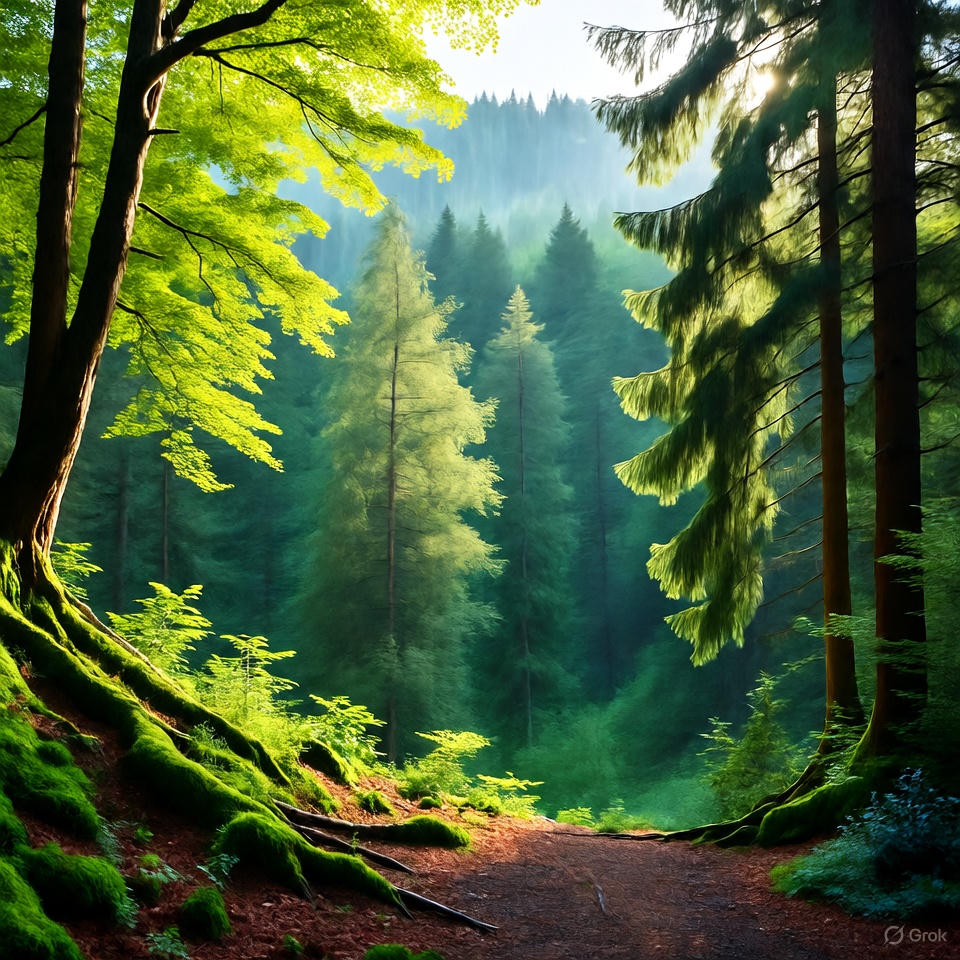
Zhuangzi believed that all sentient beings, including humans, exist through the flow of breath, behind which lies an invisible connection of energy. When we find ourselves in a lush forest and feel uplifted and joyful, that is the connection of energy between nature and humanity. When we converse with like-minded people and feel excitement and pleasure, that is the resonance of energy. Conversely, when we communicate with those who disagree with us and often feel weary and drained, that is the cancellation and depletion of energy.
Behind all things, there is an unseen energy flowing naturally. Ordinary people overlook this, while those who understand the Dao learn to utilize it. Zhuangzi said, “The Dao does not tolerate obstruction; obstruction leads to blockage, persistent blockage leads to conflict, and conflict gives rise to all manner of harm.” This means the Dao should not be stagnant, as stagnation leads to obstruction, obstruction leads to disorder, and disorder brings harm. As the saying goes, “Blockage and stagnation are the root of all illness.”
In infancy and early childhood, humans are closest to the Dao. At that stage, the mind has not yet created a separation from the connection with heaven and earth. However, as we age, accumulate experiences, and encounter interpersonal friction, we gradually form a “stable mind” to comprehend the world and protect ourselves.
This mind is a double-edged sword: on one hand, it offers protection, but on the other, it severs our connection with heaven and earth, causing us to gradually lose our spiritual vitality.
Therefore, those who grasp the mystery of life, as Zhuangzi advised by “abandoning knowledge and learning” or as Laozi said, “Cease learning, and no more worries,” no longer rely on the mind to fortify the self. Instead, they let go of attachments, comply with the changes of heaven and earth, and walk in harmony with the great Dao. Though engaged in worldly affairs daily, they do not carry them in their hearts. By creating space within, the Dao can flow smoothly, allowing them to receive its nourishing energy.
The source of the universe is an endless wellspring of living water. Only those who maintain inner space can preserve their own fluidity and vitality.
Silence can heal illness, tranquility can quell agitation. Zhuangzi said, “Stillness can remedy illness, calm can cease agitation.” After illness or exhaustion, people always need quiet rest. Because the mind constantly thinks, the heart worries, we speak many words, do many deeds, and exhaust our bodies—it is like a bowl of muddy water, shaken and unsettled, unable to calm the spirit. Without a settled spirit, the body struggles to maintain vigor. Quiet nurturing is like allowing the water to become still; only through sedimentation comes clarity. Then, the spirit can find peace, and the body can gradually repair its energy.
Zhuangzi advocated “nourishing the spirit through stillness.” The Yellow Emperor’s Classic of Internal Medicine also states: “Follow the laws of Yin and Yang, harmonize with techniques and numbers, regulate eating and drinking, maintain regular daily routines, avoid overexertion—thus form and spirit can remain together, allowing one to live out their natural lifespan.”
One should set aside time and space each day to quiet the mind in solitude and repair energy in stillness. If one can maintain abundant essence, energy, and spirit, that is ideal. Gradually, one trains to the point of not wanting to speak, not enjoying debate, not courting favor, not pleasing anyone, losing interest in gatherings, becoming increasingly silent, even unwilling to pretend in social performances. Preferring to come and go alone is not alienation, but rather understanding human nature and seeing through life.
Everyone needs a quiet corner—lonely yet solid—allowing themselves to steal a moment of leisure in the fleeting life, enjoying a brief respite. To survive, humans must rely on many external conditions, so we are inevitably carried forward by life.
But after experiencing the ruthlessness of society, the malice of human nature, economic pressures, the burdens of marriage, etc., we finally understand: seeking help from others is like swallowing a three-foot sword; relying on others is like ascending to the highest heavens.
Even when pressure feels overwhelming, don’t feel wronged, because in the adult world, no one pities you. All is suffering, and only you can ferry yourself across. No one in this world is born strong; everyone trudges step by step through the mire of life’s hardships. Enduring, people slowly become stronger. At first, it might be pretense, but eventually, it becomes real.
What truly transforms a person are always those desperate, darkest moments. Only through nirvana can one be reborn. Human potential is limitless because you are a child of the universe. When others treat you ruthlessly, it反而 becomes easier to break free. Therefore, we should be grateful to those who hurt us without regard, for only through pain do we learn to let go. Letting go is progress; turning away brings renewal.
Having journeyed through half a life, returning from the noisy world to tranquility, learning to live with oneself is the most important practice of our later years. With age and material stability, we eventually leave behind meaningless drinking parties, unpleasant social interactions, uninteresting group chats—everything unimportant is filtered out.
Solitude is refusing to play along in someone else’s act; distancing is to spare one’s own heart, allowing the soul to return to relaxation. The longer one stays among crowds, the more one’s energy scatters. After half a lifetime, we finally realize: instead of exhausting ourselves to please others and force our way into unwelcome circles, it’s better to settle down and focus on the people and things that truly matter.
This world may seem complex, but in essence, it is still your own world. If you think complicated thoughts, the world is complicated; if you live simply, the world is clear. May you, after experiencing complexity, return to simplicity—seeing the mountain still as a mountain.
The best state of life is “the bustling fervor within the quiet solitude.” Those with truly high awareness often appear “detached and unfeeling” towards others—even family and friends—seemingly lacking compassion, yet this is actually true compassion and great love.
Only those with high awareness can truly understand: let flowers bloom in spring, trees grow in summer, leaves fall in autumn, and snow cover the ground in winter. They let what should happen, happen—neither blocking nor changing it. True empathy is not weeping with someone over their misfortune, but understanding how they reached that point, recognizing it as the result of their own choices.
We cannot save another’s fate, for it is their own karma. Letting go of the savior complex and respecting others’ destinies is the beginning of maturity.
Those who reach this state must have experienced countless events, analyzing and resolving them one by one, walking alone through darkness until dawn. Those who have weathered great storms rarely show obvious pity towards the weak, for they deeply understand: one must not easily deprive others of their necessary path of growth, even if it is fraught with thorns.
In one’s life, we play different roles at specific stages—sometimes strong, sometimes vulnerable; sometimes glorious, sometimes disheveled. Regardless of success or failure, right or wrong, good or bad, gain or loss, all are valuable wealth.
Only through experience can one grow, and only then can one better understand the truth of things—the Dao. As your awareness approaches the Dao, you see more clearly the patterns of occurrence, development, decline, and extinction of all things. Viewing the world with a Dao-approaching eye, you ultimately perceive its essential truth.
Although heaven and earth nourish all things, it doesn’t mean they are benevolent and virtuous. Heaven and earth regard all things equally, following a uniform law. As stated in Laozi’s Dao De Jing: “Heaven and earth are not benevolent; they treat all things as straw dogs.”
I once had grand ambitions, wanting to help everyone under heaven. Later, I realized: if a person lacks value, others will not hesitate to discard them. I came to understand that people cannot be educated or persuaded; they can only be awakened by heaven. The only one who can save a person is themselves.
Whether it’s parents, lovers, children, other relatives, or friends—I am not a god. I am just an ordinary person. I cannot love unconditionally, nor do I have infinite breadth of mind. I too have human weaknesses. I must accept the complexity of human nature and embrace intricate reality.
Human nature is neither entirely good nor entirely evil. We cannot deny the good because we have encountered evil, nor can we desire only the good and reject or exclude the evil. Good and evil are interwoven in human nature. Allowing this complexity to exist is the mark of a true strength.
So, I began to focus all my energy on myself. In darkness, confusion, and hardship, I work silently, telling myself: endure, wait, conceal one’s strengths and bide one’s time. I started treating myself like a plant—giving it sunlight and rain, but most importantly, time. Be patient and wait for growth.
When the darkness passes, I may seem cold and quiet, giving an impression of being “callous and unfeeling.” Some ask: Do you think you are cold-hearted? I have merely let go of all illusions and expectations of others. My ideals still survive, but my faith is now deeply rooted in reality, solid and reliable.
I still love this world, but this love is a firm choice made after doubt. “Cold-bloodedness” is my way of protecting myself against the dark side of human nature; “warmth” is my sincere response to those who love me. This is the most correct choice I have made after seeing the hardships of life and the complexity of human nature.
原文
天地共呼吸:在喧嚣中寻回内在能量
庄子曾揭示天地万物运行的奥秘:天大地大,人处其间,唯天地人三者相合,方为至贵。唯有为心灵留白,方能在天地间汲取能量。
庄子认为,一切有知觉的生命,包括人,皆依靠气息的流动而存在,其背后是一种无形的能量联结。当我们置身于郁郁葱葱的森林,顿觉心旷神怡,那是自然与人的能量相通;当我们与志同道合者交谈,感到兴奋愉悦,那是能量的共振;而当我们与意见相左者沟通,却常感疲惫心累,那是能量的抵消与消耗。
万物背后,皆有一种看不见的能量在自然流动。普通人对此视而不见,而得道之人却懂得运用。庄子曰:“凡道不欲壅,壅则梗,梗而不止则撵,撵则众害生。”意思是,道不求滞塞,滞塞则不通,不通则生乱,乱则生害。正如俗语所说:“堵塞不通,百病之源。”
人在婴幼时期,最接近于道。那时尚未被心智隔绝,仍与天地相连。然而随着年岁增长、阅历累积、人际摩擦,人逐渐形成一种“稳定的心智”,用以认知世界、保护自我。这心智如同一把双刃剑:一方面护己周全,另一方面却切断了与天地的连结,使人渐失灵气。
因此,洞悉生命奥妙之人,如庄子所言“弃智绝学”,或如老子所说“绝学无忧”,不再依赖心智固守自我,而是放下执念,顺应天地变化,与大道同行。他们虽日处俗务之中,却不挂碍于心,为道留出流动的空间,从而获得能量的滋养。
宇宙源头,活水不绝。唯有内心留有空间的人,才能保持生命的流畅与鲜活。
静默可以调理疾病,宁静能够平息焦躁。庄子说:“静可以补病,宁可以止遌。”人在病累之后,总需静养。因终日思虑纷飞、言语不休、奔波劳形,心神如浊水摇荡,难以安定。唯有静下来,如水沉淀,方能清澈见底,心神归位,身体得以修复能量。
庄子提倡“以静养神”,《黄帝内经》亦言:“法于阴阳,和于术数,饮食有节,起居有常,不妄作劳,故能形与神俱,尽终其天年。”
人应每日留出时间与空间,在独处中静心,于安静中修复。若能保持精气神足,便是最佳状态。慢慢地,人会历练到不愿多言、不喜争辩、不慕逢迎、不讨好任何人,对聚会失去兴趣,愈发沉默,甚至不愿再逢场作戏。独来独往,不是孤僻,而是悟透了人性,看淡了人生。
每个人都需要一个安静的角落,孤独却踏实,让自己在浮生中偷得半日闲,享受片刻轻松。人为了生存,不得不依附于外在条件,被生活推着前行。但当我们尝尽社会的无情、人性的险恶、经济的压力、婚姻的困顿,终会领悟:求人如吞三尺剑,靠人如上九重天。
即使压力如山崩,也别觉委屈,因为成年人的世界,无人替你承担。万般皆苦,唯有自渡。这世上没有天生的强者,所有人都是在岁月的泥泞中,一步步跋涉而来。熬过去,人便一点点变得坚强。起初或许是假装,后来便成真实。
最能让人蜕变的,永远是那些死去活来的至暗时刻。唯有涅槃,方能重生。人的潜力无穷,因你本是宇宙之子。当别人对你绝情,你反而更容易走出困局。因此,应感谢那些曾伤害我们的人,因为痛过,才懂收手;懂得放手,才是进步;懂得转身,才有新生。
走过半生,从喧嚣回归宁静,学会与自己相处,是后半生最重要的修行。随着年纪与物质基础的积累,我们终将远离无意义的酒局、不喜欢的社交、不感兴趣的群聊,剔除一切不必要的牵绊。
独处,是不愿再陪人演戏;远离,是为放过自己的心,让灵魂回归松弛。人在人群中待得越久,气场越易涣散。走过半生终醒悟:与其费力讨好、强融不属己的圈子,不如沉淀下来,专注于重要的人与事。
这世界看似纷繁,本质仍是你一个人的世界。你想得复杂,世界便复杂;你活得简单,世界便清澈。愿你在历经复杂后,回归纯粹——看山还是山。
生活的最佳状态,是“冷冷清清的风风火火”。那些认知高的人,对待他人——哪怕是亲人朋友——往往显得“薄情寡义”,看似缺乏同情,实则是真正的慈悲与大爱。
只有高认知者才能悟透:春天让花开,夏天让树长,秋天任叶落,冬天容雪覆。他们让该发生的自然发生,不阻挡,不改变。真正的共情,不是陪人落泪,而是理解一个人为何走到那一步,明白那是他自身选择的结果。
我们无法拯救他人的命运,因为那是他们自己的因果。放下助人情结,尊重他人命运,是成熟的开始。
能达此境界者,必曾历经世事,独自穿越黑暗,迎来破晓。他们深知:不能剥夺他人成长的必经之路,哪怕路上荆棘密布。
人的一生,会在不同阶段扮演不同角色——时而强大,时而脆弱;时而风光,时而狼狈。无论成败对错,都是生命的财富。唯有经历,才能让人成长,接近事物的真相,也就是“道”。
当认知越接近道,便越能看清万物生灭的规律。以近道的眼光看世界,所见才是本质。天地滋养万物,却非出于仁爱,而是一视同仁。正如《道德经》所言:“天地不仁,以万物为刍狗。”
我曾胸怀大志,欲助尽天下人。后来才明白:人若没有价值,被人抛弃时,他人不会手软。人无法被教育,只能被天启。能救一个人的,只有他自己。
无论对方是父母、爱人、子女或朋友,我都不是神。我只是一个普通人,无法无条件去爱,也无法胸怀无限。我有人性的弱点,必须接受人性的复杂,拥抱现实的错综。
人性既非全善,也非全恶。不能因见过恶而否认善,也不能因向往善而拒绝恶。善恶交织,允许这种复杂存在,才是真正的强者。
于是,我开始将全部精力倾注于自身。在黑暗、迷茫与困顿中,默默耕耘,告诉自己:要忍,要等,要韬光养晦。我像对待一株植物般对待自己——给予阳光、雨露,最重要的是时间,耐心等待成长。
当黑暗过去,我或许显得冷漠安静,给人“冷血无情”之感。有人问:你觉得自己冷血吗?我只是放下了所有幻想,放下了对他人的期待。我的理想尚存,但信仰已深深扎根于现实,坚实而可靠。
我依然爱这个世界,只是这爱,是怀疑过后的坚定选择。“冷血”是我面对人性阴暗面的自我保护,“温暖”是我对待爱我之人的真诚回应。这是我看清人生艰难与人性复杂后,所做的最正确的选择。